
A fresh trim can make a poodle’s coat look easy to maintain. A week later, you might notice a catch behind an ear or under a harness and wonder whether you’re brushing the right way.
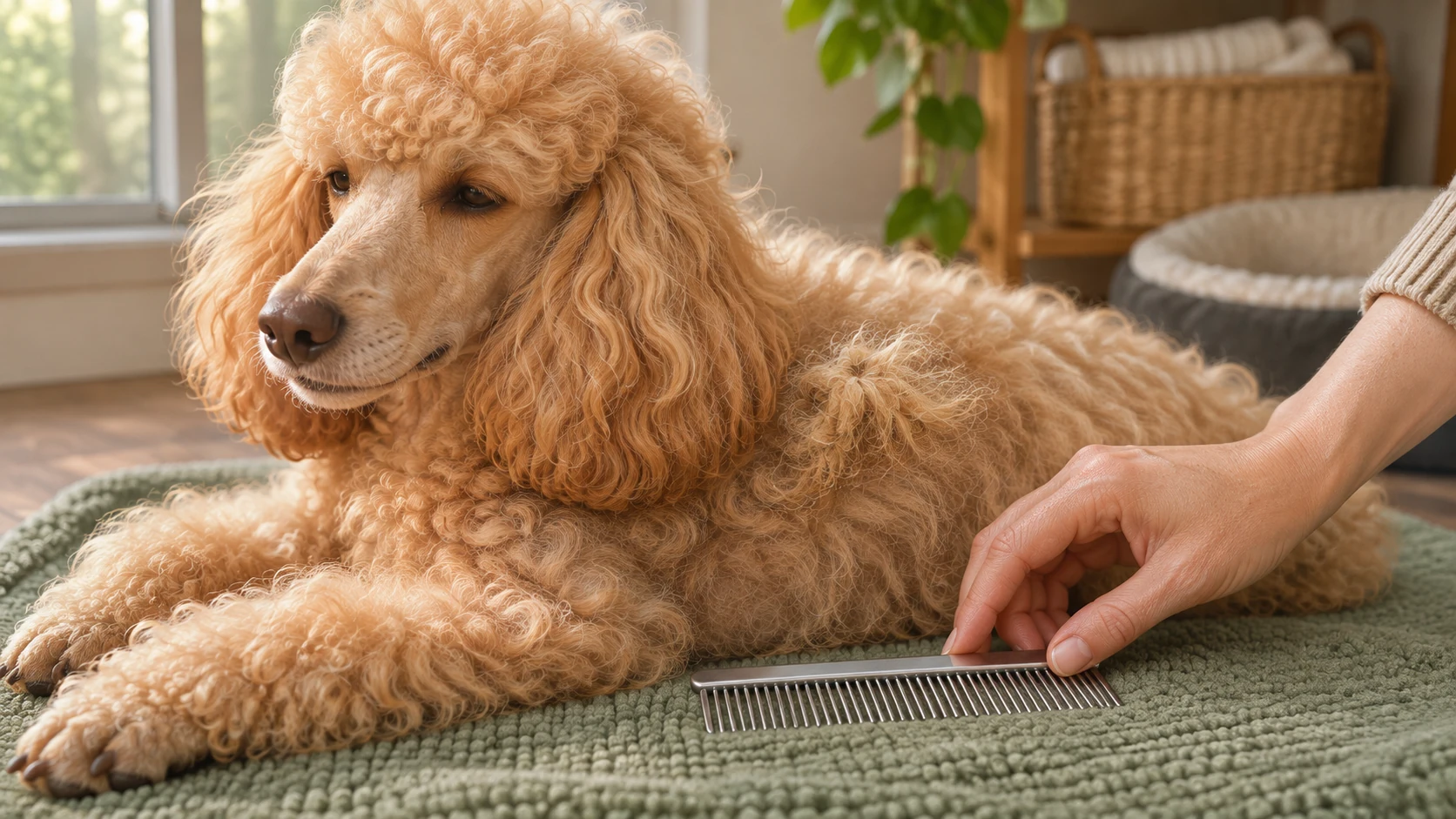
If the comb catches, pause and set it down. AI-generated image.
Start with a relaxed dog and a small section of coat. Your aim is to find snags early and keep handling comfortable, not pull a brush through every tangle in one sitting. Ask your groomer to show you which tools and routine suit your dog’s coat and haircut.
Quick Answer
- Start on a loose patch of coat that your poodle lets you touch. Part a small section and brush it with light strokes.
- Check the brushed hair with a comb. If it catches, set it down and note the spot for your groomer.
- Check behind the ears and under the harness only while your dog stays comfortable. Sore or broken skin needs veterinary advice.
What You’ll Need
A stable, non-slip spot, a brush suited to your poodle’s trim and a comb your groomer has shown you how to use. Put both tools within reach so the dog can get up and leave at any point.
TailSprig Living · Amazon Idea List
My recommendations for brushing a poodle
The coat-care list includes slicker brushes and a steel comb. Ask your groomer which brush suits your dog’s coat length. After brushing a small section, check it gently with the comb and stop if it catches.
Affiliate link. As an Amazon Associate I earn from qualifying purchases.
See poodle coat-care picks on Amazon1. Let your poodle settle and inspect the tools
Pick a stable, non-slip spot where your dog can stand or lie comfortably. Bring a suitable brush and comb within reach, then let your dog investigate them. If brushing is new, reward a calm look or brief touch before trying a stroke. You can end the session there and build on it another day.
A dog who moves away or becomes uncomfortable needs a pause. If the coat or skin seems painful, ask your veterinarian for advice rather than pushing through.
2. Match the brush to the coat
A slicker brush can suit a poodle’s curly coat, and a comb can help you check a section after brushing. The right size and type depend on the dog and the length of the coat. Ask your groomer to show you how to use the tools without scratching the skin; you do not need to buy every grooming tool you see. VCA explains how brush choices vary by coat.
3. Brush one section and check it with the comb
On a longer coat, gently part a small area so you can see the hair you are brushing. Use light strokes through a tangle-free section without pressing brush pins or comb teeth into the skin. Work through the section without pulling, then check it gently with a comb. Your groomer can demonstrate how to use the tools on your dog’s particular coat, including how close to the skin to work.
If the comb catches, stop. Don’t pull through it or cut the knot with scissors; a tight mat may hold skin close. Ask a qualified groomer for help. If the skin is sore, red or broken, or handling seems painful, contact your veterinarian. VCA’s coat-care guidance explains when to seek professional help.
4. Look behind the ears and along the harness line
When your dog is comfortable, gently look and feel around the areas your groomer identifies as prone to tangles. Behind the ears, under the legs and where a harness rests can be easy to miss. Only check an area while your dog is comfortable; stop if they move away or become tense. Don’t pull an ear or leg into position.
If your dog is happy for only one area to be checked today, that’s a useful start. Short sessions can make it easier to notice what your dog accepts and where you may need help.
How often should you brush a poodle?
Longer curly coats can need frequent attention. VCA recommends daily brushing for long, curly coats; a shorter trim may need a different routine. Ask your groomer what fits your dog’s actual coat, including longer areas such as the ears or tail. If your dog cannot comfortably tolerate a full session, start with a small area and ask the groomer or your veterinarian for a plan rather than forcing it.
Make the next groomer’s visit easier
Show the groomer any areas that caught or seemed uncomfortable. Ask for a demonstration on your dog and agree on a routine that fits the length of the coat, the equipment you use and your dog’s comfort.
Choosing a different trim can also change the upkeep between visits. Our guide to poodle haircut styles explains the choices to discuss, while a poodle puppy’s first grooming appointment covers preparing for that first visit.
Printable checklist
Poodle brushing checklist
- Choose a non-slip spot and let your dog approach.
- Brush one small, comfortable area with light strokes.
- Check the section gently with the comb. Stop at a snag.
- Note where the comb caught or handling felt uncomfortable.
- Ask the groomer about tight mats. Call the vet about sore skin.
Frequently asked questions
Why does the comb catch when the top of the coat looks smooth?
Long curls can lie smoothly over tangled hair. Part a small section and look underneath. If it feels tight, leave that spot for the groomer.
Does a short body trim change how I brush the ears?
The hair on the ears may still be long after a short body trim. Ask your groomer to show you which areas need more frequent checks and how to support them comfortably.
Should I keep brushing if my poodle steps away?
Put the brush down and let your dog leave. Next time, try one brief stroke in an area your dog accepts. If a previously comfortable touch now seems painful, contact your veterinarian.
Can I snip out a mat behind the ear?
Leave the scissors alone. Skin can be caught inside a tight mat. A qualified groomer can assess it. If you see redness, a wound or signs of pain, call your veterinarian.
Leave a Reply