
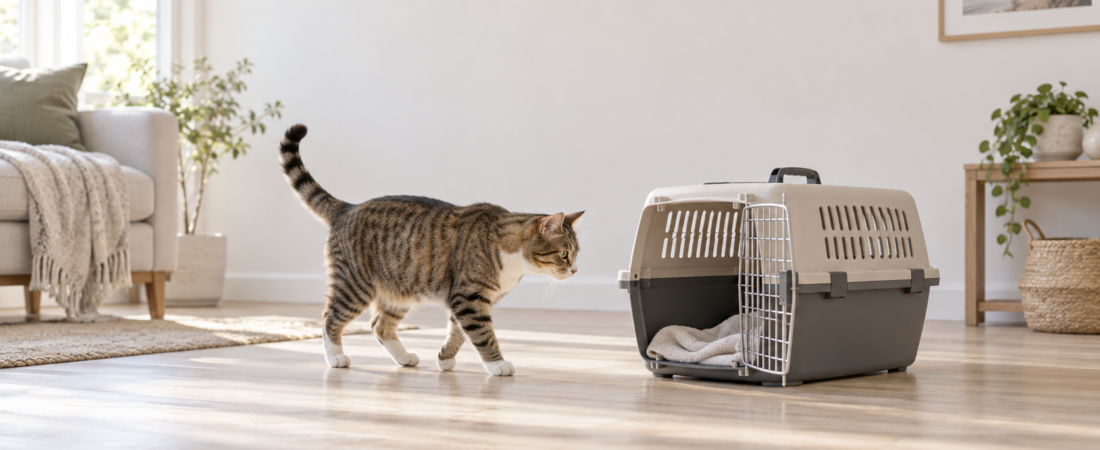
The carrier comes out of the cupboard, and your cat disappears. If that sounds familiar, start the next practice session on a day when you are staying home. A veterinary appointment is a difficult deadline for learning something new.
Cat carrier training starts with voluntary approach and entry. Leave a suitable carrier open in a quiet room, reward small steps toward it, and practice the door separately. Work at your cat’s pace; there is no reliable seven-day deadline. If your cat needs veterinary care now, call the clinic for transport advice instead of postponing care to finish training.
First, check the carrier itself
A training plan cannot fix a broken latch or a cramped box. Your cat needs room to stand, turn and lie comfortably, with adequate ventilation. A front entrance lets them walk in; a removable top can also make examinations easier. Cats Protection’s carrier guide explains the features to look for.
Before every trip, check doors, fasteners, the base and any joins for damage or loose parts. Follow the carrier’s own assembly and carrying instructions. ASPCA’s carrier-training handout specifically recommends inspecting the carrier for defects. Practice operating the empty carrier so the latch is familiar before your cat is inside.
1. Make being nearby an easy first win
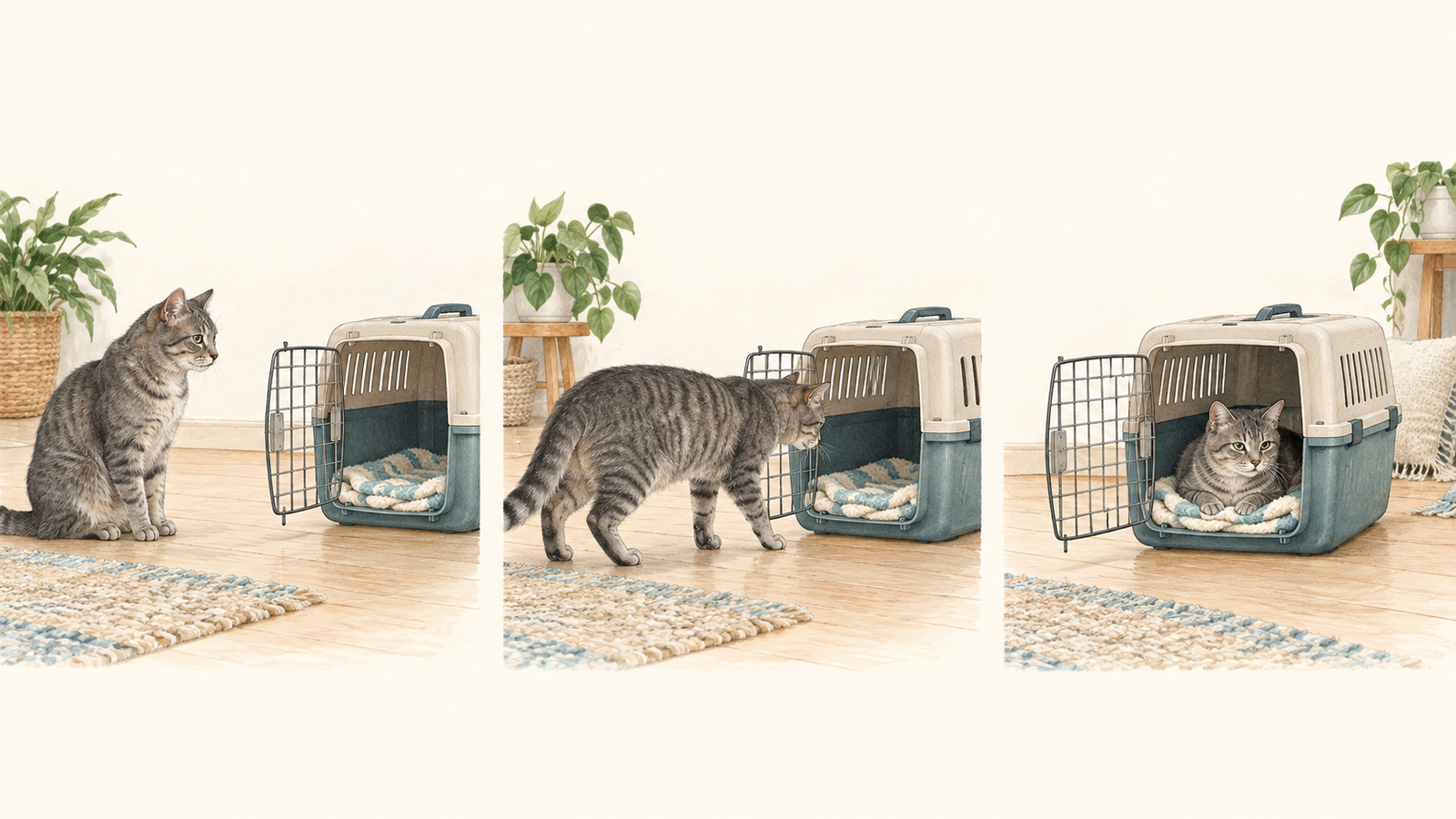
Put the carrier on a stable floor in a familiar room, away from busy walkways and noisy appliances. Secure the door open so it cannot swing toward your cat. Add familiar bedding. Start far enough away that your cat is comfortable; the first useful achievement might simply be staying in the room.
For a cat frightened by the whole carrier, start with their blanket nearby, or the carrier’s base alone if the design allows safe disassembly. Introduce the top separately later. Woodgreen’s step-by-step advice stresses making these changes while the cat is outside the carrier, rather than putting a lid over them unexpectedly.
2. Reward approach, then voluntary entry
Choose a reward your cat enjoys and can safely have. Place it where they already feel comfortable, then gradually work closer to the opening. A look toward the carrier, a step forward and a paw inside can each be a useful small step. This is called shaping: Cat Friendly Homes explains how to reward successive steps toward a behavior.
Keep the door open while your cat learns to enter and leave. Avoid pushing their hindquarters, blocking the exit or shutting the door the first time they investigate. A treat at the back is only helpful if your cat is ready to go that far.
You can use part of a normal meal if food motivates your cat. Move the bowl closer only while they remain comfortable eating. ASPCA recommends backing the bowl away when a frightened cat will not eat near the carrier. Keep normal food available; do not try to make a reluctant cat hungry enough to give in.
3. Teach the door as its own small exercise
Once your cat is comfortable spending time inside, move the door slightly, reopen it and reward. Build toward closing it briefly, then opening again. Add latching and longer periods gradually. Woodgreen advises reopening the door if the cat looks worried or moves toward it during home practice.
Do this in a secure indoor room. You are looking for relaxed participation, not simply a cat who has stopped moving. If a small door movement changes the session from easy to difficult, that is the step to work on next time. Do not add lifting at the same moment.
4. Add carrying and travel gradually
Comfort in a stationary carrier is different from comfort while it moves. When closed-door practice is going well, introduce a brief, steady lift using the manufacturer’s carrying instructions, then put the carrier down again. Progress to carrying around the home before treating a car ride as the next task. VCA’s veterinary behavior guide discusses making confinement and travel positive experiences.
For a real journey, secure the carrier as its instructions require. Keep your cat enclosed; do not open the door at the roadside or in an open parking lot. Wait for a securely enclosed indoor space. If using a light cover, leave ventilation unobstructed. See Cats Protection’s travel guidance for planning the trip itself.
When progress stalls
- “My cat grabs the treat and backs out.” Keep practicing easy entries and exits. Do not turn that first entry into a surprise lock-in.
- “The carrier stays out, but my cat ignores it.” Being familiar furniture is a starting point. Add short, rewarding practice at a comfortable distance.
- “The top goes on and everything stops.” Return to the last comfortable setup. A lid, a moving door and a lift are separate changes.
- “My cat cannot have extra treats.” Ask your veterinary team what can be used from the prescribed diet. Do not change a medical diet or fasting instructions for training.
- “My cat hides, struggles or becomes increasingly distressed.” End the exercise safely indoors and make the next attempt easier. Persistent fear deserves a veterinary or qualified behavior consultation.
If the appointment is today
Tell the clinic that getting your cat into the carrier is the obstacle. Ask for a handling and transport plan suited to your cat, and follow any fasting instructions. Medication for travel or visit anxiety is a veterinary decision; do not give a human medicine or reuse another pet’s prescription. VCA’s guide to preparing for a veterinary visit explains why advance planning helps.
Training should make future visits easier. It should never become a reason to leave an ill or injured cat without care.
A simple note for the next session
Record three things: the setup, the last comfortable action and what you will repeat. For example: “Carrier on bedroom floor; walked in with door open; repeat entry before moving the door.” This keeps the next session focused without turning a cat’s progress into a calendar challenge.
Leave the carrier available between trips and keep offering pleasant, low-pressure experiences around it. For other ways to build an inviting indoor routine, browse our practical indoor cat enrichment ideas. Carrier practice can be a small part of the day, rather than a battle that only happens before the vet.
This guide is general training information, not an individual veterinary assessment. No products were tested for this article. As an Amazon Associate I earn from qualifying purchases. The product link below is an affiliate link. If you need a carrier, compare the model below with your cat’s measurements and your veterinarian’s advice; buying a new carrier is not required to start training.
