
A cat can enjoy being stroked and still walk away the moment a brush appears. Buying another brush may help, but it does not tell you whether the problem is the tool, the length of the session, a painful patch of skin, or the feeling of being held in place.
Start by making the next attempt easier. For a comfortable, healthy cat, that might mean seeing the brush without being touched, then trying one light stroke on another occasion. The first goal is willing participation, not a brush full of hair.
Quick Answer
- Check for sore skin, mats and changes in tolerance before you start.
- Choose a tangle-free patch your cat likes being touched. Try one light stroke and pause.
- Let your cat leave. Ask a groomer about extensive mats and a veterinarian about irritated skin or pain.
What You’ll Need
A coat-appropriate brush and a place the cat can leave freely.
1. Check discomfort before practising
If a cat who previously accepted brushing now objects, or their coat or grooming habits have changed, arrange a veterinary check. Do the same for sore skin, bald areas, new mats, or sensitivity to touch. Cats Protection’s skin guidance explains why skin changes need veterinary attention.
An older cat struggling to reach their coat may need help, but painful areas can also make grooming uncomfortable. Cats Protection’s older-cat guide recommends discussing changes in mobility and behaviour with the vet.
Do not keep testing a sore spot with the brush to see whether the reaction happens again. This introduction plan is for a cat who is comfortable enough to learn; needed medical care should not wait for training.
2. Match the tool to the coat
A soft brush or grooming mitt may suit a short coat. Longer coats often need a suitable comb as well. Ask your veterinary team or a cat groomer to show you a tool and technique for your cat’s particular coat.
TailSprig Living · Amazon Idea List
My recommendations for choosing a cat brush
The collection includes brushes, combs and grooming mitts. Begin with a tool that fits your cat’s coat and that your cat accepts near their body. For a tight mat or sore skin, set the tool down and seek professional help.
Affiliate link. As an Amazon Associate I earn from qualifying purchases.
See cat brushes and combs on AmazonBefore use, check the brush for damaged teeth or sharp, rough edges. Use light pressure. If it catches, stop rather than pulling harder. VCA’s grooming guide stresses gentle handling and avoiding excessive pulling on tangles.
Try one tool at a time. A different texture is worth considering when the cat stays relaxed around the brush but dislikes its contact. Repeatedly approaching with several unfamiliar brushes makes it hard to tell which part of the experience needs changing.
3. Set up a place your cat can leave
Choose a quiet moment when your cat is awake, relaxed and willing to interact. Sit beside a familiar floor mat or resting spot rather than picking them up and placing them on a grooming table. Keep other pets from interrupting.
Have the brush and a small reward ready before you begin. Use something your cat likes and can safely have: a little of their usual food, an appropriate treat, or another welcome reward. Follow any veterinary dietary restrictions.
FelineVMA’s handling guidance recommends inviting interaction rather than chasing a cat. Keep the route away clear. Do not pin the cat down, hold their scruff, or block their exit to finish a section. A cat leaving ends that attempt. For care that cannot wait, ask the veterinary team for a practical handling and grooming plan.
Build a small brushing routine
The Feline Veterinary Medical Association’s training guidance describes breaking skills into small steps and rewarding participation. The following is a practical way to apply that idea to brushing. It is a flexible starting plan, not a timetable every cat must complete.
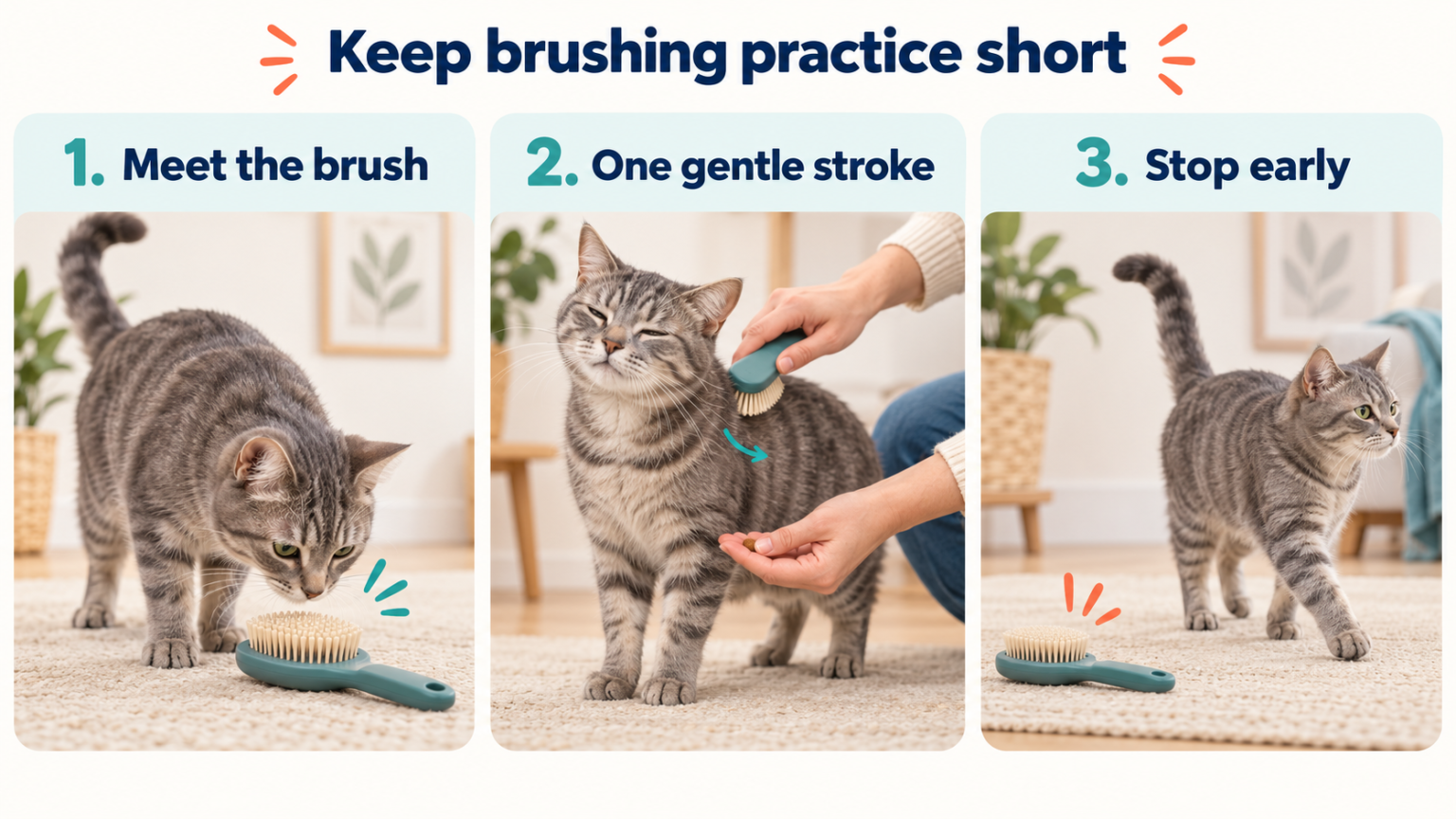
1. Let the brush be present
Place the brush nearby without moving it toward your cat. Reward a relaxed look or voluntary investigation. There is no need to push it toward their nose.
If the cat moves away or becomes tense, put it farther away next time. An early practice session can end here. You have not failed because no fur was brushed.
2. Practise a familiar touch
If your cat welcomes a normal hand stroke on the shoulder or upper back, offer one brief touch there, then reward. If even that is unwelcome, do not add the brush. Return to comfortable interaction and discuss persistent touch sensitivity with your vet.
Avoid beginning with the belly, armpits or an area your cat already protects. You can work on other coat areas later with suitable guidance.
3. Try one light stroke
With a suitable soft brush, make one short, gentle stroke in the direction the coat grows, in the area your cat accepted. Remove the brush, give the reward, and pause. Do not immediately follow with a full-body sweep.
For a specialised grooming tool, follow its own instructions rather than assuming every brush uses the same motion. If the stroke pulls or your cat shows discomfort, stop.
4. Add a little, then pause again
After repeated comfortable attempts, try another stroke with a pause between. Increase only one part of the task at a time: another stroke, a slightly longer stroke, or a nearby body area.
A cat who accepted shoulder brushing has not automatically agreed to having their hindquarters combed. Return to an easier step whenever needed. Some sessions will remain very short.
Stop before a warning becomes a bite
Watch the whole cat, not just the amount of hair on the brush. Blue Cross’s grooming advice lists tail movement, changes in ear position, widening pupils and attempts to move away as signs of discomfort.
Pause or end when you notice:
- A tail that begins twitching or swishing.
- Ears turning back or moving sharply.
- Tension, a quick head turn toward the brush, or an attempt to leave.
- Growling, hissing, swatting or biting.
You do not need to decide whether a bitten brush means play, frustration or discomfort before putting it away. Keep fingers clear and end the attempt. Do not supply a second brush to chew while you carry on.
Troubleshoot the next attempt
Keep a brief note of the tool, body area and point where the cat became uncomfortable. This makes the next change more deliberate.
| What happens | What to change next time |
|---|---|
| The cat leaves when the brush appears | Start with it farther away; do not attempt contact. |
| Hand strokes are welcome, but brush contact is not | Check the tool, pressure and coat for catching or sensitivity. |
| One stroke is accepted, several are not | Finish earlier and keep a pause after each stroke. |
| A previously comfortable area becomes sensitive | Stop brushing there and contact your vet. |
If necessary grooming remains difficult, ask your vet for a qualified feline behaviour professional. A cat with a frightening grooming history may need an individual plan.
What if there are already mats?
Do not use training time to pull through a mat. Do not cut one out with household scissors: skin can be caught in the cut.
VCA recommends professional care for severe or extensive tangles and veterinary attention when matting has irritated the skin. Tell the vet or groomer that your cat struggles with brushing so they can plan the care appropriately.
A rubber brush used for loose surface hair is not a substitute for dealing with a tightly matted coat. Keep ongoing coat care and the gradual introduction plan separate.
An optional brush to compare
The KONG Cat ZoomGroom, purple, is one flexible grooming tool to consider alongside a suitable soft brush or mitt. KONG’s product page identifies the cat version and gives gentle circular-motion brushing instructions.
Follow those instructions for that tool, and check it for damage before use. Put it away if your cat bites it; it is grooming equipment, not a chew toy. It is optional, and buying it does not guarantee that your cat will accept brushing.
The product card below contains affiliate links.

How often should you practise?
There is no required number of strokes or deadline. Choose brief opportunities when your cat is comfortable rather than chasing them for a daily target. End a successful attempt while it is still easy.
Actual coat maintenance depends on coat length and individual needs. Cats Protection’s grooming guide notes that long-haired cats need more frequent grooming than short-haired cats. Ask for help if the coat needs more care than your cat currently accepts.
For another everyday handling skill, see our cat carrier training guide. If you want a separate activity your cat can explore without handling, our beginner cat puzzle-feeder guide explains an easy first setup.
Printable checklist
Gentle cat brushing checklist
- Check for sore areas or tight mats before starting.
- Offer a single gentle stroke on a comfortable patch.
- Pause and let your cat choose whether to stay.
- Ask a groomer about mats and a veterinarian about pain or damaged skin.
- Write down the area and tool your cat accepted for next time.
Frequently asked questions
What if my cat dislikes even seeing the brush?
Start with the brush present at a comfortable distance. Keep the cat free to leave.
Can I brush through a tight mat?
Stop and ask a groomer how to handle it. Seek veterinary advice if skin is sore or touching it hurts.
Which part should I brush first?
Choose a tangle-free area where the cat accepts touch and try one light stroke.
How do I know when to stop?
Pause at early signs of discomfort or withdrawal instead of trying to finish the coat.
Sources and further reading
- Cats Protection: Grooming your cat
- Blue Cross: How to groom your cat
- FelineVMA: How to pet and handle cats
- FelineVMA: Cat training techniques for caregivers
- VCA Animal Hospitals: Grooming and coat care for your cat
- Cats Protection: Skin problems in cats
- Cats Protection: Elderly cats
- KONG: Cat ZoomGroom product and instructions
This guide is educational and does not replace advice from your veterinarian or a qualified feline behaviour professional.
Leave a Reply