
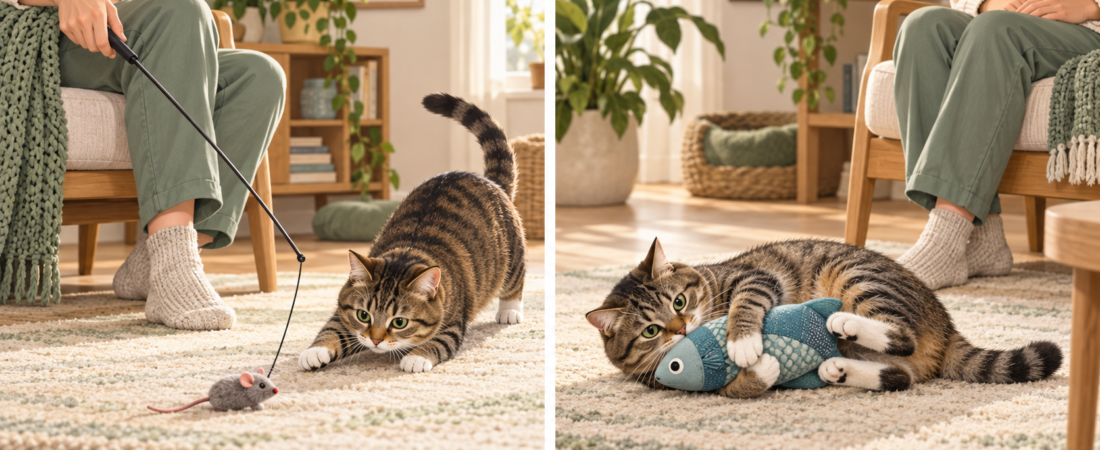
Keep the play target away from hands and feet. These AI-generated scenes illustrate toy placement; they are not photographs of a training session.
You pick up a toy, your cat pounces, and your fingers end up being the thing they grab. Changing the toy alone may not change the game if you still wiggle your hand beside it. Start by moving the play target away from your body and deciding what happens when teeth touch skin.
This guide covers bites during an active chasing or wrestling game. A bite during petting, when you reach into a hiding place, or alongside a sudden behavior change needs a different assessment. Do not assume every bite is playful.
Give the cat a target beyond your hands
Cats Protection recommends toys that keep play away from your body, including wand toys and larger kicker toys. Fingers and toes should stay out of the game, even with a small kitten. Let the cat catch the lure during play rather than keeping it forever out of reach.
- Choose a safe play area with enough room to move the lure away from your legs.
- Hold the wand by its handle. Put the lure on the floor away from your hands and feet.
- Move the lure within the cat’s comfortable reach, with pauses and chances to catch it.
- For wrestling play, offer a suitable plush kicker on the floor rather than holding it against your hand.
- End while the game is manageable. Check the toy for loose or damaged parts and put string or wand toys away after supervised play.
For example, if your cat keeps grabbing the hand holding a tiny mouse, put that toy down and use a wand that gives you more separation. You are changing the position of the target, not asking the cat to read a new rule while your fingers remain beside it.
Redirect before contact; pause after a bite
The San Francisco SPCA play-aggression guide makes a useful distinction: a toy can redirect an anticipated pounce, but immediately producing one after an attack may reinforce the sequence. Have the toy ready before the cat starts targeting you.
If teeth or claws contact your skin, stop the game and withdraw calmly when you can do so safely. Avoid jerking your hand around as another moving target, shouting or physically punishing the cat. Do not pick up an aroused cat to carry them into a punishment room.
Resume a separate toy game after the cat has settled. There is no need for a stopwatch or a dramatic reprimand. If you cannot disengage safely, protect yourself and get professional help; keeping your hand within reach is not a training exercise.
Make the household rule easy to follow
VCA’s kitten-biting guidance stresses consistency: one person encouraging hand wrestling can confuse a kitten whose other carers are trying to redirect it. Agree on toys for play and keep suitable ones easy to reach.
An adult can supervise children and demonstrate where to hold the handle. A visitor does not need a lecture: show them the toy and explain that hands stay out of the chase. If safe supervision is not possible, skip the interactive game.
Notice when hand-targeting happens. A short note such as “grabbed sleeve while I collected the toy” is more useful than “bad all evening.” Prepare the toy before that moment next time. Measure progress by fewer contacts and easier pauses, not by expecting a fixed number of bite-free days.
Keep other outlets available
Regular play and a choice of suitable activities can help meet your cat’s needs. For quiet food-searching practice, start with our easy first puzzle-feeder session. Our indoor cat enrichment ideas offer other options. A puzzle does not replace interactive play or a health assessment.
When to get help
Contact your veterinarian if an adult cat suddenly begins biting, the behavior escalates, the cat seems painful, or you are unsure what triggers it. Cats Protection advises a veterinary check for new play aggression in an adult cat, followed by qualified behavior support as appropriate.
A hand bite that breaks the skin also deserves prompt medical advice for the person bitten. The NHS bite guidance identifies hand bites as a reason to seek urgent advice; use your local medical service. Seek emergency help for a large or deep wound or bleeding you cannot stop.
The next game can be simpler: prepare the toy, keep its target away from your body and leave room for a calm finish. Consistent placement and pauses are practical changes you can make without turning play into a confrontation.
An optional kicker to compare
As an Amazon Associate, I earn from qualifying purchases.
The KONG Kickeroo Swirl, one toy in an assorted colour, is an option to compare if your cat enjoys holding and kicking a plush toy. KONG describes the Swirl as a long toy with crinkle sound and catnip inside. Cats respond differently; buying this toy does not guarantee an end to hand biting.
Place it on the floor away from your fingers during a planned play session. Supervise, inspect it regularly and put it away if damaged. Keep using the calm pauses and toy-placement steps above.
