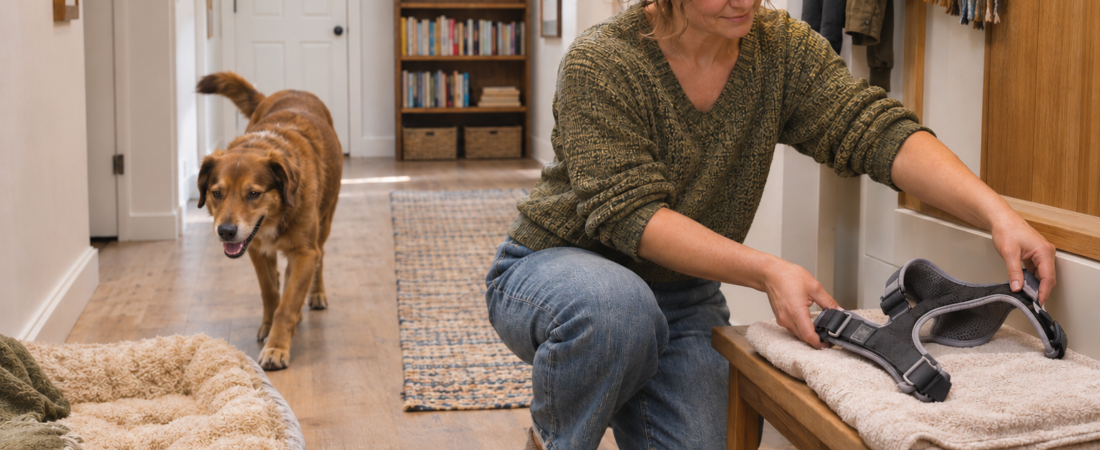
Mud on the straps is a cleaning job. A buckle that will not latch is a different problem. Before you wash a dog harness, check its condition and find the care instructions for that exact model.
Quick Answer
- Remove the harness indoors with your dog safely contained, then check straps, stitching and fasteners.
- Follow the exact model’s cleaning instructions. A fabric harness is not automatically machine washable.
- Use the permitted cleaner and washing method, rinse as directed, and allow the harness to dry completely before reuse.
- Stop using damaged equipment. Contact the manufacturer about repair or replacement, and your veterinarian about sore or irritated skin.
What You’ll Need
- The harness’s care label or manufacturer’s instructions for its model.
- A place to keep your dog safely indoors while the harness is off.
- The cleaning supplies specified by the manufacturer. These may include a basin, mild soap and a soft cloth or brush.
- A suitable place to dry the harness, following its instructions.
Ordinary dirt does not mean you need a new harness. First establish whether the one you have is intact and can be cleaned as directed.
1. Match the instructions to your harness
Look for the model name on its label, packaging or order record. Find the maker’s care page or manual and check that it covers the same product.
For example, Ruffwear’s harness-care instructions specify hand washing in warm water with mild soap, followed by thorough rinsing and air drying. The same page gives different instructions for boots. Read the harness section rather than applying another product’s instructions.
These instructions apply to the named products; they do not establish a washing method for every harness.
If the care label is missing
Send the manufacturer a photo and any model information you can find. Ask about the washing method, cleaner, drying method and care of the fasteners. Leave an unidentified harness out of the washing machine until you have an answer.
2. Remove and inspect it before cleaning
Bring your dog into a secure indoor space before taking the harness off. Let them settle away from your cleaning supplies.
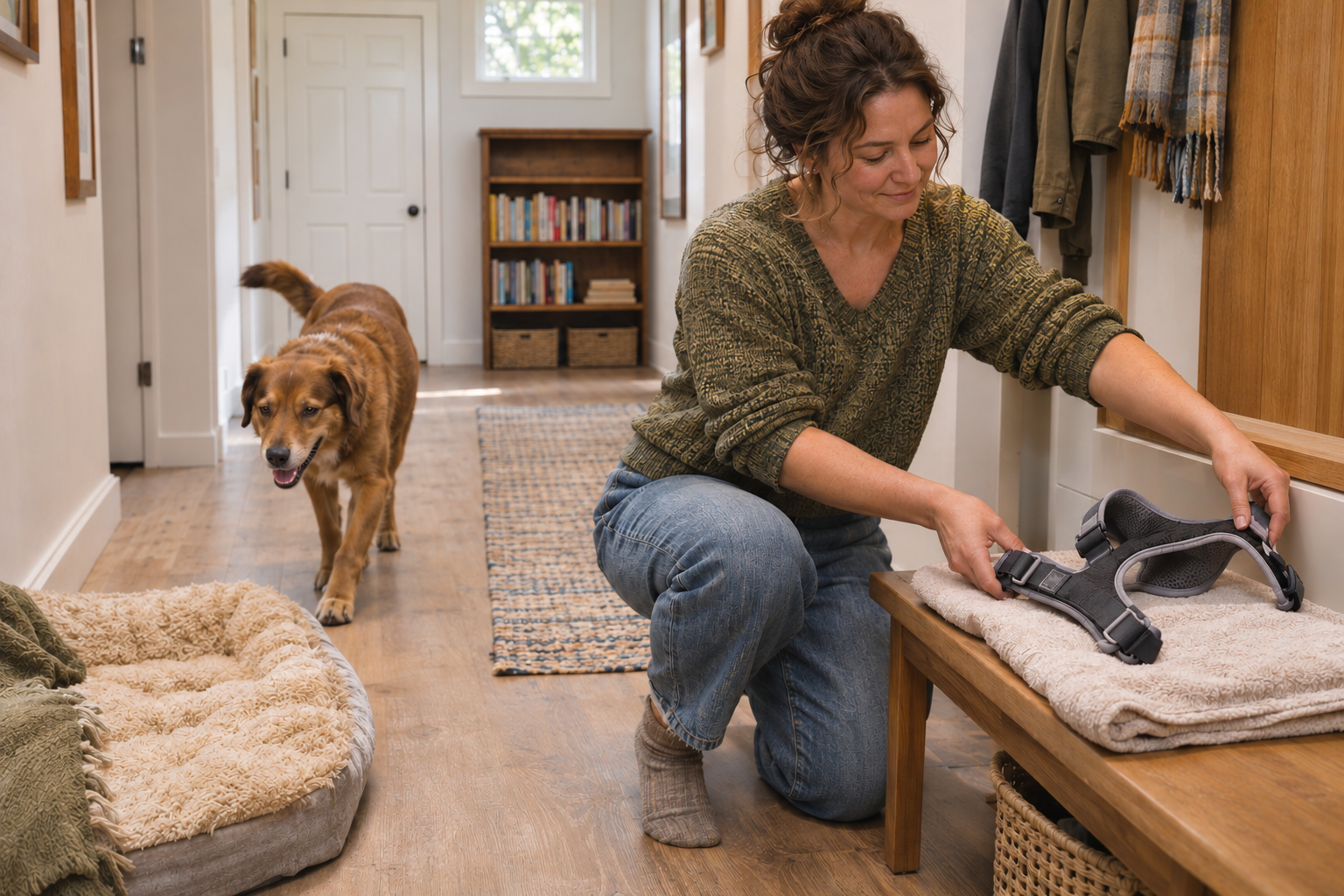
Check the webbing, stitching, attachment points and buckles. If structural straps or stitching are damaged, or a buckle will not latch reliably, stop using that harness and ask the manufacturer what to do. Cleaning cannot repair damage. Ray Allen’s equipment inspection guidance supports checking these parts before continued use.
Some products have manufacturer-supplied replacement parts, but do not assume yours does. Ruffwear’s parts guidance asks owners to identify the product and provide details of the damage.
TailSprig Living · Amazon Idea List
My recommendations if the harness needs replacing
If inspection shows damage and you need a replacement, my adjustable walking-harness collection offers several options to consider. Ordinary dirt alone is not a reason to buy another harness. Measure your dog and check the exact model’s sizing and fit instructions; a “medium” is not the same across brands. These are walking harnesses, not a recommendation for car restraint.
Affiliate link. As an Amazon Associate I earn from qualifying purchases.
3. Use only the permitted washing method
Remove loose debris as the instructions allow. For a model with the Ruffwear hand-wash instructions above, use warm water and mild soap, then rinse thoroughly. A soft brush or cloth can help with a dirty area.
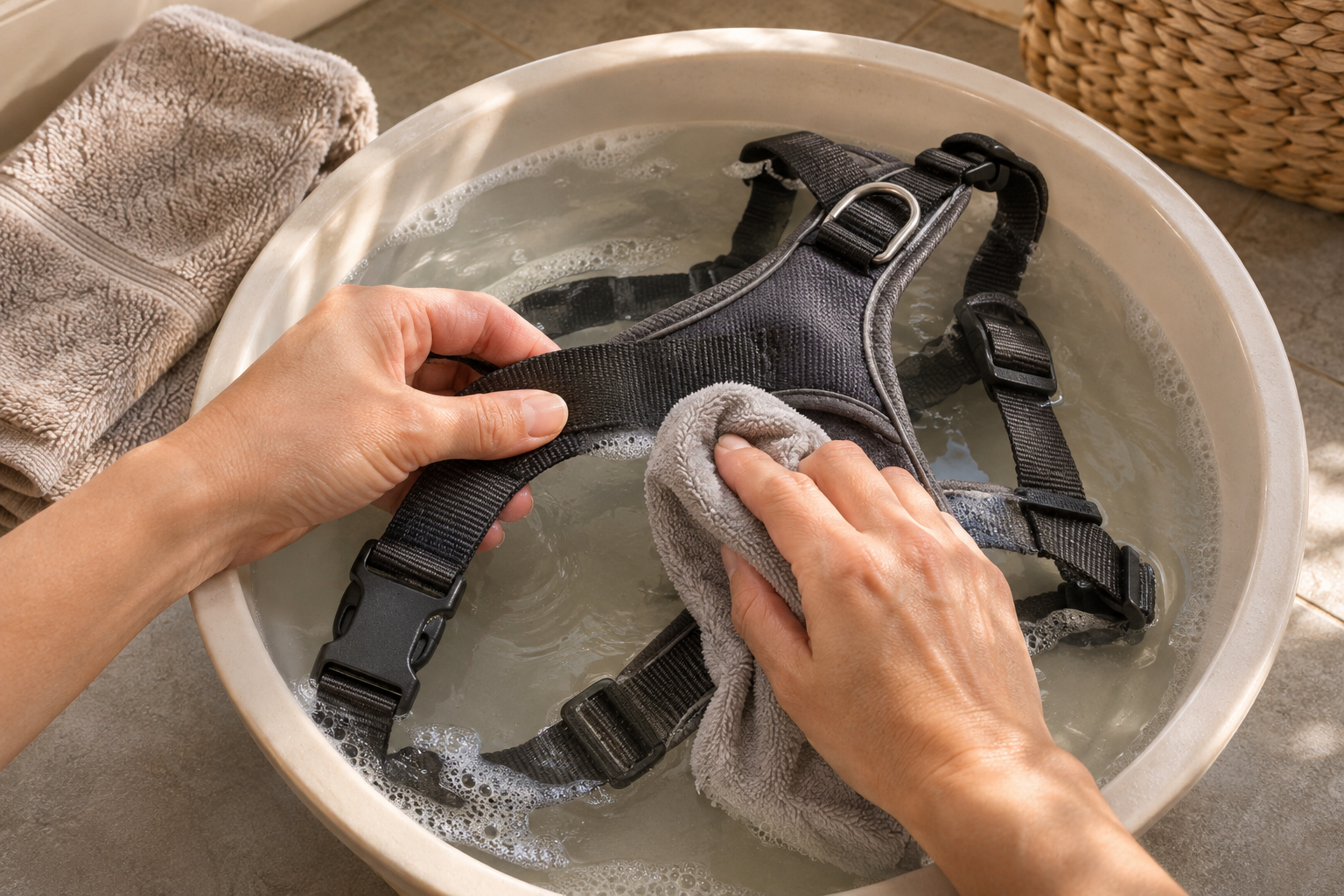
If your exact model permits a washing machine, follow its specified cycle, temperature and preparation instructions. Do not assume a laundry bag makes an otherwise unsuitable harness machine washable. Avoid adding a homemade cleaning mixture that the maker has not approved.
4. Finish drying before the next walk
Follow the drying instructions for the model. Leave enough time for padded areas and folds to dry. Check these areas as well as the surface before reuse.
If an odor remains, contact the manufacturer before switching to a stronger cleaner. This guide addresses ordinary dirt, not treatment of infectious contamination or a veterinary disinfection plan.
5. Recheck condition and fit
Before putting the dry harness back into service, check its fasteners and structural parts again. Confirm the adjustment and fit using the maker’s instructions and our dog harness fit guide.

When to contact your veterinarian
If you notice redness, sores, hair loss or repeated licking or scratching where the harness sits, arrange veterinary advice instead of assuming a wash will solve it. The USDA’s skin-disorder guide recommends veterinary assessment for signs of skin disease. Worsening redness, swelling, heat or oozing warrants prompt attention; Cornell’s hot-spot guidance identifies these as possible infection signs.
Printable Checklist
Download the one-page harness-cleaning checklist (PDF)
- ☐ Exact model and care instructions found.
- ☐ Dog safely indoors before harness removal.
- ☐ Straps, stitching, attachment points and buckles checked.
- ☐ Only the permitted washing method and cleaner used.
- ☐ Rinsing and drying completed as directed.
- ☐ Condition, fasteners and fit checked before reuse.
- ☐ Damaged equipment kept out of use; skin concerns referred to the vet.
FAQ
Can I put a dog harness in the washing machine?
Only when its manufacturer permits it for that exact model. Check the label even if another harness looks similar.
What cleaner should I use?
Use the cleaner specified by the manufacturer. If the instructions are unclear, ask before substituting a household cleaner or mixture.
Can I use a dryer to make it ready sooner?
Do not use a drying method that the care instructions do not allow. The Ruffwear harness instructions above call for air drying.
How often should I wash it?
Check it after use and follow the maker’s maintenance guidance. Ordinary dirt, the material and the instructions matter more than a universal weekly schedule.
Should I replace a dirty or damaged harness?
Ordinary dirt may only require approved cleaning. Structural damage or an unreliable fastener calls for taking it out of use and asking the manufacturer about repair or replacement.
Leave a Reply