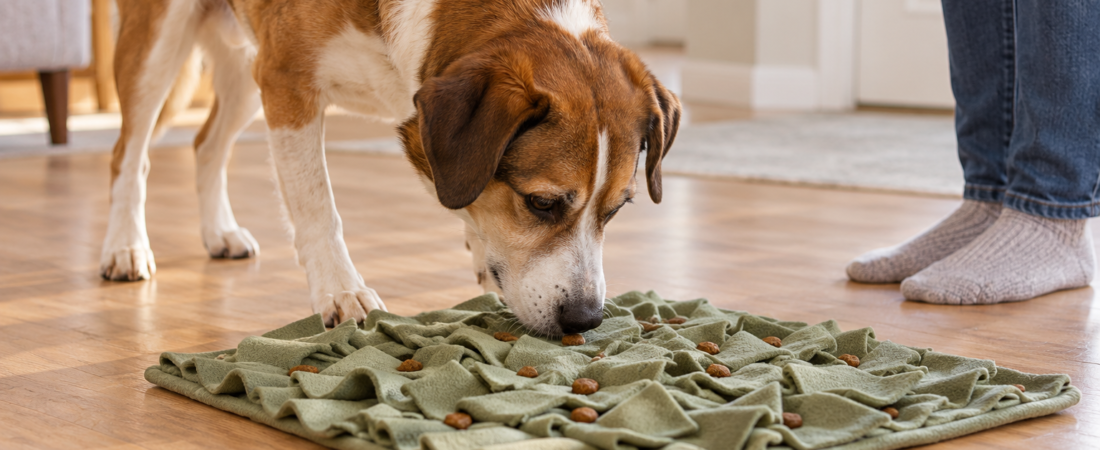
AI illustration of a supervised first session with a generic snuffle mat.
A first snuffle-mat search can be as simple as spotting two pieces of kibble on the surface. Give your dog space to sniff and watch whether they search the folds or tug at the fabric.
Quick Answer
- Let your dog inspect the empty mat on a stable floor.
- Start with a few visible pieces of their usual dry food. Make the next search harder only if the first was comfortable.
- Supervise the whole game. End it if your dog pulls at or eats the material.
- Collect the mat when your dog moves away and check the folds for food or damage.
What You’ll Need
- A clean, intact fabric mat and a stable surface with room to step away.
- A few pieces of your dog’s usual suitable dry food from their daily allowance.
- A quiet space away from other pets and children, with someone available to supervise.
TailSprig Living · Amazon Idea List
My recommendations for a first food search
For a search among fabric folds, the collection includes the green AWOOF snuffle mat. Start with visible pieces of your dog’s usual dry food. If your dog tears fabric, put the mat away and choose an activity suited to their chewing habits. A flat lick mat in the same collection offers a different supervised feeding activity.
Affiliate link. As an Amazon Associate I earn from qualifying purchases.
See dog enrichment toys on AmazonSet up an easy first try
Choose a quiet space where another pet cannot walk over and join in. Prepare the food before your dog reaches the mat, using a closed door or suitable barrier if needed. Keep children out of the feeding space.
Check the mat before loading it. Look for loose strands, damaged seams, exposed backing or pieces that could come away. Use a clean, dry mat on a stable surface, with enough room for your dog to move away. Stop using damaged material.
Set aside a small amount of food from the day’s allowance. Your dog’s usual suitable dry food keeps this first attempt simple; follow their existing dietary restrictions. Ask your vet before adding different treats if your dog has special dietary needs.
If your dog routinely tears up or swallows fabric, choose a different activity. Supervision cannot make every material suitable for every dog. The Dogs Trust enrichment guide recommends considering the individual dog, the materials and how they respond.
Show your dog how the game works
- Let them investigate the empty mat. Put it down and give your dog space. They can sniff it, look at it or step away. Avoid pushing their nose into the fabric or placing their paws on it. There is no need to get a particular reaction on the first attempt.
- Put the first pieces in plain sight. Place a few dry pieces on top of an open area. Let your dog see where the food went, then stand nearby while they collect it. Keep these first finds easy enough that they can eat without pulling at the fabric. Blue Cross’s snuffle-mat introduction starts with visible dry treats and moves to deeper hiding once the dog associates the mat with food.
- Hide just a little more. When your dog has finished and moved away, prepare another small round. Tuck a few pieces just below the surface while leaving some easy ones visible. Change one part of the task at a time rather than filling every fold. Watch for comfortable searching: your dog returns to the area, moves their nose among the strands and finds the food. If they walk away or start getting frustrated, show the food more clearly or finish the session.
- Stay for the whole session. Stay close enough to notice chewing, tugging, loose pieces or other pets approaching. A mat with food in it needs your attention throughout use. If you use a cue such as “find it,” say it as you offer the easy search. A cue is optional; your dog does not need a trained routine before trying a few visible pieces.
- Finish and put it away. Once the small portion is finished, let your dog move away before collecting the mat. Check for leftover food and damage, then store it out of reach. Do not leave it available as something to chew after the search is over. The AKC’s guide to using snuffle mats also advises supervision, separating pets, tracking food amounts and picking the mat up after use.
If your dog flips it or chews the fabric
Flipping the mat may release the food quickly. That does not mean you need a harder puzzle. Pause, prepare a smaller easy area and see whether your dog chooses to search. If they keep picking it up, a different supervised activity may suit them better.
Chewing needs a different response: stop the session. Avoid tugging the mat against your dog or turning removal into a chase. Collect it when your dog has moved away safely, and inspect it before considering another attempt. A dog that keeps pulling off fabric should not continue with that mat.
If you think your dog has swallowed fabric or backing, contact your vet immediately. Do not wait for symptoms or try to make them vomit unless your vet tells you to. PDSA’s guidance on swallowed objects explains when to seek help.
If your dog freezes, stiffens, growls or guards the food, give them space and keep other people and pets away. Do not reach in to take the mat or punish the warning. Ask your vet and a qualified behaviour professional for help with a safe plan. Dogs Trust’s resource-guarding guidance explains why taking guarded items can increase the problem.
Using the Meadow mat you already have
If you already own the Pet Parents Forager Mat in the Meadow design, check the patches before adding food. The maker’s Meadow and Forest guide describes Meadow’s blue visual areas and Forest’s more concealed design. You can put the first food pieces visibly on top of the Meadow areas.
Before each session, check that the mat lies flat and that its fabric is intact. Stay with your dog. If your dog starts chewing the fabric, end the session and put the mat away. We have not tested this product.
The original product card below is an affiliate link. TailSprig may earn a commission if you buy through it.

This is the Forager Mat in the Meadow design. The Forager Bowl is a separate product. If you already have a suitable mat in good condition, use the same easy introduction with that.
Clean it for the next session
Remove leftover food and check the folds, backing and seams after use. Follow the supplied care label for your exact model, then let the mat dry before loading fresh food.
If you already use this Forager Mat, Pet Parents’ washing instructions say to secure the strap at the back, wash gently in cold water and avoid bleach or fabric softener. The maker includes air or flat drying as an option. Check the current label before washing or using a dryer; other snuffle mats can have different care instructions.
You can explore other dog-enrichment activities or a separate introduction to a dog lick mat. Pick an activity that fits your dog and their usual diet.
Printable first snuffle-mat session checklist
- Check the seams, backing and fabric before adding food.
- Keep other pets and children out of the feeding space.
- Place a few pieces of familiar dry food on top where your dog can see them.
- Watch for comfortable searching and stop if teeth pull at fabric.
- When your dog leaves, remove leftover food and inspect the mat before storing it.
Download the one-page first snuffle-mat session checklist (PDF)
Frequently asked questions
Does my dog need to eat a whole meal from it?
Start with a few pieces and serve the rest in the usual way. For a dog on a prescribed diet, follow the existing feeding plan.
How long should the first search last?
It can end after a few easy finds. Watch your dog’s behavior. If they walk away or become frustrated, finish the session.
What if my dog ignores the mat?
Make several pieces visible and give them space. If they still choose to leave, put it away. Offer their meal as usual.
Can I leave the loaded mat while I go out?
Put it away before you leave. Supervision lets you see chewing, torn fabric or another pet approaching.
What if fabric may have been swallowed?
Contact your veterinarian immediately. Keep the damaged mat or a photo handy and follow their instructions.
Leave a Reply