
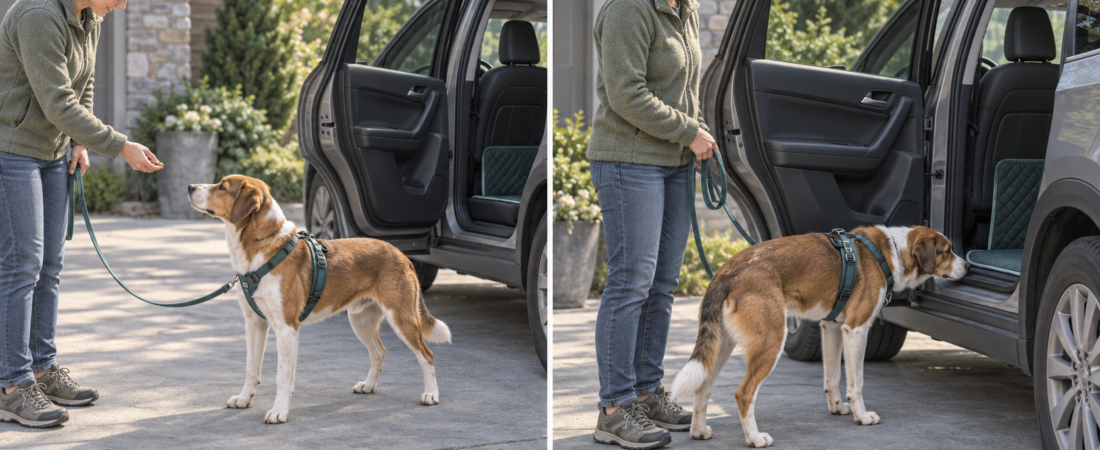
A comfortable approach and doorway investigation can be separate steps. These AI-generated scenes are an example, not photographs or a promised training outcome.
Your dog walks beside the car, then plants their feet when the door opens. A treat on the seat does not solve it. Before asking for a bigger jump or repeating the invitation, work out which part is difficult: approaching, stepping up, being confined or riding.
Check what changed before you train
If reluctance is new, or your dog seems sore, stiff or unable to manage the step, ask your veterinarian about physical access and discomfort. Do not treat an apparent ability to jump elsewhere as proof that this entry is comfortable. Discuss safe assistance if the height or footing is unsuitable.
VCA’s travel guidance explains that nausea and anxiety can overlap. Drooling, vomiting or distress during rides warrants veterinary advice. A dog may anticipate feeling sick before the car moves. Treats and repetition cannot replace care for that problem.
Write down where hesitation begins and what happened on recent trips. “Stops when the door opens” and “gets in willingly but drools once moving” describe different starting points. Share those observations with your vet or a qualified reward-based behavior professional; they are not diagnoses.
Prepare a short parked-car session
Start in a quiet, cool, safe place away from passing traffic, with the vehicle securely parked and engine off. Keep your dog under safe control with a comfortable harness and slack leash. Stay with them throughout. Dogs Trust advises never leaving a dog alone in a car.
Clear the entry area and check footing. Do not attach the leash to the vehicle or use it to pull the dog in. The open door should not swing onto the dog, and there must be space to move away. On a hot day, choose another practice setup rather than a warming car.
Optional reward pouch for parked practice
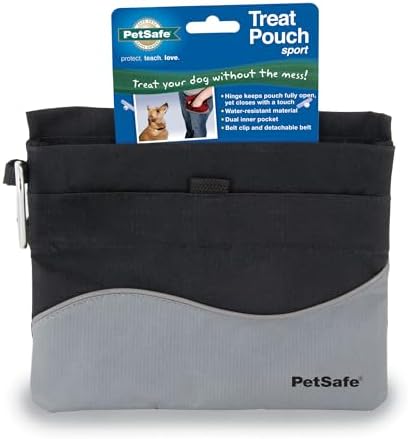
An optional treat pouch can keep familiar rewards within reach while you practise beside the parked car. The PetSafe Treat Pouch Sport in Standard Black has a hinged opening and divided pocket. A pocket you already use may be enough; buying a pouch will not resolve pain, travel sickness or fear. Reward comfortable choices rather than using food to pull your dog farther inside.
As an Amazon Associate, I earn from qualifying purchases.
Begin where your dog can remain comfortable
Blue Cross recommends gradual, short introductions, starting around the stationary car and rewarding calm behavior before progressing to sitting inside with the engine off. Use the following small steps as an example, adapting them to your dog:
- Stand at a distance where your dog can notice the car without becoming tense. Offer a small reward there.
- If the dog chooses to approach comfortably, reward that approach. A look or sniff can be enough for this session.
- Introduce the open doorway as a separate step. Reward investigation without requiring a jump or all four paws inside.
- Only work on entry when access is physically suitable and the dog remains comfortable. Let them leave calmly under your control.
- Finish before distress grows. At the next session, start with a step the dog already finds easy.
A dog who can approach the car but backs away when the door opens does not need treats placed farther into the seat. Make door movement the smaller practice task. If you cannot keep that task comfortable, stop and seek help rather than trying to lure through the reaction.
Watch the whole dog, not just the treat
Blue Cross lists excessive panting, lip licking, pacing, a tucked tail, ears held back and vocalizing among signs to monitor. These signs need context; one yawn does not diagnose fear. A growing cluster, freezing, repeated retreat or inability to settle is reason to end or simplify practice.
Eating a treat is not the only test of comfort. Watch movement, posture and the ability to disengage. If your dog becomes distressed, stop; return later to an easier version. Persistent fear calls for professional support. Dogs Trust specifically warns against forcing frightened dogs to travel.
Entry is only one part of travel
Closing the door, wearing a travel restraint, starting the engine and movement can each change the experience. Introduce them separately at a manageable level. For actual travel, use a suitable correctly installed crate or vehicle restraint system and follow its instructions. An ordinary walking harness fit check is not proof of crash protection.
Our quiet settle-on-a-mat practice may provide a familiar starting skill. A doorway wait can help with controlled exits, but neither makes a dog ready for a journey.
If essential travel cannot wait, call your veterinary team for a safe transport plan. Once parked practice, restraint and engine sound are comfortable, build toward short, gentle journeys. There is no universal number of sessions. The useful next step is the smallest one your dog can manage safely.