
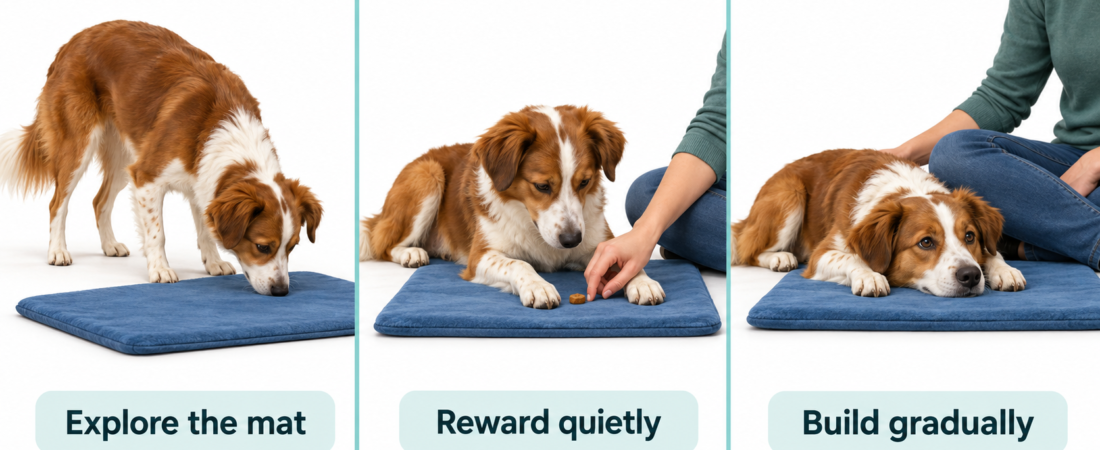
Your dog lies down on the mat, but their eyes stay fixed on the treat pouch. When you reach for it, they spring up. Learning where to lie and feeling comfortable enough to rest are two separate skills.
Quick Answer
- Start with a familiar, steady mat in a quiet room. Leave room for your dog to walk away.
- Reward interest in the mat first. A look, a sniff or a paw on the edge gives you somewhere to begin.
- Place rewards quietly on the mat. Watch for your dog shifting into a comfortable position while you sit nearby.
- Add a little time or one small distraction only when the current setup feels easy.
What You’ll Need
- A blanket or mat that stays still underfoot and gives your dog room to stretch out.
- A quiet spot beside your chair, away from doors and passing feet.
- A few small pieces of familiar food your dog can comfortably eat. Have them ready before you sit down.
TailSprig Living · Amazon Idea List
My recommendations for mat-training rewards
Set a few familiar treats within reach before mat practice. A pocket works, or you can use a pouch you can open quietly. If your dog watches the pouch, keep it out of sight and place the next reward calmly on the mat. The collection includes treat pouches alongside fixed leads.
Affiliate link. As an Amazon Associate I earn from qualifying purchases.
See the treat-pouch options on AmazonHow to practice settling on a mat
- Choose a quiet moment. Take care of ordinary needs such as a toilet break and usual activity first. Set the mat near your chair and sit down. Let your dog decide whether to approach.
- Reward an easy first choice. When your dog investigates, quietly place a piece of food on the mat. Over later attempts, look for a paw stepping onto it and eventually a comfortable lie-down. If your dog already knows a gentle down cue, you can use it. Avoid pushing them into position. See the Battersea settle guide.
- Notice a change in how your dog rests. A shift onto one hip or a head resting down can be worth rewarding. Set a treat within easy reach and let your hand go still again. Check the rest of their body, too. A dog holding a down while tracking every hand movement may still be waiting for food. See Dogs Trust settle training and VCA teaching settle and calm.
- Try one small change. When your dog rests comfortably while you sit, pause a little longer between rewards. Another day, try a small movement such as shifting in your chair. If your dog gets up, let them leave. Next time, return to the last easy version before adding visitors or a busier location.
Keep practice voluntary. The RSPCA recommends reward-based training. If you are trying to understand why your dog shadows you at home, our guide to dogs that follow their owners covers that separate question. For activities to enjoy between rest periods, try these dog enrichment ideas.
When to pause and get help
Give your dog space if they stay tense or frightened. Persistent distress calls for individual help from a qualified reward-based behavior professional. Sudden restlessness or signs that lying down hurts warrant veterinary advice. If your dog tears the mat, put it away. Contact your veterinarian promptly if you think they swallowed material.
Using a portable bed you already own
The Chuckit! product card below is an affiliate link. We may earn a commission if you buy through it.
A familiar blanket is enough to begin. If you already use a Chuckit! Travel Pillow Bed, check that your dog can stretch out comfortably and that the bed stays steady on your floor. Petmate describes this model as washable and water-resistant, not waterproof. Supervise use and stop if your dog damages or swallows material. We have not personally tested this product; it does not treat anxiety.

Printable mat-practice checklist
- Clear the walking route around the mat and check that the mat stays put.
- Set the rewards within reach before inviting the dog over.
- Let the dog investigate or walk away freely.
- Note one comfortable choice, such as resting a hip or lowering the head.
- Write down what happened just before the dog got up and one easier setup to try next time.
Frequently asked questions
Does my dog have to lie down the first time?
A sniff or a step onto the mat is a useful first session. Let your dog become familiar with the surface before expecting them to lie there.
What if my dog watches the pouch the whole time?
Keep the pouch out of sight and try a familiar reward that creates less excitement. Quietly place it on the mat. End the session if anticipation keeps rising.
My dog gets up when I stand. Where do I restart?
Try the same chair and mat with a smaller movement. Shift your weight, then pause. Record the movement your dog could rest through before trying to stand again.
Can I use the mat when guests arrive?
Start well away from the doorway after quiet practice is familiar. Give your dog an undisturbed route out. If a visit is already overwhelming, offer your dog their usual quiet space and practice another day.
Will mat training help my dog tolerate being left alone?
This routine teaches resting while you are present. If your dog becomes distressed when left alone, speak to your veterinarian or a qualified behavior professional about a plan tailored to them.
AI illustration of mat training.
Leave a Reply