
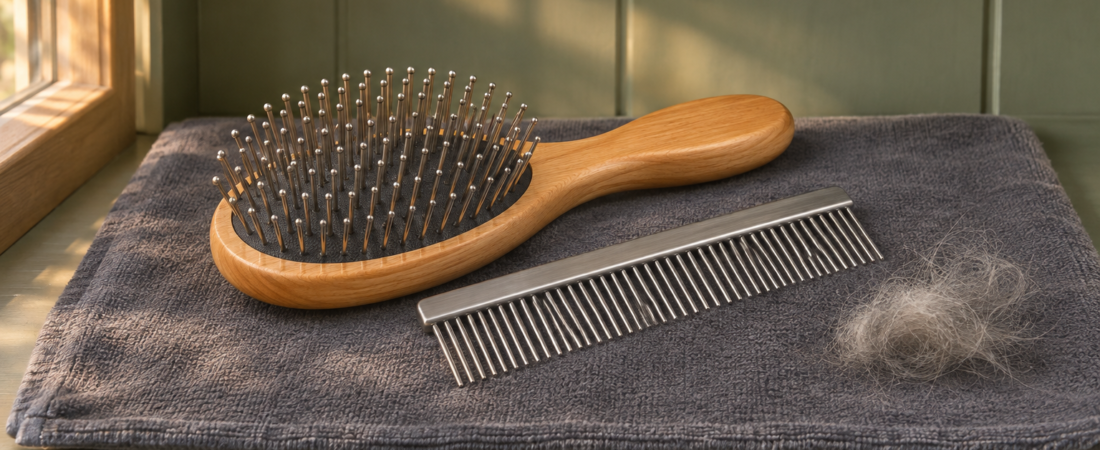
After a brushing session, a slicker can hold a whole layer of fur. Clear it away before you put the brush back. The useful question is how much moisture your particular tool can handle. A solid metal comb and a brush with a cushioned pin bed may need different care. The featured image is AI-generated.
Quick Answer
- Lift out loose hair after each brushing session. On a self-cleaning brush, use the release mechanism as directed.
- Check the maker’s care instructions before washing. Keep water out of a brush pad or mechanism unless the maker explicitly allows immersion.
- Dry the tool completely before putting it away. Set aside anything with loose, sharp or badly bent pins.
- If your dog has a suspected skin infection, keep that brush separate and ask your veterinarian how to handle it before you use it again.
What You’ll Need
Set out a waste bin, a clean cloth, a dry towel and the instructions for your brush or comb. A small soft cleaning brush can help reach the gaps if the manufacturer recommends one. Clean at a utility surface away from food preparation, with your dog out of the work area. You can usually begin by removing fur with what you already have.
TailSprig Living · Amazon Idea List
My recommendations for replacing a worn grooming tool
If the pins are damaged or the cushion is coming loose, compare a replacement suited to your dog’s coat. My Poodle Coat Care Between Grooms collection includes slickers, a pin brush and a metal grooming comb for curly-coat routines. A groomer can help you choose if you are unsure about the pin length or tool style.
Affiliate link. As an Amazon Associate I earn from qualifying purchases.
See brushes and combs in my poodle coat-care collection1. Lift off loose hair
Work over the bin or a towel. Lift the fur from the outside of the brush head, keeping your fingers clear of the wire points. On a fixed-pin brush, try the small soft cleaning brush your manufacturer recommends rather than pulling hard against a tangled clump. If a pin moves with the clump, stop and inspect the brush.
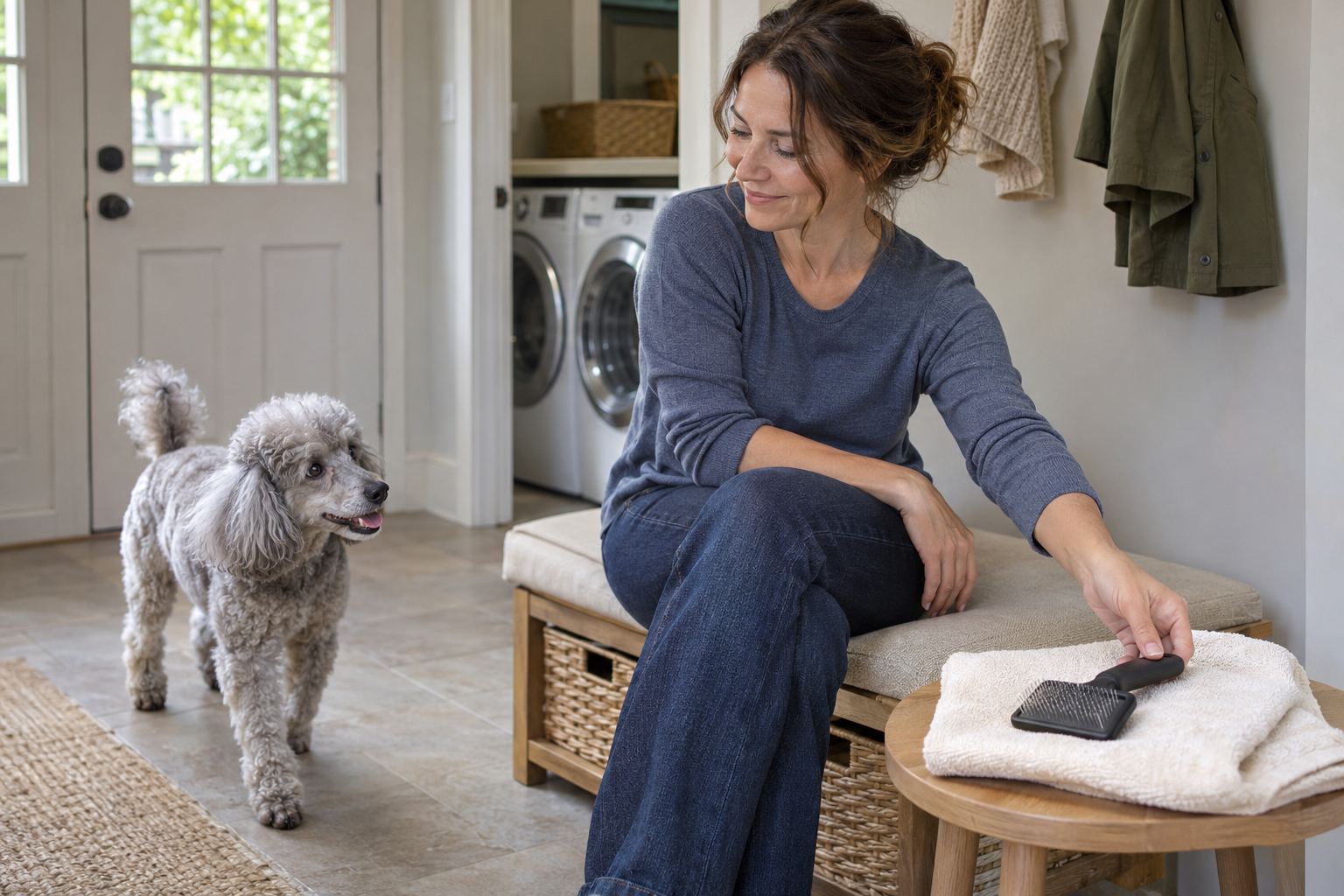
On a self-cleaning slicker, check which part moves when you press the button. On Safari’s self-cleaning model, the pins retract so you can lift away the layer of hair. Check your own model before you decide how to wash it.
2. Match the cleaning method to the tool
Cushioned slickers and pin brushes
Wipe away buildup with the cloth or cleaning brush allowed by the maker. Chris Christensen’s tool-care guide cautions against soaking the brush pad. If the care instructions allow a damp cloth, keep moisture out of the seams and cushion. If you cannot find instructions for your model, start with dry removal and check with the maker before washing.
Metal combs
A cloth can reach the flat sides of the comb. Use the maker’s recommended small brush or cloth to work between teeth. If the directions allow washing, follow them and remove any residue before drying. Check special coatings and finishes before letting a comb sit in water.
3. Dry and inspect before storing
Wipe away surface moisture and follow the maker’s drying directions. Leave air around the brush head and comb until they are fully dry. Check the cushion, seams and gaps beside the teeth before placing the tools in a drawer or bag.
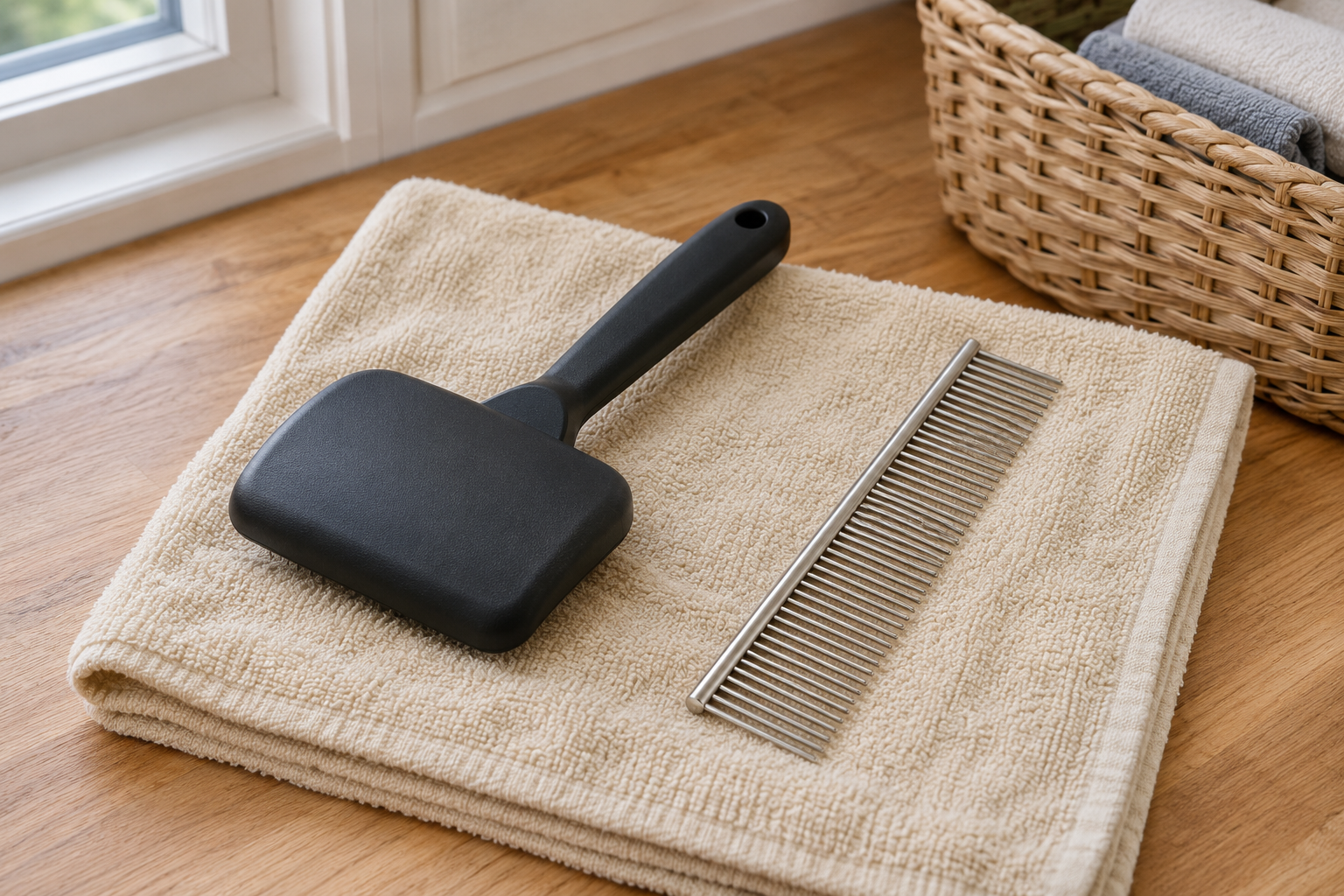
Look for bent or loose pins, rough teeth, a shifting pad or corrosion. Set a damaged tool aside. A groomer can help find a suitable replacement or work through tight mats. If your dog has irritated skin, a wound or pain during brushing, stop grooming that area and call your veterinarian.
When the brush has been used on a dog with skin problems
Keep the tool separate from other pets’ grooming supplies and ask your veterinarian what cleaning or disinfection is appropriate for the suspected condition and tool. The CDC’s guide to cleaning pet supplies explains the difference between cleaning and disinfection and when the label calls for pre-cleaning. Keep pets out of the cleaning area and follow the directions for any product your vet advises you to use.
For guidance on the brushing session itself, see how to brush a poodle.
Printable Checklist
- ☐ Lift out loose hair without bending the pins.
- ☐ Check the maker’s directions before adding water.
- ☐ Remove residue using the method allowed for this tool.
- ☐ Dry completely and check for rough, loose or damaged parts.
- ☐ Set aside a brush used on a dog with a suspected skin infection and ask your vet before reuse.
Open the one-page dog brush and comb care checklist
FAQ
How often should I clean my dog’s brush?
Remove loose hair after each use. Clean the pins or teeth more thoroughly when residue collects and the maker’s instructions say how.
Can I soak a self-cleaning slicker brush?
Check its instructions first. The button helps remove fur. The moving parts may need a different kind of care from a solid comb.
Can I use the same method for a slicker and a metal comb?
Check each tool separately. A metal comb may tolerate washing that a cushioned brush does not. A delicate comb finish may also need special care.
How can I tell when the brush needs replacing?
Look for pins that move in the pad, sharp edges, a cracked handle or a cushion that lifts away from the brush head. Set the brush aside if you see damage.
What if my dog keeps pulling away during brushing?
Stop and check whether the tool is damaged or caught in a tangle. Ask a groomer about technique or mat removal and ask your veterinarian if your dog seems painful or the skin looks irritated.
Leave a Reply