
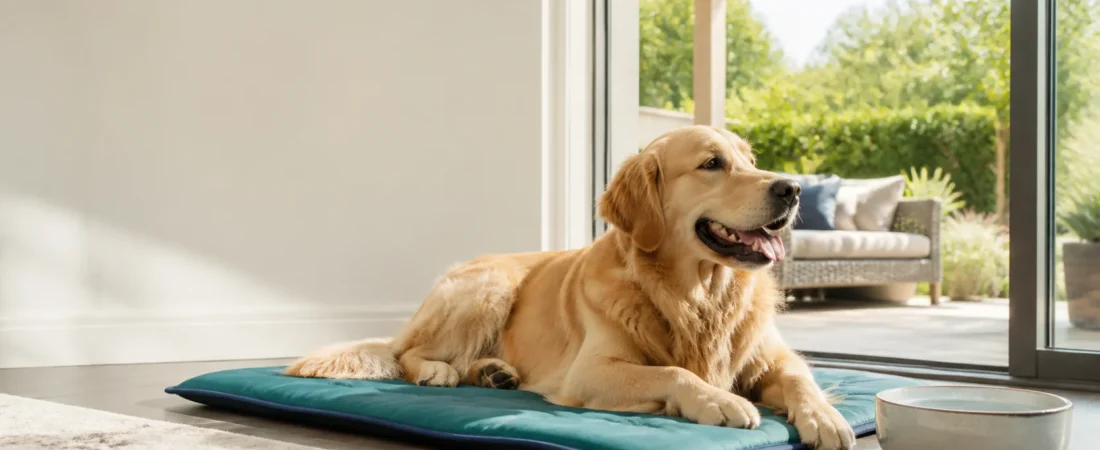
If you are wondering how to keep your dog cool in summer, start with shade, fresh water, cooler activity times and close observation rather than relying on a single product.
Some links below are affiliate links. As an Amazon Associate, TailSprig Living may earn from qualifying purchases, at no extra cost to you.
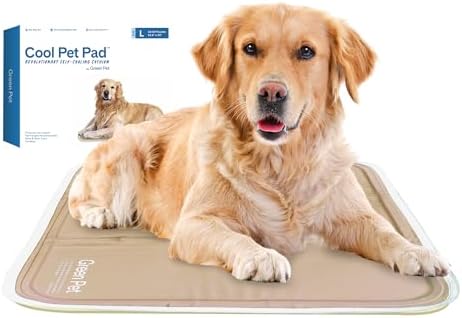
Hot weather changes the rules of an ordinary dog day. A familiar afternoon walk may become risky, a sunny yard may have no truly cool resting place, and a parked car can become dangerous within minutes. Dogs do not cool themselves the way people do; they rely heavily on panting and have only limited sweating through their paw pads.
The good news is that most summer comfort comes from simple management: move activity to cooler hours, provide water and shade, create a cool indoor resting area, and know what early heat stress looks like.
This guide is for everyday prevention. Suspected heatstroke is an emergency—move the dog to a cooler place, begin appropriate cooling and contact a veterinarian immediately.
Quick answer: Keep your dog indoors during the hottest part of the day, offer fresh water in several places, walk early or late, avoid hot pavement, and never leave a dog in a parked vehicle—even with cracked windows.
Why dogs overheat faster than people expect
Humans release heat by sweating over much of the body. Dogs mainly cool through panting, which moves air over moist surfaces in the mouth and airways. That system becomes less effective in high humidity, during intense exercise and in dogs with breathing limitations.
Flat-faced breeds, puppies, seniors, overweight dogs and dogs with heart or respiratory conditions may struggle sooner. Thick-coated and dark-coated dogs also require careful monitoring, though shaving a double coat is not a safe shortcut. A healthy coat can help insulate the body, and improper shaving may remove protection and damage regrowth.
1. Change the walk, not just the pace
Move longer walks to early morning or later evening when the sun and pavement are cooler. Shorten the route, add sniff breaks in shade and bring water. A slow exploratory walk can provide useful mental activity without the heat load of running or repeated ball chasing.
Check pavement with the back of your hand for several seconds. If it feels uncomfortably hot to you, choose grass, shade or another time. Paw protection can help in some settings, but boots also need correct fit and gradual training and do not prevent the rest of the body from overheating.
2. Create a genuinely cool indoor zone
Choose the coolest room in the home and block direct afternoon sun with curtains or shades. Use air conditioning when available. A fan can improve air movement, but because dogs do not sweat across their skin like people, a fan alone may not provide enough cooling in severe heat.
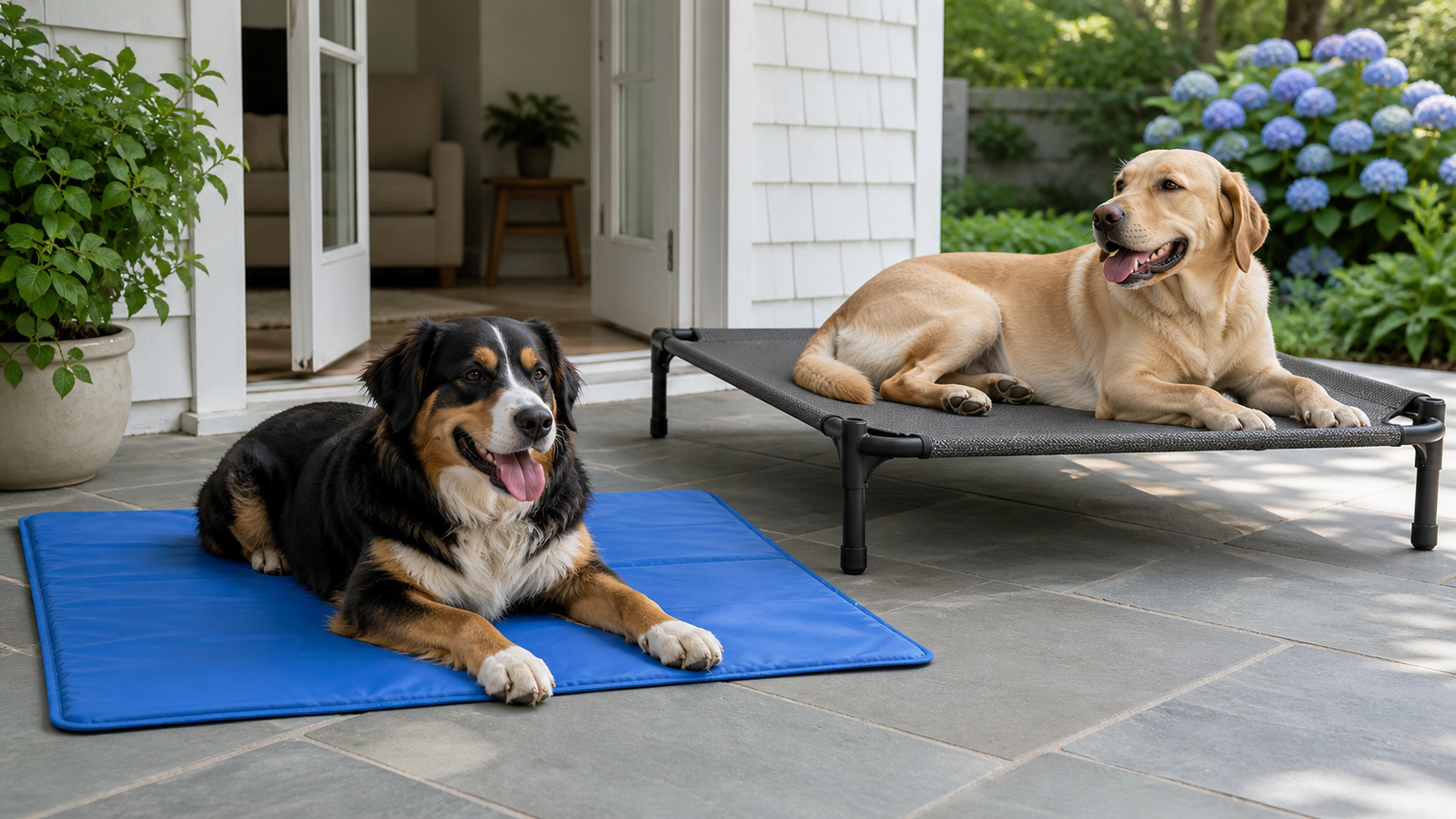
Place the dog’s bed on a cool, dry surface away from hot windows. Offer more than one resting option: a normal bed, a tile floor and a cooling mat used according to its instructions. Let the dog choose.
3. Make water easy to reach
Provide fresh water throughout the day and take water on every warm-weather outing. In a multi-level home, place bowls on more than one floor. Wash bowls daily and position outdoor water in shade so it does not become hot.
Do not force a distressed dog to drink large amounts. If you suspect heatstroke, contact a veterinarian while beginning safe cooling; veterinary guidance matters more than a home remedy.
4. Add shade that actually moves with the sun
A spot that is shady at 9 a.m. may be fully exposed at noon. Check the yard at different times and create access to a covered, ventilated area. A doghouse can trap heat and should not be treated as reliable summer shade.
Outdoor time should remain supervised and limited in very hot weather. Shade and water reduce risk but do not make extreme heat safe.
5. Use cooling mats and vests correctly
A pressure-activated cooling mat can offer a cooler surface indoors or in shade. Choose a size that allows the dog to lie naturally and inspect the mat for leaks or chewing damage. Some dogs avoid the unfamiliar feel; introduce it beside their regular bed rather than forcing them onto it.
Evaporative cooling vests are soaked and wrung out before use. They work best with airflow and must be rewetted as directed. Check the dog’s skin and body temperature regularly; a warm, dried-out vest can become uncomfortable. No product replaces water, shade and reduced activity.
6. Offer calm activities in a cool setting
You can freeze a dog-safe food toy containing part of the normal meal, offer chilled water or set up supervised play with a shallow splash pool for a dog who enjoys water. Keep the pool in shade, use a non-slip area and empty it after use.
Choose cooling support for the setting
Compare the resting area, fit and use instructions. A mat or raised cot cannot make an overheated environment safe.
The Green Pet Shop Cool Pet Pad
Check the current product size and manufacturer use instructions. Supervise dogs who chew and remove damaged pads.
View the existing Cool Pet Pad product on Amazon
Bedsure Elevated Cooling Dog Bed
Check the exact dimensions, load limit, assembly and stable placement. The frame and fabric are not indestructible.
View the existing Bedsure elevated bed on Amazon
Prices and availability can change. Verify the exact current variant and instructions before ordering.
Suspected heatstroke needs immediate water cooling and veterinary care. Do not wait for a mat, toy or preferred water temperature. Royal Veterinary College research advises cooling first, then transporting; use water cooler than the dog and combine it with airflow while arranging urgent care. Cold-water immersion can be effective for healthy, conscious dogs; spraying or pouring water on the body with airflow is an option for dogs who should not be immersed. Keep the head and airways clear. RVC: How to Cool Hot Dogs.
7. Adjust indoor enrichment on no-walk days
Skipping a hot afternoon walk does not have to mean boredom. Use a snuffle mat, a simple food puzzle, short training sessions, hide-and-seek or a cardboard search box under supervision. Mental work can take the edge off without raising body temperature as quickly as hard exercise.
Keep sessions calm. Fast indoor fetch in a warm room can still overheat a dog.
8. Groom for airflow without shaving the coat
Regular brushing removes loose undercoat and mats that can interfere with normal airflow. Use tools suited to the coat type and stop if the skin becomes irritated.
Before clipping or shaving a double-coated breed, speak with a veterinarian or experienced groomer. The AKC notes that the coat helps regulate temperature and that shaving may increase heatstroke risk and cause coat damage.
9. Plan car trips carefully
Never leave a dog in a parked vehicle on a warm day. Cracked windows do not make it safe. If the destination does not allow dogs inside, leave the dog at home with reliable cooling or arrange appropriate care.
During necessary travel, cool the vehicle before loading, secure the dog safely, keep air moving and schedule water and bathroom breaks. Carry more water than you expect to need and know the location of emergency veterinary clinics along long routes.
10. Know the warning signs of heat stress
Early signs may include heavy or frantic panting, excessive drooling, bright red gums, restlessness, weakness or poor coordination. Vomiting, collapse, seizures and loss of consciousness are severe emergency signs.
If you suspect heat stress:
- Stop exercise and move the dog out of the heat immediately.
- Begin cooling with water cooler than the dog’s body, combined with airflow. Avoid pouring water into the nose or mouth, and do not wait while searching for tepid water.
- Call a veterinarian or emergency clinic for immediate advice while cooling. Arrange urgent assessment and keep the vehicle cool and ventilated during transport.
- Offer small sips of water if the dog is alert and able to drink; do not force water.
- Have the dog assessed even if they seem better. Serious heat injury may not be apparent immediately.
Royal Veterinary College: heatstroke first aid.
Heat injury can affect internal organs even after surface signs improve.
A summer routine that is easy to follow
Early morning
Take the main walk, bring water and choose a shaded route. Feed breakfast afterward through a calm puzzle while the dog settles indoors.
Midday
Use short bathroom breaks only. Refresh bowls, close sun-facing shades and check the cool resting area. Offer quiet enrichment rather than vigorous play.
Evening
Wait until air and pavement have cooled. Take a shorter sniff-focused walk and monitor panting. Remember that humidity can remain high after sunset.
Before bed
Refill water, inspect cooling products and check the next day’s forecast. Plan an indoor alternative before a heat warning arrives.
Product ideas to compare on Amazon
Products should support a heat-safety plan, not become the plan. Useful categories include:
- The Green Pet Shop pressure-activated dog cooling mat or a comparable correctly sized mat.
- Ruffwear Swamp Cooler vest or another evaporative vest with clear sizing and use instructions.
- A leak-resistant stainless-steel water bottle with dog bowl attachment for walks and travel.
- A collapsible silicone bowl kept in the car and walking bag.
- A digital indoor thermometer/hygrometer for monitoring the dog’s resting area.
- A washable snuffle mat or food puzzle for indoor activity during the hottest hours.
Cooling myths that can create risk
“A fan is enough”
Air movement may help, but it does not cool a dog the same way it cools a sweating person. In extreme heat, use effective room cooling and reduce activity.
“Shaving all the fur keeps a dog cooler”
Not necessarily. Double coats can provide insulation. Ask a professional about coat-specific grooming.
“The dog will stop before overheating”
Some dogs remain excited and keep chasing a ball despite dangerous heat. Owners need to set limits.
“Shade makes any temperature safe”
Shade reduces direct solar heat but cannot cancel extreme air temperature or humidity.
Which dogs need extra caution?
Use a more conservative plan for flat-faced breeds, overweight dogs, very young or old dogs, thick-coated dogs and any dog with heart, lung or mobility problems. Dogs that have previously experienced heatstroke may also be more vulnerable.
Ask your veterinarian for individualized limits. Medication and disease can change heat tolerance, and advice for a healthy adult dog may not apply.
The takeaway
Keeping a dog cool in summer is mostly about timing and environment: cooler walks, reliable indoor rest, water, shade and early recognition of distress. Set up the routine before the hottest day, and treat any suspected heatstroke as an emergency rather than a problem to manage with a gadget.
Sources and further reading
- American Kennel Club, “Keeping Canines Cool and Safe During Summer.”
- American Kennel Club, “Do Dogs Sweat? How Dogs Stay Cool in Hot Weather.”
- American Kennel Club, “Canine Summer Safety Tips.”
Pet-care information on TailSprig Living is educational and does not replace veterinary diagnosis or treatment. If you suspect heatstroke, contact a veterinarian immediately.
Free printable: At-Home Dog Grooming Checklist
Keep track of your dog’s coat care between grooms. Print it for a simple reminder.
Download the free checklist (PDF) →