
A lick mat looks simple: spread on some food and let your dog get to work. The part worth planning is what happens next. Does your dog lick the food, drag the mat across the kitchen, or try to chew a corner once the topping is gone?
Start with a small, supervised trial. You are finding out whether this particular feeding activity suits your dog, rather than trying to make one serving last as long as possible.
Quick answer: Use a clean, undamaged mat on a stable surface. Put a small amount of familiar food near the center and stay close while your dog explores it. Once the food is finished and your dog has moved away, put the mat away. Stop if your dog bites or damages it. Save freezing and harder-to-reach food for later, if your dog is comfortably licking.
Before you put food on the mat
Check the packaging for intended use, cleaning instructions and a suitable size. Examine the surface and edges for splits, missing pieces or loose material. A feeding mat is not something your dog should eat.
Consider your dog’s habits, too. A dog who routinely shreds and swallows toys may need a different feeding activity. Tougher construction does not remove the need to watch what the dog does with it.
Choose a quiet place with a washable, stable surface and enough room for your dog to move away. Separate pets so nobody has to compete for the food. Keep the first session somewhere you can watch closely; a busy kitchen doorway makes that harder.
What should you put on a dog lick mat?
For the first attempt, use a little of a familiar, spreadable food your dog already tolerates. Their usual wet dog food is a straightforward starting point. Measure it from the daily ration rather than adding an unplanned second helping.
You do not need a recipe with five ingredients. Using one familiar food makes it easier to see whether your dog likes the activity, without changing the food and the feeder at the same time. If your dog eats a prescription diet or has a food allergy, ask your veterinarian which part of that diet can be used.
Peanut butter is optional. Read the ingredients every time you buy it: xylitol is dangerous to dogs and may also be called birch sugar or wood sugar. If you think your dog has eaten it, contact your veterinarian or an emergency clinic immediately. The FDA’s xylitol guidance explains what to check.
Count toppings along with training rewards and other treats. For healthy dogs, AAHA’s feeding guidance recommends that complete and balanced food provide at least 90% of daily calories, with treats and other foods making up no more than 10%. Your veterinarian may set a different plan for your dog.
Set up the first session
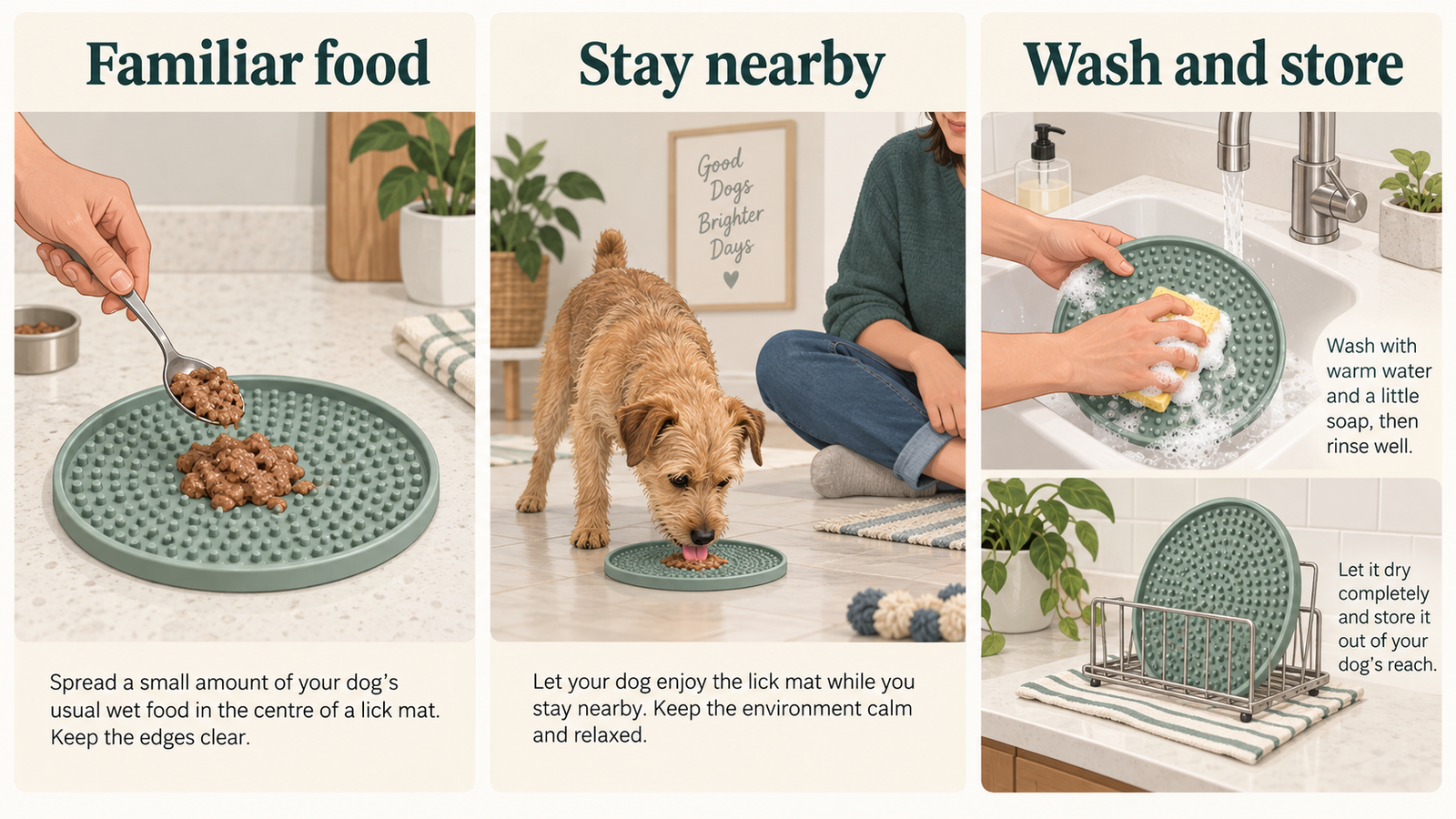
Keep the first serving unfrozen and easy to reach. Add a small patch of food around the middle, leaving the edges bare. The manufacturer’s introduction guide uses this approach to introduce licking before making the task harder.
Place the mat flat and let your dog approach. Stay nearby and watch their mouth as well as the feeder. A successful first attempt can be brief. You are looking for comfortable licking, not a particular number of minutes.
Once the food is finished and your dog has moved away, put the mat away. If your dog starts biting it, end the session safely. Do not keep serving it while hoping the chewing will stop.
After several comfortable attempts, you can spread food across more of the surface. Change one thing at a time so you can tell what works. Freezing is a later option only if the product permits it and your dog continues to use the mat appropriately.
If your dog chews, slides or ignores it
They bite the edges. Stop using the mat and inspect it. Repeated chewing is a reason to choose another activity, not to keep buying harder mats. A measured food search may suit some dogs better; our dog enrichment guide includes other ways to offer food and play.
The mat travels across the floor. Recheck the surface and the manufacturer’s setup instructions. Some designs have suction cups or a compatible holder; others do not. Avoid improvised glue or attachments your dog could reach. If the mat will not stay stable, choose a different setup.
They walk away. Check whether the food is familiar and accessible. Offer an easier serving on another occasion. Your dog does not have to enjoy this particular feeder; an ordinary bowl remains a useful option.
They gulp down the topping. A short session is not automatically a failure. Keep the serving within the food allowance and remove the empty mat once your dog has moved away. Adding more food just to extend the activity can quietly increase the day’s calories.
They stiffen, growl or guard the mat. Give them space. Do not reach toward their mouth or wrestle for it. Seek advice from your veterinarian or a qualified reward-based behavior professional before trying another food activity that creates the same conflict.
A lick mat is an activity, not a treatment plan
Some dogs enjoy concentrating on spreadable food. That does not mean a mat will cure anxiety, stop destructive behavior or make an uncomfortable grooming session safe.
Introduce it during an ordinary quiet moment before considering it as a distraction. If your dog panics when left alone, needs help tolerating handling, or has a sudden behavior change, address that problem with appropriate professional help. Food should not be used to push through distress.
For a separate training skill, see our guide to teaching a dog to settle on a mat. A resting mat and a food-covered lick mat have different jobs.
Clean it after every use
Your dog licking the grooves does not replace washing. Remove remaining food and follow the exact product’s care instructions. Check small pockets and the underside before letting it dry fully.
The FDA recommends washing feeding equipment and utensils with soap and hot water after use. Promptly refrigerate or discard unused canned or pouched food, and wash your hands before and after handling pet food.
Do not assume every mat can go in the dishwasher. LickiMat’s cleaning guide recommends hand washing its Classic mats and identifies the rigid-base Tuff range as dishwasher safe. Follow the instructions for the model you actually own.
One product to compare
As an Amazon Associate, TailSprig Living earns from qualifying purchases. Buying through our product links may earn us a commission at no extra cost to you.
The LickiMat Tuff Buddy, Orange is one option to compare if you want a feeder with a rigid base and square pockets. The manufacturer lists dishwasher cleaning for this model. Check the selected model and color on the purchase page, and consider how readily you can clean its texture.
It still needs supervision. We have not tested it with your dog, and no purchase can guarantee that a dog will lick rather than chew.

If a piece is missing
Stop using the mat. If you suspect your dog swallowed material, contact your veterinarian promptly and describe the product and the missing piece. Keep the damaged mat or take a photo to help explain what happened.
VCA’s foreign-body guidance explains that swallowed objects can cause an obstruction. Vomiting, reduced appetite, abdominal pain or lethargy need veterinary attention. Do not assume material will pass because another dog seemed fine after swallowing something similar.
The useful first-session checklist is short: familiar food, an easy setup, close supervision, and a clean mat stored out of reach afterward. Keep offering it only if your dog uses it comfortably and safely.