
A dog can bring a toy straight back to you and still hang on when you reach for it. Fetch turns into tug, or your dog darts away before your hand gets close. Teaching “drop it” starts with making release worthwhile, rather than trying to win the toy.
Practise with an allowed toy your dog is relaxed about. This guide is for ordinary training with a dog who does not guard the item. A dog who freezes, growls or snaps needs a different plan with professional help.
This article contains affiliate links. As an Amazon Associate, TailSprig earns from qualifying purchases.
What “drop it” means
“Drop it” asks your dog to release something already in their mouth. “Leave it” asks them to turn away from something before taking it. Keep those jobs separate while your dog learns.
For the first sessions, the useful goal is modest: your dog releases one familiar toy willingly in a quiet room. That is not proof they will release food, a stolen sock or an exciting find outside. The San Francisco SPCA’s drop-it guide builds the skill with rewards and gradually varied practice.
Set up an easy first session
Choose a quiet space with enough room for your dog to move away. Keep children and other pets out of this exercise. Have your rewards ready before offering the toy.
- Pick an intact toy that is suitable for your dog and easy for them to release. Skip their prized chew or favourite possession.
- Use small rewards your dog enjoys and can eat safely within their usual diet. Follow any veterinary dietary restrictions.
- Put away shoes, laundry and other tempting objects. Practise with the toy you deliberately offered.
- Keep your hands clear of your dog’s mouth and the item while they are holding it.
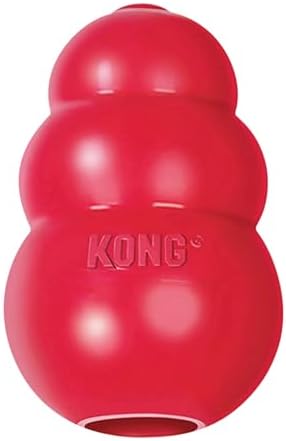
You do not need special training equipment. If you are comparing rubber toys, the KONG Classic red toy is one option, provided the size and chewing suitability match your dog. KONG’s current product guidance calls for supervision and discontinuing use if damaged. If your dog treasures that toy, choose something less exciting for this lesson. A familiar toy you already own may be the better starting point. The linked example is the Large size; use KONG’s sizing guide rather than treating it as the right size for every dog.
Build the trade before adding the words
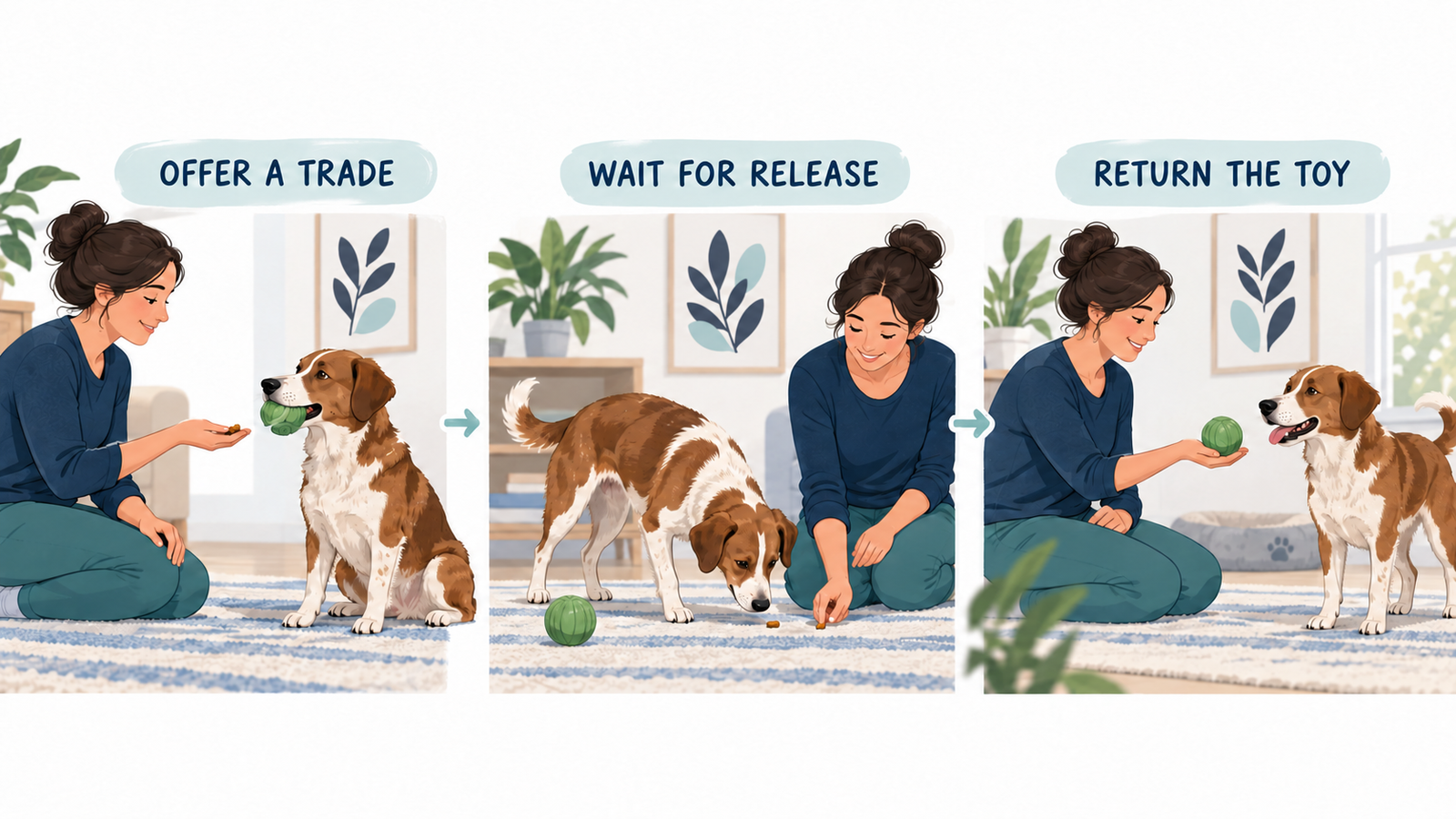
The Dogs Trust leave and drop training guide starts with an appealing exchange and returning the toy. Use that idea for a calm practice game.
- Offer the low-value toy and let your dog take it voluntarily. Avoid winding them up with a fast chase or vigorous tug first.
- Show a small food reward, then place or gently toss it away from the toy. Give your dog room to release the toy and move toward the food.
- Praise the release quietly. Keep your hands away while your dog changes position; do not race them for the toy.
- Retrieve the toy only after your dog has moved away and is comfortable with you doing so. Then offer the allowed toy back for another turn.
- Repeat a few easy exchanges, ending while your dog is still comfortable and interested.
If your dog follows the food with the toy still in their mouth, the exchange is not working yet. Do not pull the toy loose. Next time, try a less valued toy or a reward they prefer. If they keep the toy, become tense or run away, stop and rethink the setup.
Returning the practice toy matters: releasing it need not mean the fun always disappears. Never return an unsafe object just to continue this game.
Add “drop it” when release becomes predictable
Once your dog readily lets go when you offer the trade, say “drop it” just before presenting the reward. Use the same short cue each time, then reward the release and return the allowed toy when appropriate.
After several successful repetitions, try saying the cue with the food still out of sight. Give your dog a brief chance to release. If they do, praise and bring out the reward. If they do not, help with the familiar visible prompt, then make the next repetition easier.
You are gradually removing the need to see the reward first, while continuing to reward the behaviour. Do not confuse hiding the food with stopping rewards. The American Kennel Club’s drop-it tutorial describes this progression from a prompted release to a verbal cue.
Move on gradually: another ordinary toy, another quiet room, then mild distractions. Change one thing at a time. A successful living-room trade does not mean your dog is ready for an unfamiliar outdoor object.
When the trade gets stuck
“My dog drops it, then grabs it again.”
Avoid leaning in as the toy lands. Place the reward far enough away for your dog to move clear, and wait for a comfortable opportunity to retrieve the toy. If your dog rushes back, stiffens or worries about your hand, end the exercise. Do not turn it into a contest over who can grab fastest.
“It only works when I show a treat.”
Return to the same easy toy and quiet setting. Practise cue first, a brief pause, then the familiar prompt if needed. Reward successful releases, including those that happen before the food appears. Increasing difficulty and hiding the reward at the same time makes the lesson harder to follow.
“My dog cares more about toys than food.”
Some dogs will exchange one toy for another. The RSPCA’s toy-release guidance includes this option. It is not the right choice if showing another toy causes jumping, grabbing or frantic play. Keep the session calm and ask a reward-based trainer for help if you cannot find an easy exchange.
“My dog steals things to start the game.”
Set up practice with permitted toys instead of waiting for stolen objects. Put tempting belongings out of reach and offer ordinary play and other suitable enrichment at home. A training session should not depend on finding a sock in your dog’s mouth.
Stop if your dog protects the item
Watch for a stiff body, hovering over the toy, freezing, hard staring, growling or snapping. Stop approaching and give your dog space. Do not punish the warning or repeatedly test whether you can take the item.
Keep others away and get help from a qualified reward-based trainer or veterinary behaviour professional. Arrange a veterinary check, especially if the behaviour is new. Dogs Trust’s resource-guarding advice explains these warning signs and why support matters.
If your dog may have swallowed a harmful object, contact your veterinarian promptly instead of trying to solve it with a training exercise. Cornell’s foreign-body guidance explains why swallowed objects can require urgent veterinary care.
What to practise next
Keep a simple note of the toy and setting where your dog can release comfortably. Use that easy version again before adding a challenge. There is no fixed number of days that makes the cue reliable everywhere.
For a separate quiet-home skill, our guide to teaching a dog to settle on a mat shows how to reward relaxed behaviour. Keep each lesson short and distinct: one asks for a release, the other builds comfortable rest.
Sources and further reading
- Dogs Trust: leave and drop training
- San Francisco SPCA: drop-it command
- American Kennel Club: teaching your dog to drop it
- RSPCA: teaching your dog to give up a toy
- Dogs Trust: resource guarding food and toys
- Cornell: gastrointestinal foreign-body obstruction in dogs
- KONG: Classic toy and supervision guidance