
Your dog reaches the end of the leash. You stop. They come back, take a treat, and shoot forward again. If that is your whole walk, make the exercise smaller: reward a single step while the leash is still loose, before another pulling-and-returning cycle begins.
Loose leash walking means moving together without steady tension on the leash. Your dog can look around and enjoy sniffing; they do not need to stare at your face or hold a formal heel position for the entire outing. Start where your dog can comfortably pay attention, then build toward the places you actually walk.
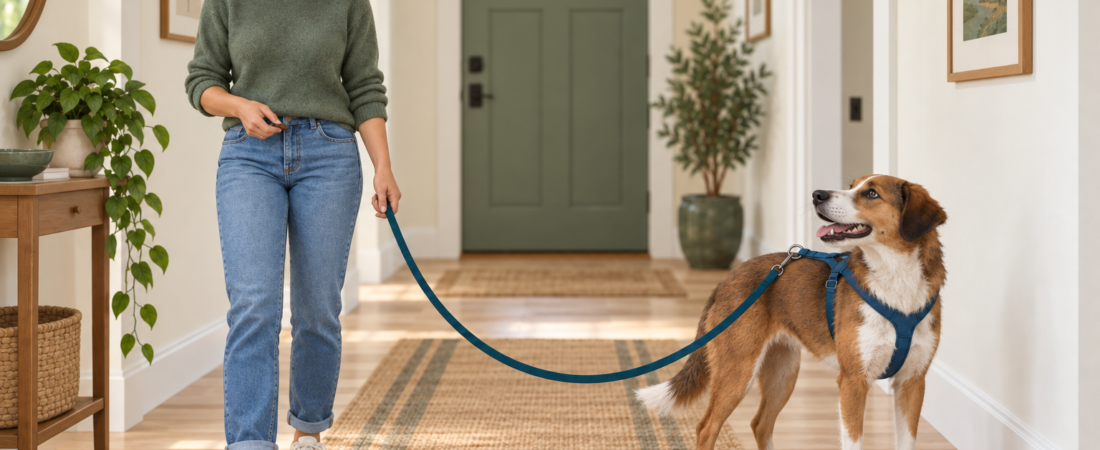
The photographic-style image shows a slack leash attached to a generic harness. It is AI-generated, not a photograph of a real training session or a tested product.
Why dogs pull—and what to teach instead
A smell, another dog, or simply a faster walking pace can take your dog to the end of the leash. Sometimes pulling has also helped them reach something interesting. That does not tell you they are being stubborn, and it does not mean every dog who pulls has the same problem.
Teach an alternative you can recognize: a loose curve in the leash while you both move. Early practice should give your dog plenty of chances to earn a reward before the line tightens. If the only reward arrives after pulling, turning back, and returning to you, that sequence may become the most familiar part of the exercise.
Keep the training reward-based. The American Veterinary Society of Animal Behavior’s humane training position recommends reward-based methods and rejects aversive methods. Leash jerks, prong collars, choke collars, and electronic corrections do not belong in this plan.
Set up for comfortable practice
Choose a quiet space with enough room to take a few steps and turn without tangling the leash. Put rewards where you can reach them easily. Use small pieces your dog can comfortably eat, and account for training food within their usual diet; follow your veterinarian’s advice if they have dietary restrictions.
Use a comfortable, properly fitted harness and a fixed-length leash that lets your dog move without constant tension. Check that straps do not rub and that the leash is clear of legs. If equipment leaves marks or changes how your dog moves, address that first; our dog harness fit guide covers what to inspect.
Equipment helps you manage the walk; it does not teach the skill by itself. Avoid introducing several unfamiliar pieces of gear at once. A head collar needs careful fitting and conditioning, and sudden lunges can strain the neck, so it is not a casual shortcut for this beginner exercise.
An optional pouch for quick rewards
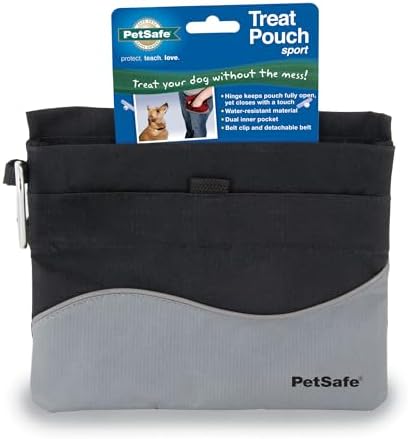
A pocket or pouch you already own may be enough. If reaching for food keeps interrupting your timing, the PetSafe Treat Pouch Sport in Standard, Black is one option to consider. The manufacturer’s product page describes a hinged opening, divided inner pocket, and belt attachment options. Those features can keep rewards accessible; they do not stop pulling or replace practice. Check the hinge and attachment before use, and keep the pouch out of your dog’s reach between sessions.
As an Amazon Associate, I earn from qualifying purchases.
Teach loose leash walking indoors first
Pick a side for this short practice session so reward placement is predictable. Either side is fine if it works comfortably for both of you. Hold the leash with enough slack for a visible curve, without letting it trail around your dog’s feet. Do not wrap it tightly around your hand or use it to pull your dog into position.
- Stand quietly with your dog near you. When they comfortably turn toward you and the leash is loose, say a brief marker such as “yes,” then give a reward.
- Deliver the food low enough for your dog to eat without jumping, near the side where you want them to walk. Avoid reaching far ahead and encouraging another surge forward.
- Take one small step. Mark and reward while the leash is still slack. If one step is too much, return to standing and make your next movement smaller.
- Repeat a few easy successes, then pause. Add another step only when the current version is comfortable and repeatable.
You are not testing how long your dog can go without a reward yet. You are showing them which part of the movement earns one. VCA’s loose leash walking guide also begins in a quiet setting and builds from very short stretches of slack-leash movement.
Watch your own hand as well as your dog. If you shorten the line every time they move, they have little chance to practice on a loose leash. Leave room for normal movement while keeping the line clear of furniture and feet.
Build a short sequence, not a long test
Once a step is easy, try a slightly longer sequence, reward, and make the next repetition easier again. For example, you might reward after one step, then two, then one. These are practice examples, not a required formula or a scientific pass mark.
Add gentle changes of direction where there is space. Say your walking cue, move slowly, and reward your dog for following with a loose leash. Turn before the line becomes tight; do not use a sudden turn to jerk them around. Keep your pace comfortable for your dog’s size and movement.
End while the exercise is still manageable. Several short opportunities can fit into ordinary life without turning every outing into a lesson. There is no universal number of minutes or days that makes a dog ready for a busy route.
What to do when the leash tightens
In a safe practice area, stop moving forward without yanking or scolding. Give your dog a chance to turn back or create slack, then begin again. Dogs Trust’s walking-nicely guidance describes stopping when the lead tightens and returning to easier practice when needed.
If your dog returns for food and immediately pulls again, reward sooner during the next attempt—while you are moving together on a loose line. Shorten the distance between rewards or choose an easier place. Do not spend the whole session waiting for the same mistake to happen.
If they stay at the end of the leash staring at something, consider the surroundings. Move farther from the distraction when you can do so safely, or leave the area. Repeatedly calling their name or holding them in a long stand-off may add frustration without helping them learn.
Safety takes priority over the exercise. Beside traffic, an approaching dog, or another hazard, get to a safer place first. Do not remain planted in danger because a training rule says to stop. Normal toilet breaks and comfortable exercise still matter while this skill is developing.
Take the skill outside in small stages
A quiet hallway and a sidewalk full of smells are different learning situations. Start the outdoor version with the short sequences that worked at the beginning, even if your dog can walk farther indoors. Change one challenge at a time: the number of steps, the setting, or the distance from a distraction.
Use this four-stage progression as a flexible guide:
- Quiet room: reward comfortable attention and one loose-leash step.
- Hallway or another quiet indoor space: add a few steps and gentle turns.
- Quiet outdoor area: shorten the sequence again and allow time to investigate.
- An easier part of your usual route: practice away from busy corners or close encounters.
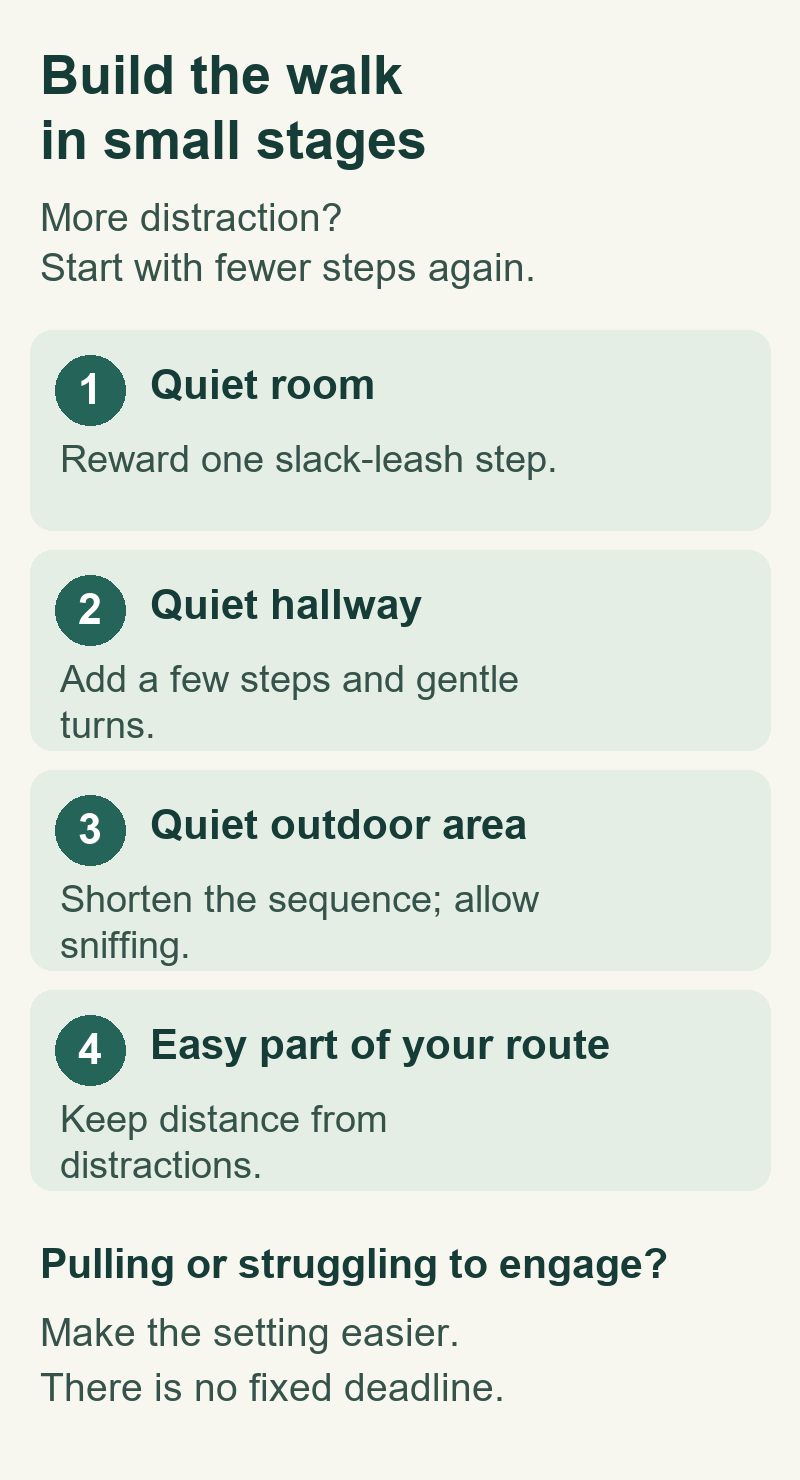
Move forward when short sequences are repeatedly comfortable and your dog can reorient toward you. If the line keeps tightening or your dog cannot engage comfortably, reduce the challenge. A quieter time of day or more distance may help more than asking for extra effort in the same spot.
Your dog does not have to earn every sniff by walking perfectly. Include relaxed sniffing breaks, and sometimes use access to a safe, interesting spot as the reward for a little slack-leash movement. The AKC’s leash-training tips discuss sniffing and other real-life rewards alongside food.
Two simple loose leash walking games
Follow the easy turn
In an uncluttered space, take a step or two and make a gentle turn while the leash is loose. Mark your dog for choosing to follow and reward beside you. Keep the movement slow enough that they can succeed without being pulled. If they keep missing the turn, make it smaller and reward earlier.
Walk toward something worth investigating
Choose a safe sniffing spot with no food scraps, traffic, or unfamiliar dogs crowding it. Start close enough that a little slack-leash movement is achievable, then give a release cue such as “go sniff” and move with your dog toward it. If the exercise becomes repeated pulling, pick an easier target or take a normal sniffing break instead.
Rewarding movement toward something a dog wants is also illustrated in the RSPCA’s walking-nicely exercise, which uses a toy. The useful idea is that the reward need not always come from your hand.
Leash training a puppy
For a puppy, begin with comfortable handling and positive introductions to the harness and leash. Let them explore the equipment under supervision before expecting coordinated walking. A quiet, safe indoor area is a good place to start; ask your veterinarian about suitable outdoor locations during the vaccination period.
Keep expectations small. A few comfortable steps can be a useful session. If your puppy bites the leash, repeatedly jumps, or starts struggling with the equipment, pause and consider whether they need rest, a toilet break, or an easier setup. Do not drag a puppy who has stopped walking.
Practice can build familiarity, but it does not guarantee that a puppy will never pull later. New environments, development, and changing distractions mean you may need to revisit the basics.
Troubleshooting: change the setup before adding pressure
- Good indoors, pulling outside: restart with a shorter sequence in a quieter outdoor place. Do not expect indoor practice to transfer immediately.
- Returning for a treat, then rushing ahead: reward the next slack step sooner and check that you are not delivering the food far in front of you.
- Looking away or refusing food: consider appetite, reward preference, competing smells, discomfort, and the setting. Treat refusal alone does not diagnose fear or mean your dog is “over threshold.” Simplify if they cannot comfortably engage.
- Barking or lunging at dogs: create safe distance and seek individualized help if you cannot manage encounters safely. Our reactive-dog walking guide addresses that separate challenge.
- Freezing, limping, coughing, or a sudden change: stop treating the problem as ordinary pulling. Check equipment and speak with your veterinarian about pain, breathing changes, or other health concerns.
Common questions
Is loose leash walking the same as heel?
No. Heel asks for a particular position close to the handler. Loose leash walking allows more freedom as long as the leash is not under steady tension. A dog can sniff or look around without failing the whole walk.
How long does loose leash training take?
There is no dependable deadline for every dog. Previous practice, the environment, physical comfort, and how difficult each session is all matter. Track small changes—such as a comfortable short sequence in a new place—rather than expecting a completely different walk by a fixed date.
Do I need a no-pull harness?
No product replaces teaching. Start with equipment that fits comfortably and that you can manage safely. If your dog can overpower you, get individual help with handling and equipment rather than assuming a new harness will solve the problem.
What should I practice on the next walk?
Choose one easy stretch and aim for one slack-leash step that you can reward before your dog reaches the end of the line. Then allow a break. If that is too hard outdoors, practice it inside first. The next useful step is the one your dog can comfortably understand today.
This article contains affiliate links. If you buy through them, TailSprig may earn a commission at no additional cost to you. Product suggestions are optional aids, not substitutes for training or individualized veterinary advice.