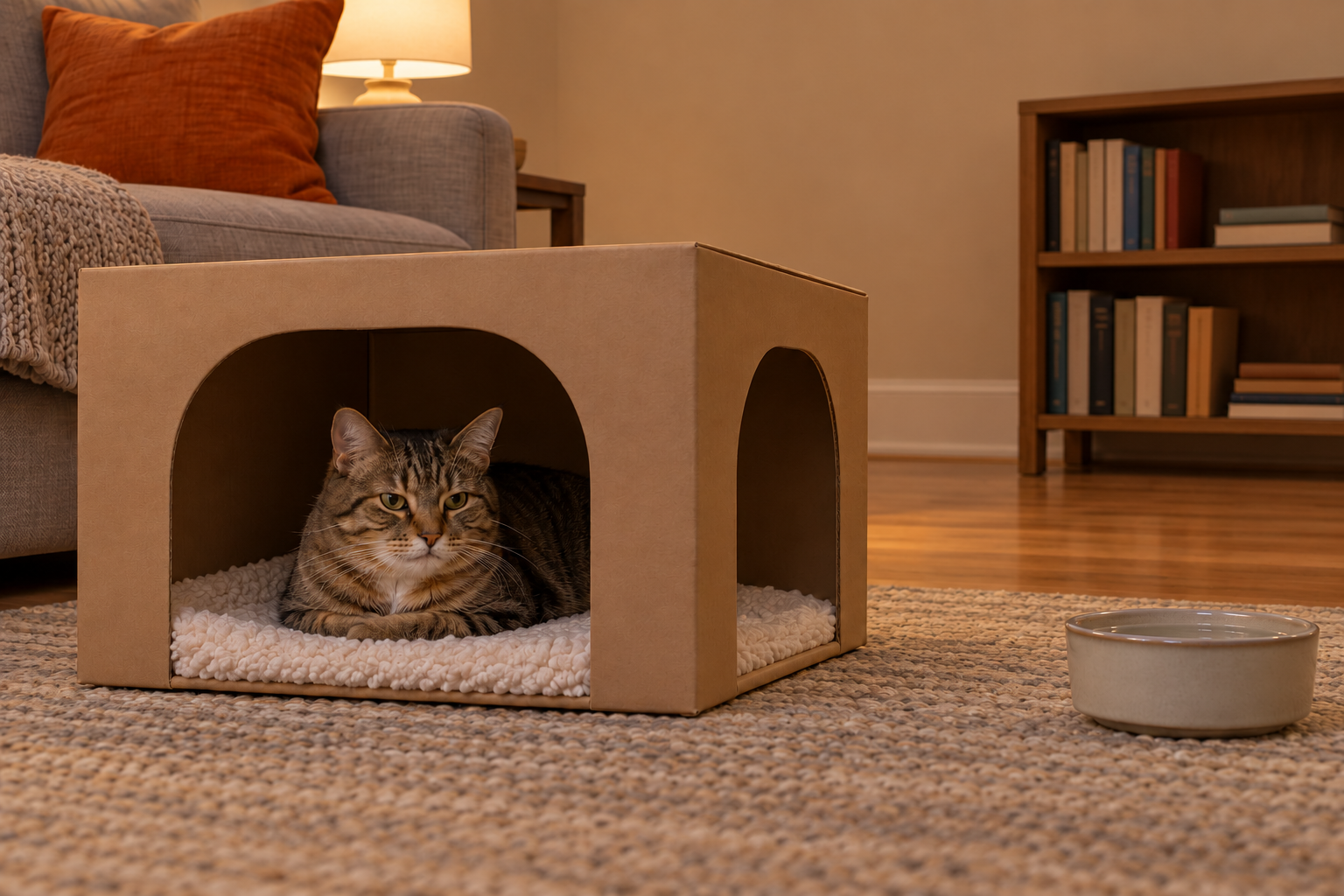
A cat resting in a familiar indoor hide. AI-generated educational illustration.
The doorbell rings while someone opens a candy bag and the cat heads toward the hallway. That is the moment a vague “we’ll keep an eye on them” plan becomes difficult.
Halloween pet safety is easier to organize before visitors arrive. Decide who handles the entrance, where every candy stash goes and where each pet can spend the evening comfortably. A familiar routine and fewer surprises matter more than getting a pet to join the celebrations.
Quick Answer
- Set up the retreat before visitors arrive.
- Choose who will manage the front door.
- Store candy and discarded wrappers out of reach.
- For a suspected toxic ingestion, contact veterinary help immediately with the packaging.
What You’ll Need
- A familiar retreat with access to water and a way to secure the entry.
- A closed candy cupboard, the emergency clinic number and a named adult for door duty.
Make the plan before the first visitor
- Prepare each pet’s familiar retreat and decide who will stay nearby if needed.
- Assign one adult to check pet locations before opening any outside door.
- Put all candy and discarded wrappers out of reach, including visitors’ bags.
- For suspected harmful ingestion, call the veterinarian or animal poison service immediately with the packaging.
Set up a familiar retreat before visitors arrive
Choose an area your pet already uses comfortably, away from the busiest route through the house. The ASPCA’s Halloween guidance recommends a comfortable space away from front-door activity for pets who are uneasy around visitors.
For a dog, that might be a familiar room with bedding and water, with a household member staying nearby. A crate is only an option if your dog already rests comfortably in it. Halloween evening is a poor time to introduce unfamiliar confinement.
For a cat, offer a private hide and keep access to the resources they normally use. Cats Protection’s Halloween advice suggests somewhere peaceful to hide when visitors arrive. That could be a familiar box or a resting place under furniture; guests should leave it undisturbed.
A “quiet room” is not a rule that every cat must be shut in one small space. Cats Protection’s fireworks guidance warns that confinement can increase stress for some cats. If that describes yours, plan a larger familiar indoor area with access to food, water, litter and hiding choices while separately securing the route to the outside. Do not drag a hiding cat into a different room.
Give dogs and cats separate arrangements if sharing a retreat would add tension. The goal is comfortable distance from the event, not putting every pet behind the same door.
Make the front door one person’s job
Agree which adult will answer visitors. Before opening the exterior door, that person checks that pets are on the safe side of the household’s containment arrangement. A gate is useful only if it actually suits the animal; cats can climb and some dogs can jump, push through or knock one over.
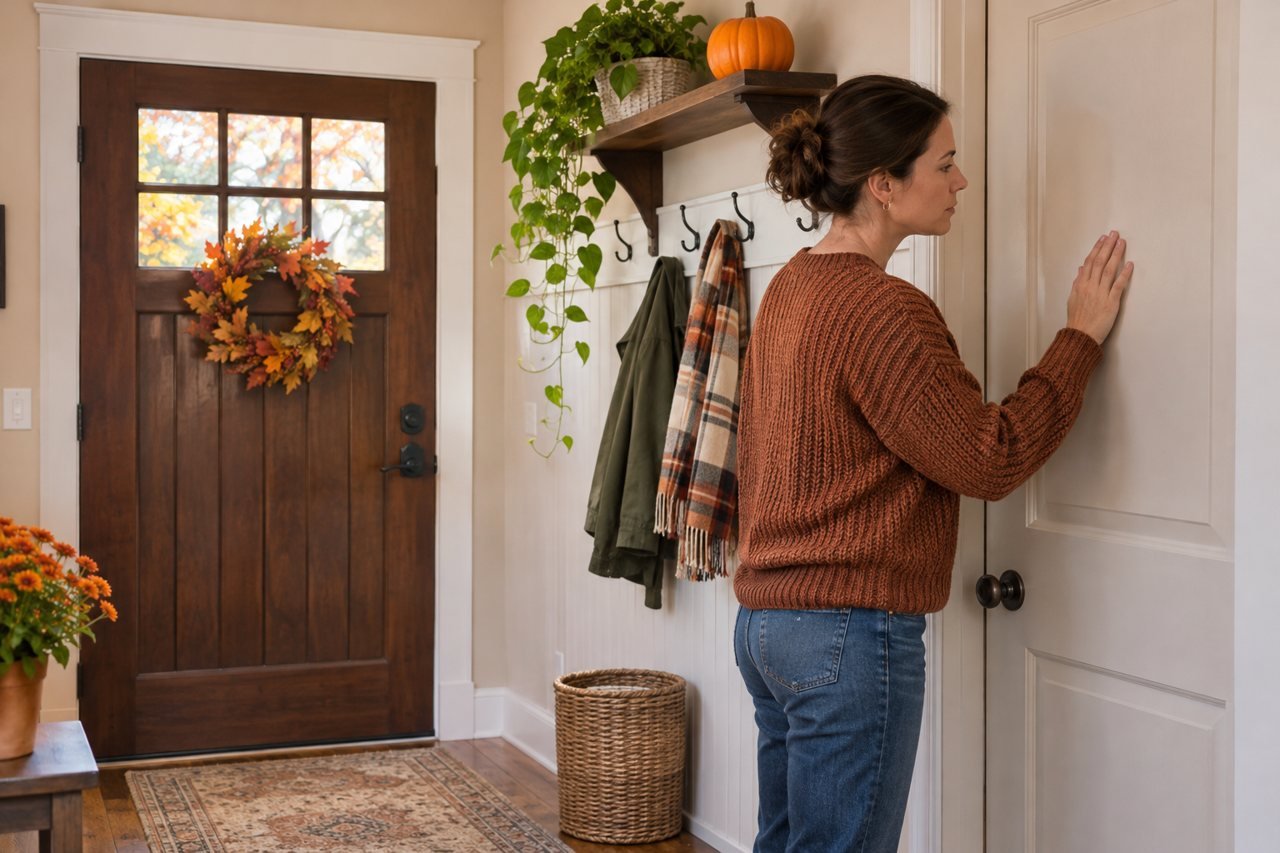
Battersea’s visitor guidance separates immediate front-door access from gradual work on a dog’s response to strangers. Keep that distinction on Halloween. A trained “wait” or “stay” is not a physical escape barrier.
Use a short handoff everyone understands: “The pets are settled; you can answer.” Check again when someone comes home with bags, opens a side door or takes rubbish outside.
Our door-wait guide covers quiet practice at an interior doorway. Save that lesson for an easier time. Our settle-on-a-mat guide can also support familiar practice, but repeatedly ringing the bell while your dog struggles is not a useful Halloween test.
A polite sign asking visitors not to knock may reduce interruptions, but assume someone will miss it. If handing out treats makes it impossible to keep pets comfortable and exits secure, change the arrangement or stop answering.
Put every candy stash behind a closed cupboard
The bowl by the entrance is only one source. Children may bring bags into bedrooms, guests may leave sweets in coat pockets and opened packets can end up beside the sofa. Pick one adult-managed storage place that pets cannot access.
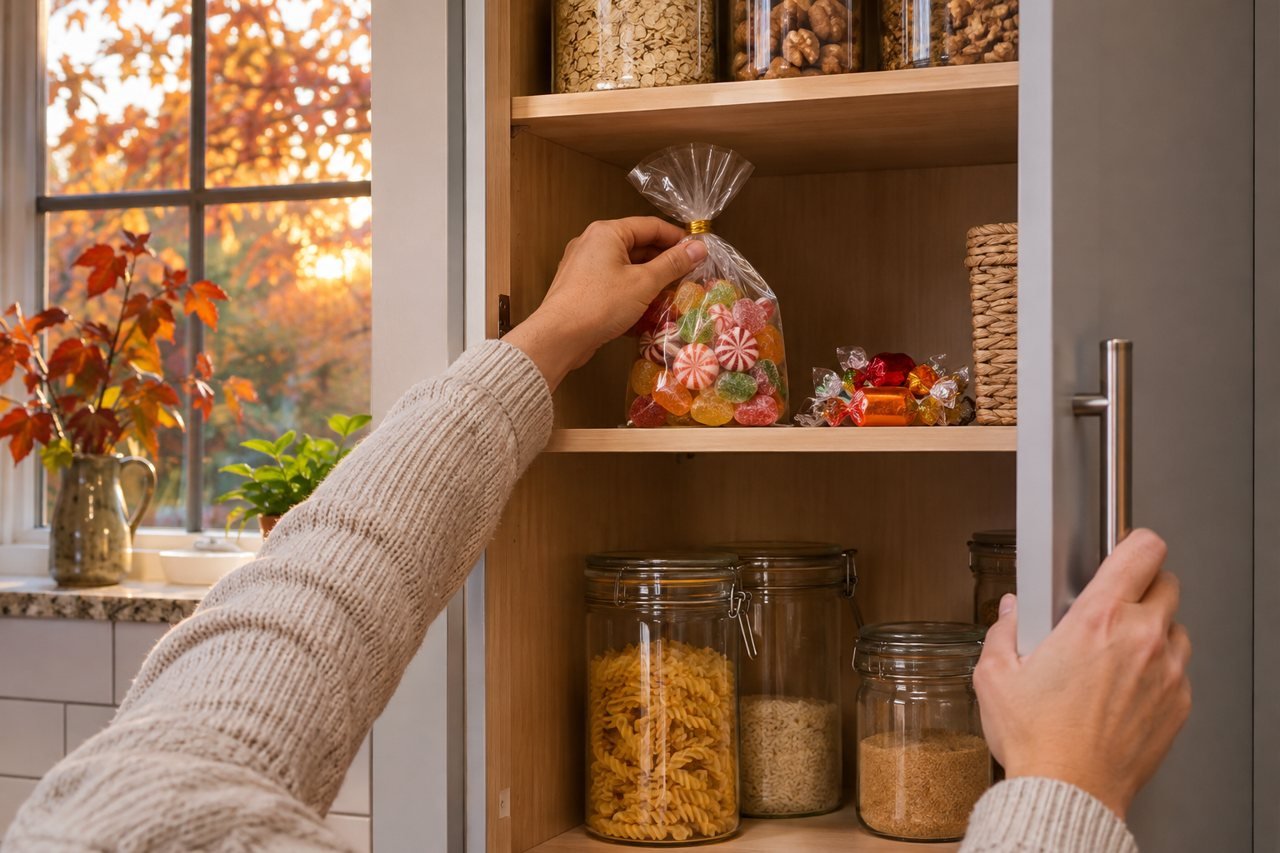
Chocolate can be dangerous for both dogs and cats. Xylitol, which may be found in sugar-free sweets and gum, is toxic to dogs; the FDA also lists names such as birch sugar and wood sugar. Do not offer Halloween candy to either species.
Ask returning trick-or-treaters to bring bags straight to the agreed storage place rather than dropping them on the floor. Keep wrappers and discarded food out of reach as you go. A bowl on a high counter is not a dependable solution for a cat who can jump there.
Use the same rule for the pet’s retreat: it should not double as the room where visitors leave their sweets.
Keep the evening familiar
Make time for your dog’s usual toilet needs without taking them through a crowd of costumed visitors. Arrange the route and who will accompany them before opening an exterior door. Check identification details in advance, rather than discovering an outdated phone number after an escape.
Inside, choose something your pet already enjoys. That might be resting with a familiar person or a simple activity they have done comfortably before. Our dog enrichment ideas offer options for ordinary days; choose one familiar activity rather than presenting a new, difficult puzzle during a noisy evening.
A toy is optional. It does not replace supervision, secure doors or a setup your pet can tolerate. Do not insist that an animal play or eat in order to prove they are fine.
If previous visitor-heavy evenings caused marked distress, speak with your veterinary team beforehand. Avoid trying a new calming product or someone else’s medication on the night.
One dog enrichment option to compare
A KONG Classic Red Dog Toy can be an option for a dog who already uses a suitable fillable toy comfortably. The linked example is Large, which will not suit every dog. Follow KONG’s current sizing and chewing guidance rather than choosing by appearance alone.
TailSprig Living · Amazon Idea List
My recommendations for a familiar supervised dog activity
If another adult can stay with the dog, a familiar large aqua West Paw Toppl or a familiar LickiMat may suit part of a usual meal. Match the size and surface to your dog and stop if they chew pieces off. Save unfamiliar toys for a quieter day. Secure the door and candy before offering any activity.
Affiliate link. As an Amazon Associate I earn from qualifying purchases.
See dog food toys on AmazonThe manufacturer’s product instructions require supervised use, removal of packaging and discontinuing use if damaged. Use only familiar food your dog can have within their normal feeding plan. This is a dog product, not a recommendation for a cat.
Only offer it when someone can stay and supervise. The adult repeatedly leaving to answer the door cannot also watch a toy session in another room. If nobody can supervise, keep the retreat simple with familiar bedding and company instead. Do not use food toys around other pets when there is guarding or competition.
The product card below is also an affiliate link. TailSprig may earn a commission if you buy through it.

We have not personally tested this product. It is not a treatment for anxiety or a substitute for an individual behavior plan.
If a pet gets into candy, call rather than calculate
Contact your veterinarian, an emergency veterinary clinic or an animal poison service promptly if a pet may have eaten something harmful. Keep the packaging and tell the professional what may have been eaten, approximately how much and when. Do not wait for a guessed “safe amount.”
For suspected xylitol ingestion in a dog, the FDA advises contacting a veterinary professional or animal poison service immediately. Do not wait to see how the dog looks.
ASPCA Poison Control provides poison-exposure advice. Do not induce vomiting or give a home remedy unless a veterinary professional explicitly instructs you; ASPCA explains why home attempts can cause harm.
Check the house before ending the plan
Keep pets away from the entrance until visitors have gone, exterior doors are secured and the cleanup is finished.
- Put the main candy bowl and every returning bag away.
- Look under chairs and beside the sofa for sweets, wrappers and costume pieces.
- Remove pet-accessible candles, loose decorations and wires.
- Locate each pet and confirm they can reach their normal resting place and resources.
Use a small handoff chart if several people are involved:
| When | Entrance and candy check | Pet check |
|---|---|---|
| Before the first visitor | Agree who answers and where bags go | Prepare each familiar retreat |
| During visits | Confirm pets are secure before opening | Check comfort; supervise any toy activity |
| After the last visitor | Secure exits and finish the sweep | Find each pet and restore the usual routine |
The evening does not need a perfect performance from your pets. It needs a household plan that still works when someone forgets the sign, drops a bag or opens another door.
Printable Halloween household checklist
- Pet retreat ready before first visitor
- Door duty assigned
- Candy and wrappers secured
- Emergency vet number stored
Frequently asked questions
Who should open the door?
Give that job to one person and decide where the pets will be before visitors arrive.
Where should I put the candy bowl?
Choose somewhere pets cannot reach even when someone steps away, and collect loose wrappers.
What if my dog eats candy?
Contact your vet or animal poison service promptly. Have the package and any known amount or timing ready.
When can my pet leave the retreat?
Check outside doors, visitors and dropped food before returning to the usual routine.
Leave a Reply