
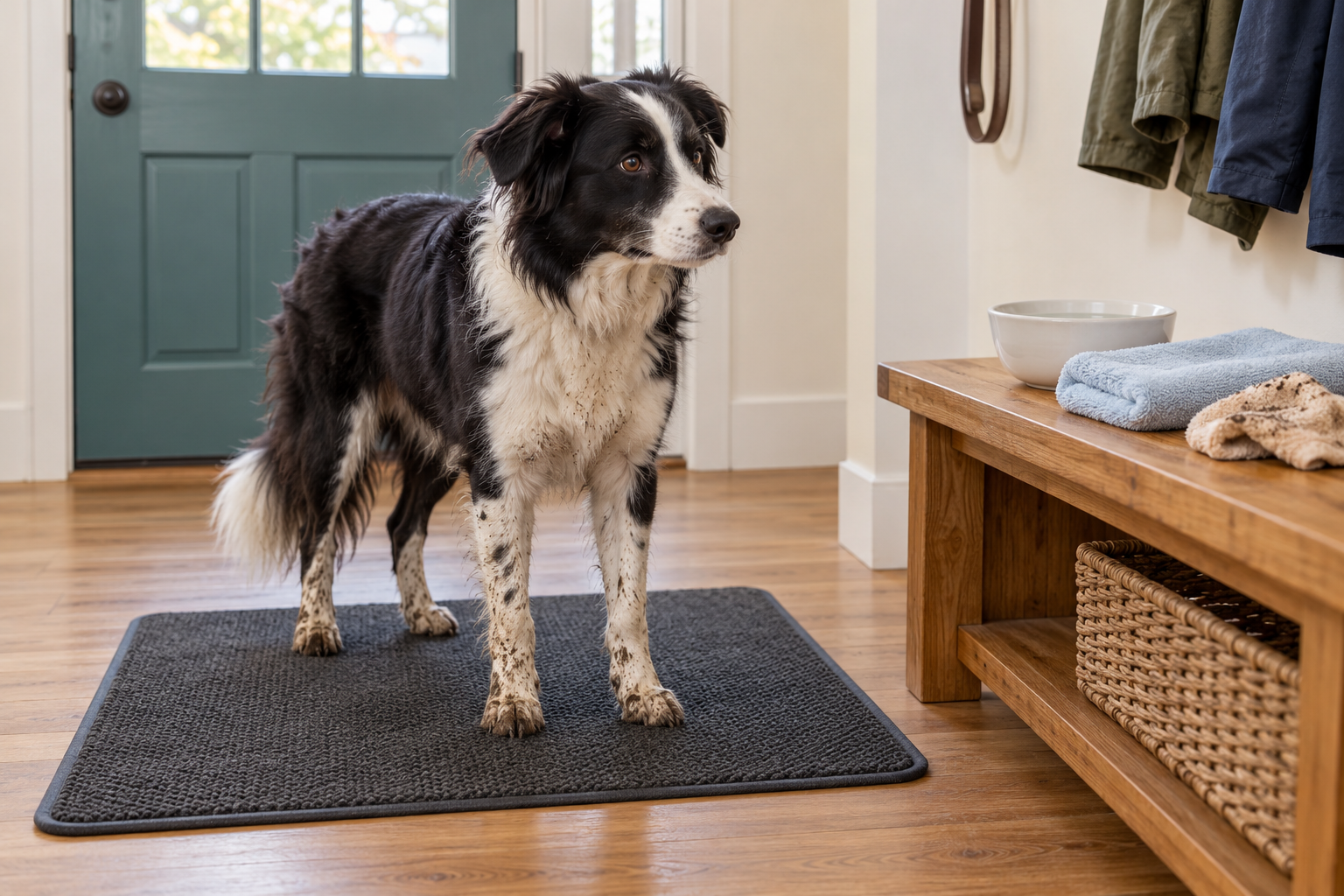
AI illustration of a muddy-paw cleanup setup.
A muddy walk can end with a dog at the door and four paws you cannot quite see beneath the dirt. Set out clean water and towels before you start. For ordinary mud on otherwise comfortable paws, work gently: look, rinse away the dirt and dry carefully, including between the toes.
This routine is for everyday dirt. A sore paw, embedded object or suspected chemical exposure needs a different response; see the veterinary advice below.
Quick Answer
- Check paws for visible trouble before wiping.
- Clean one paw at a time if your dog is comfortable.
- Dry gently between the toes.
- Stop and contact your vet about pain, injury or continuing limping.
What You’ll Need
- Clean lukewarm water, a soft towel and a nonslip place to stand.
- An easy route away and enough time to clean and dry one comfortable paw at a time.
TailSprig Living · Amazon Idea List
My recommendations for a muddy return from a walk
A soft towel and clean water are enough for many dogs. The travel list includes the beige Soggy Doggy Super Shammy and a medium blue Dexas MudBuster. A cup is optional. Check its fit and let your dog get used to it before you need to clean muddy paws.
Affiliate link. As an Amazon Associate I earn from qualifying purchases.
See paw-cleanup supplies on AmazonSet up a small cleanup spot
Choose an easy-to-clean area with secure footing and room for your dog to stand comfortably. Put a dry towel within reach, keep a second cloth for the dirt, and have clean lukewarm water ready. Avoid balancing a large dog over a sink or lifting a dog who is uncomfortable being picked up.
You do not need a special paw-cleaning station to start. A small basket for clean towels and somewhere to hang used ones can make the next wet walk easier. Our pet-friendly home guide has more ideas for choosing washable surfaces.
Clean muddy paws one small step at a time
- Look before rubbing. If your dog is comfortable with a gentle check, look at the pads, between the toes and around the nails. Stop if you notice bleeding, swelling, an embedded object or obvious pain. Do not scrub something you have not identified.
- Use only as much cleaning as the mess needs. Clean but wet paws may only need toweling. For light surface dirt, try a damp cloth. Rinse heavier mud with clean lukewarm water rather than working a dirty towel repeatedly over the same area.
- Keep the paw in a comfortable position. Handle one paw at a time without pulling a leg sideways or holding it up while you search for supplies. Let the foot return to the floor between steps. Pause if your dog pulls away or becomes tense.
- Check the less visible spaces. If your dog accepts the touch, gently look between the toes and pads for remaining grit. Use fresh water or a clean part of the cloth as needed. Do not dig into skin or probe around a painful object.
- Dry before finishing. Gently blot the paws and the spaces between the toes with a clean towel. Check that the surface your dog walks onto is dry enough for secure footing. Put used cloths aside for washing rather than back with the clean ones.
The American Kennel Club’s paw-care guidance highlights debris between toes and pads and the need to dry thoroughly after washing. If you use wipes, choose ones specifically labeled for pet use and follow their directions. Do not substitute household disinfecting wipes.
If your dog dislikes the towel
A clean floor is not a reason to pin a frightened dog in place. Dogs Trust recommends gradual, positive handling and stopping when a dog becomes uncomfortable. Sudden sensitivity can indicate pain; ask your vet rather than treating it as disobedience.
Practise when the paws are clean and there is no urgent mess to remove. Start with a comfortable, brief touch in a quiet place, pair it with a reward your dog enjoys, and release. Increase the contact only while your dog remains relaxed. Pasadena Humane’s handling guidance describes building towel contact in small steps. Pulling away, stiffening or growling means the task is too much; stop and seek help if handling remains difficult.
For an ordinary muddy arrival, let your dog stand on a washable towel while you pause and reassess. That may absorb some moisture, but it does not replace checking and cleaning the paws. If a potentially harmful substance needs removing and your dog cannot be handled safely, call your veterinary team for immediate guidance.
Is a paw-cleaning cup useful?
A cup is an optional way to contain rinse water, not a requirement for this routine. It also adds a new sensation around the paw. Introduce it separately from an urgent cleanup, follow the maker’s instructions, and never force a reluctant dog’s foot inside. You will still need a towel afterward.
Dexas describes the MudBuster as a water-filled cup with silicone bristles. The linked Amazon listing is the Dexas MudBuster Portable Dog Paw Cleaner, Medium, Blue. That identifies the variant; it is not a recommendation that medium will fit your dog. Confirm the exact model and paw fit with Dexas before ordering.
The original product card below is an affiliate link. TailSprig may earn a commission if you buy through it.

Empty and clean reusable equipment according to its instructions, then let it dry before storing it. Do not leave a dirty cup ready for the next walk or treat the product as care for damaged skin.
When to stop and contact your vet
VCA’s veterinary guidance on injured pads distinguishes surface cleanup from wounds and deeply lodged debris. Contact your vet for a cut, swelling, persistent licking, limping or pain. Seek urgent help for significant bleeding, a deep wound or suspected chemical exposure. Do not dig out embedded glass or other material.
Avoid applying an unverified balm, disinfectant or home remedy to a sore paw. If your dog has a prescribed skin-care routine, follow your veterinary team’s instructions instead of adding a new cleaner.
Make the next arrival easier
Before the next walk, replace the towels and check that the cleanup area is ready. Notice which step your dog finds difficult: the approach, the towel, lifting a foot or the water. Practising that smaller part on a calm day is more useful than trying to complete all four paws in a rush.
Keep this separate from nail clipping. Our dog nail-trimming guide covers that different task. After a comfortable cleanup, let your dog move on; you do not need to turn every return home into a grooming session.
Printable after-walk paw cleanup checklist
- Pads and spaces between toes inspected
- Mud loosened without pulling
- Paws dried gently
- Any pain or ongoing limp reported to the vet
Download the one-page after-walk paw cleanup checklist (PDF)
Frequently asked questions
Do I need a paw-cleaning cup?
Water and a soft towel may be enough. A cup helps only if it fits and your dog accepts it.
What if my dog pulls a foot away?
Release the paw and try a less intrusive step if it feels comfortable.
Which areas need drying?
Check the pads and the spaces between the toes without pulling or rubbing a tender spot.
When should I stop wiping?
Contact your veterinarian for persistent limping, pain or signs of injury.
Leave a Reply