
Last reviewed: September 2026
You love your pets. You also love your home. And some days it feels like you can only have one — a hallway of dog hair, a sofa with a new “texture,” a mystery smell by the door. The good news: a pet-friendly home isn’t about giving up on nice things. It’s about choosing a few smart materials, protecting the spots pets actually use, and staying on top of mess before it settles in.
These practical pet-friendly home ideas focus on the places that collect the most mess: floors, furniture and your pet’s favorite resting spots. Start with one washable layer or a better cleanup routine, then see what your home still needs.
Quick answer: Start with washable rugs and furniture covers, and choose an accident cleaner labeled for the affected surface. Clean the source of odors first. A correctly sized air purifier can supplement cleaning by filtering airborne particles, but it will not clean the sofa or remove every odor.
What we’ll cover
- 1. Floors & rugs that survive claws
- 2. Protect your furniture (without hiding it)
- 3. Handle accidents & odor fast
- 4. Keep the air fresh
- 5. Give each pet its own zone
- 6. Pet-proof the hidden hazards
- 7. Decor that still looks like you
- Quick product comparison
- Common mistakes to avoid
- FAQ
1. Floors & rugs that survive claws
When comparing flooring, check the exact product’s scratch resistance, water limitations and care instructions. Tile and some vinyl products can be practical options, but no floor is immune to damage. Clean spills promptly and use securely placed washable rugs where muddy paws usually land.
Already renting or not ready to redo floors? Washable rugs are the shortcut. Look for low-pile, machine-washable rugs with a non-slip backing — they catch mud at the door, give older pets grip on slick floors, and go straight in the wash when life happens. Skip shaggy high-pile rugs; they trap hair and hide “surprises” until it’s too late.
Pro tip: Put a washable runner along your dog’s favorite path — hallway, back door, next to the bed. Pets are creatures of habit, and protecting that one lane saves the rest of the room.
2. Protect your furniture (without hiding it)
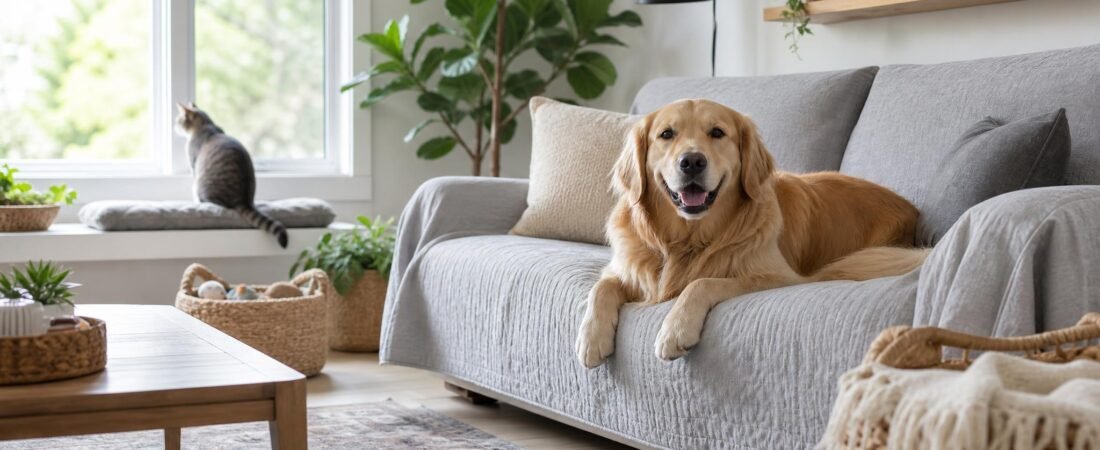
If your pets are allowed on the couch (be honest), a washable slipcover is the single best money-for-peace purchase you can make. It takes the hair, the muddy paws and the occasional drool, then pops off into the washing machine. When guests come, you pull it straight and no one knows your sofa has a secret.
Before buying a cover, measure the seat and arms and check the washing instructions. If considering the Easy-Going Reversible Couch Cover linked below, confirm that the selected size fits your sofa and that its care requirements suit your routine. Water-resistant fabric should not be treated as a waterproof barrier.

Easy-Going Reversible Couch Cover — check the current Amazon listing
For cats who scratch the sofa instead of lying on it, a cover helps but doesn’t fix the root cause. Give them a tall, sturdy scratching post right next to the spot they target — here’s how to stop a cat scratching the sofa without punishment.
3. Handle accidents & odor fast
Blot up fresh accidents promptly and check the surface’s care label before applying a cleaner. A pet stain and odor product may help with the residue, but one treatment is not guaranteed to remove an old stain or solve repeated house-soiling.
For the Rocco & Roxie product linked below, use the manufacturer’s instructions for the particular stain and surface. Its urine-cleanup guide starts with removing excess liquid, followed by enough product to reach the affected area and the specified contact time. Do not copy a carpet-soaking method onto upholstery or flooring whose care instructions prohibit it.
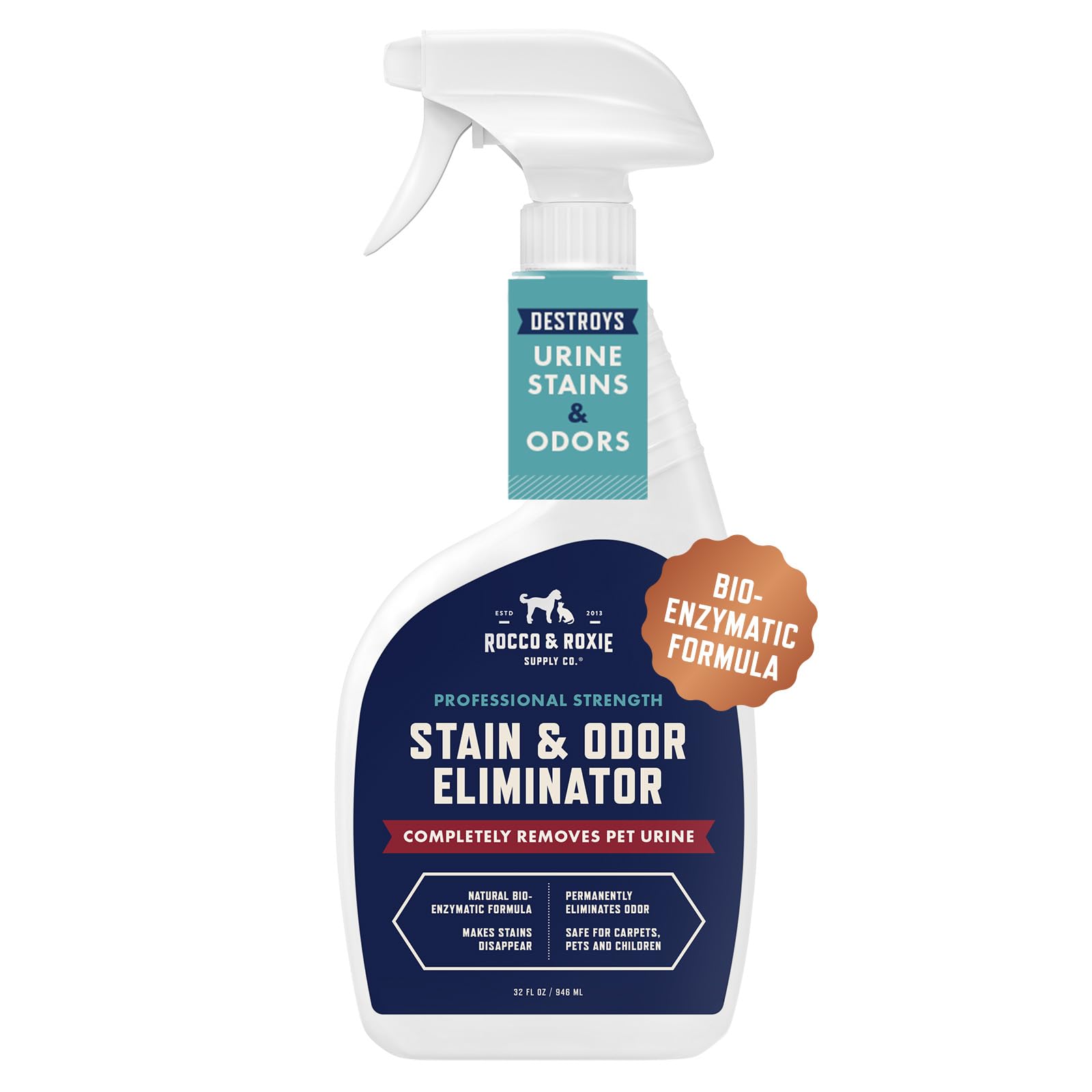
Rocco & Roxie Stain & Odor Eliminator, 32 fl oz — check the current Amazon listing
Pro tip: Keep paper towels and a spare washable cover together, and store the cleaner securely away from pets and children. Follow the label’s application, drying and storage directions.
4. Keep the air fresh
Start by removing the source of the smell: clean accidents, vacuum loose hair and wash bedding according to its care label. Air filtration is an additional tool, not a replacement for these tasks.
HEPA filters capture particles; odor gases need a filter designed for gases, such as substantial activated carbon. Choose a purifier with a clean air delivery rate suited to the room, as explained in the EPA’s air-cleaner guide. Before considering the LEVOIT Core 300 linked below, check the exact model’s current filter specifications and replacement-filter cost. No purifier removes every pollutant or guarantees allergy relief.

LEVOIT Core 300 Air Purifier — check the current Amazon listing
Keep a manageable routine for vacuuming and washing pet bedding. If ventilating, use clean outdoor air and keep pets secure around open windows; an ordinary insect screen is not a fall barrier.
5. Give each pet its own zone
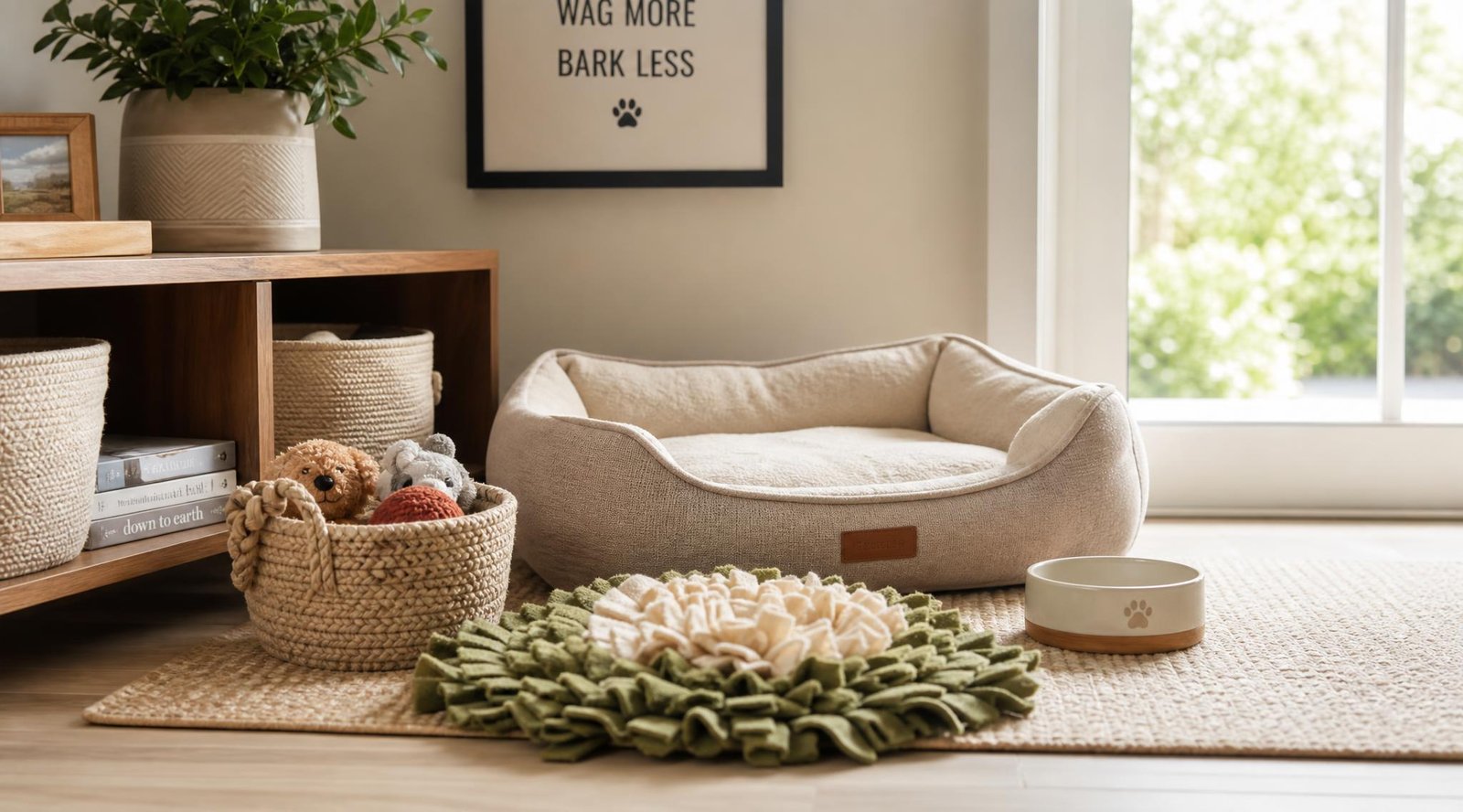
A pet with its own clearly “yours” space causes less chaos in the rest of the home. Set up a cozy corner with a bed, a couple of toys and water — somewhere calm and a little out of the traffic. Cats especially want height and a view; a window perch gives them a happy lookout that isn’t your kitchen counter. Here’s how to set up a safe cat window perch.
Suitable enrichment gives pets more appropriate ways to explore, play and forage. Try a snuffle mat, a puzzle feeder, a rotating toy box. Our dog enrichment ideas and indoor cat enrichment ideas are full of cheap DIY options.
6. Pet-proof the hidden hazards
Walk your home at pet-eye level once and you’ll spot them fast. The usual suspects:
- Plants: Identify a plant by its scientific name and check whether it is toxic to your particular pet before bringing it home. Remove toxic plants rather than relying on a high shelf. Even plants listed as non-toxic may cause stomach upset if chewed. Check the ASPCA plant database.
- Loose cords & blinds — bundle cords and tie up blind strings so they’re not chew or strangle risks.
- Open trash & laundry — a lidded, weighted bin and a closed hamper save a lot of vet bills.
- Human food & meds — chocolate, grapes, xylitol gum and pills go in closed cupboards, not the counter.
7. Decor that still looks like you
Pet-friendly doesn’t have to mean beige and boring. A few designer tricks:
- Compare fabric samples and care labels. Tightly woven fabrics may be easier to maintain than loose loops that catch claws, but leather and performance fabrics can still scratch or stain.
- Pick patterns and mid-tone colors that hide hair between cleans (matching your throw to your pet is a real strategy).
- Use washable throws on top of nicer furniture — they’re the easiest thing in the whole house to keep fresh.
- Raise fragile decor up high, and lean into baskets and closed storage so toys and gear disappear in seconds.
Quick product comparison
| Product | Best for | Why it helps | Check before buying |
|---|---|---|---|
| Couch cover | Furniture layer | Removable cover for routine washing | Sofa measurements and care label |
| Pet stain cleaner | Compatible accident spots | Use the product-specific treatment directions | Surface compatibility and contact time |
| Air purifier | Airborne particles | Supplements cleaning and source control | Room CADR, exact filter type and replacement cost |
Common mistakes to avoid
- Masking a smell without cleaning its source. Locate the affected material and choose a cleaning method permitted by its care instructions.
- Buying white or super-textured everything. It looks great for a week, then shows every hair and snag.
- Skipping the pet’s own space. No zone of their own = they claim yours.
- Forgetting toxic plants. One lily can be fatal to a cat — always check before you decorate.
Frequently asked questions
What flooring is best for a pet-friendly home?
Check the specific flooring product’s scratch resistance, water limitations and care instructions. Protect high-traffic paths with securely placed washable rugs and clean spills promptly.
How do I keep my house from smelling like pets?
Clean the odor source, wash pet bedding according to its care label and vacuum accumulated hair. Use an accident cleaner only on compatible surfaces. Particle filtration can supplement cleaning; it does not guarantee odor removal.
How do I protect my couch from my dog or cat?
A washable, water-resistant slipcover is the simplest fix — it takes the hair and paws and machine washes clean. For cats that scratch, add a tall scratching post right beside the spot they target so they have a better option.
Which houseplants are safe with pets?
Identify a plant by its scientific name and check whether it is toxic to your particular pet before bringing it home. Remove toxic plants rather than relying on a high shelf. Even plants listed as non-toxic may cause stomach upset if chewed.
The takeaway
A pet-friendly home comes down to a few repeatable choices: washable materials, protected floors and furniture, one good enzyme cleaner, clean air, and a little space that belongs to your pet. Start with the couch and the floor — the two spots that take the most hits — and build from there. Your home stays yours, and your pet gets to just be a pet.
Disclosure: This post contains affiliate links. If you buy through them, we may earn a small commission at no extra cost to you. Check each product’s current specifications and instructions before buying. This article is educational and does not replace veterinary advice.