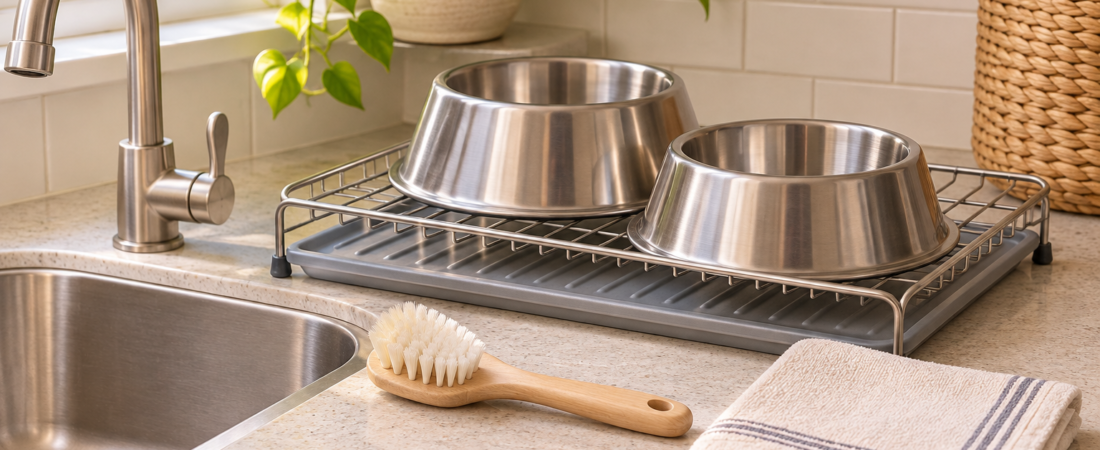
A bowl can look empty while still needing a wash. Make cleaning part of the meal routine instead of waiting for visible grime. Keep a clean spare water bowl available so your dog can drink while the other is being washed.
This guide covers ordinary food and water bowls. Fountain pumps, automatic feeders and fabric food toys need their own care instructions. Start by checking the bowl’s label, including any removable ring or base.
Quick Answer
- Wash food bowls after meals and wash the water bowl daily, sooner if dirty. Offer fresh water in a clean spare bowl while you work.
- Use warm soapy water and a brush or sponge that reaches the rim and grooves. Rinse and let the bowl dry.
- If your dog is sick, ask the vet about disinfection as well as cleaning. Follow the bowl and disinfectant labels.
What You’ll Need
Dish soap or detergent, warm water, a clean brush or sponge, and a drying rack or clean towel. Have a spare water bowl ready. Check the care label before removing a base or using the dishwasher.
TailSprig Living · Amazon Idea List
My recommendations for washing pet bowls
The list includes dish brushes and sponges for handwashing food and water bowls. Choose a tool that reaches the corners, and follow the bowl maker’s surface-care instructions. A brush you already own may work.
Affiliate link. As an Amazon Associate I earn from qualifying purchases.
See bowl brushes and sponges on Amazon1. Set out fresh water and choose when to wash
The FDA recommends washing food bowls and measuring utensils after each use. Its guidance also calls for clean hands before and after handling pet food, and a separate clean scoop rather than using the bowl to scoop from the bag.
The CDC gives a different example schedule: wet-food bowls after use; dry-food and water bowls daily. A simple routine is food bowls after meals and water bowls daily, sooner if dirty.
| Item | Routine to follow |
|---|---|
| Food bowl and feeding utensils | Wash after each use, following FDA guidance. |
| Water bowl | Wash daily; clean sooner when visibly dirty. |
| Bowl with separate parts | Check each part’s care instructions before washing. |
Choose a reminder that already belongs to your day: clearing breakfast plates, putting dinner dishes away or preparing the next meal. If you share feeding duties, agree who puts out the clean bowl. An empty bowl left on the counter does not tell the next person whether it has been washed.
2. Handwash the bowl, rim and removable parts
Following the CDC’s handwashing method:
- Wash with soap or detergent and warm water.
- Scrub with a sponge or brush.
- Rinse away dirt and soapy water.
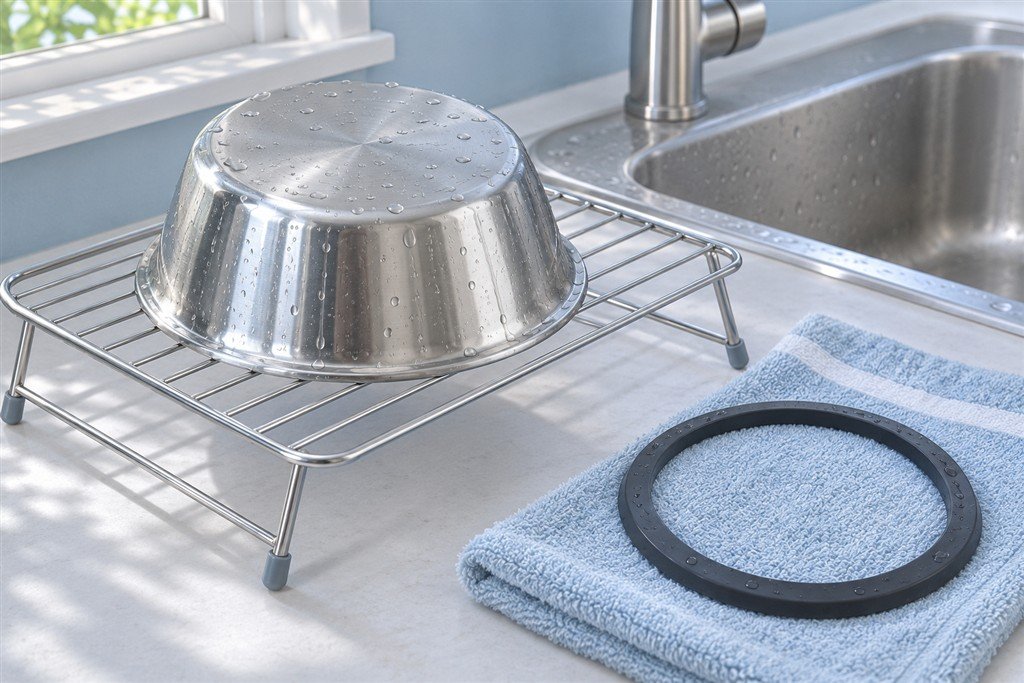
- Air-dry or use a clean towel.
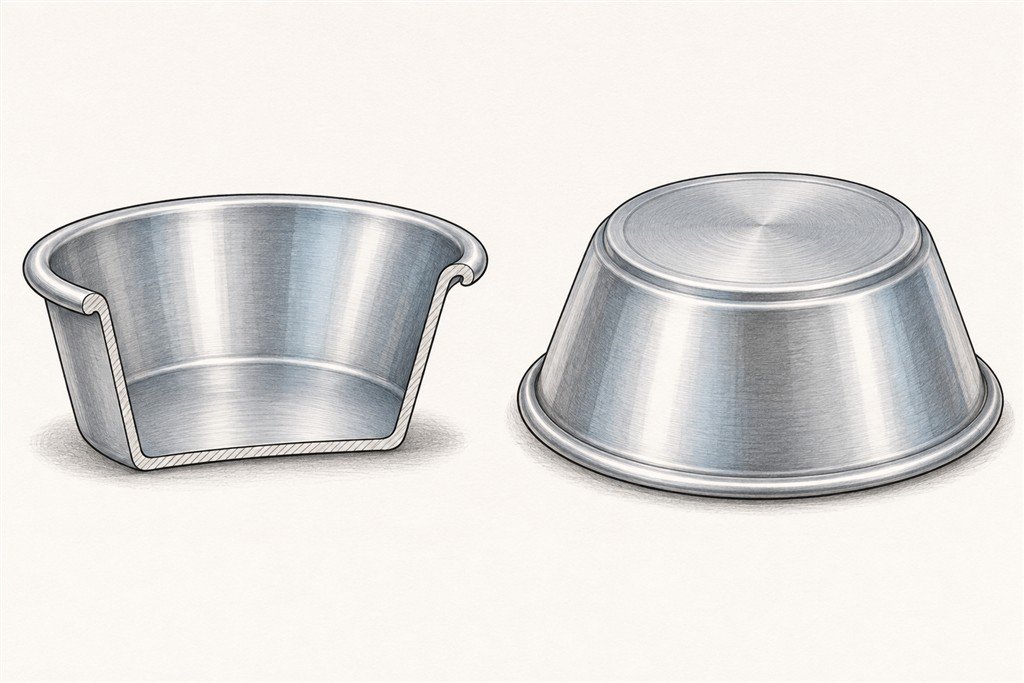
Give the rim, underside and any accessible grooves attention rather than only wiping the middle. Follow the manufacturer’s instructions for removable parts; do not force a sealed base apart. When you put the bowl back, check that any ring or stand is seated correctly.
Avoid turning the job into a test of how hot your hands can tolerate. The FDA describes hot, soapy water; the CDC describes warm water for handwashing. Neither is an instruction to pour boiling water over a bowl you are holding.
Dishwasher option for bowls and parts with a suitable label
The CDC says dishwasher-safe dog bowls can go in with household dishes. Use dishwasher detergent and follow the bowl’s care label. An ordinary wash is cleaning; the CDC specifies high-temperature or sanitizing washing plus heat drying for disinfection.
Do not assume every bowl, coating, rubber ring or stand tolerates the same cycle. Check the instructions for each part. If you cannot confirm that an item is dishwasher-safe, use its stated handwashing method or ask the manufacturer.
3. Put the clean bowl back into the feeding routine
Leave clean bowls in a consistent place so they are easy to find. A second bowl can make the routine less awkward, but you do not need a matching collection or a special feeding station to start.
When ordinary cleaning is not enough
CDC guidance says to disinfect sick pets’ items when cleaning them, and clean and disinfect more often in vulnerable households. Ask your vet for a suitable routine. Follow disinfectant labels, keep pets away and never mix cleaners. Vinegar is not a reliable substitute for a validated disinfectant.
Keep the written cleaning instructions with your pet-care notes if someone else will be feeding your dog. That is especially useful when an illness changes the usual routine.
An optional brush to consider
The OXO product card below is an affiliate link.
The OXO Good Grips Dish Brush, one count (B00004OCIZ; model 21691) is a plain dish brush with nylon bristles and a built-in scraper. OXO’s product page lists it as dishwasher-safe. It is not the soap-dispensing model.

A brush you already own may be sufficient. Compare the head with your bowl’s corners and follow the bowl manufacturer’s surface-care advice. We have not personally tested this brush. Retailer feedback about bristle stiffness and wear varies, so we do not promise a service life or suitability for every surface. Inspect it and replace worn or damaged cleaning tools.
For the separate job of storing kibble, see our dry dog food storage guide. If food is served in fabric enrichment equipment, follow its label and our snuffle-mat introduction and aftercare guide.
Printable checklist
Dog bowl washing checklist
- Set out drinking water in a clean spare bowl.
- Check the care label for the bowl and removable parts.
- Scrub the bowl, rim and grooves with warm soapy water.
- Rinse thoroughly and air-dry or use a clean towel.
- Refit any removable ring, refill the water bowl and wash your hands.
Frequently asked questions
Should I wash the bowl after dry kibble?
The FDA advises washing food bowls after each use, including dry food. Wash the scoop after use, too. A clean scoop keeps the feeding bowl out of the food bag.
Does topping up the water count as washing the bowl?
Empty the bowl and wash it daily, or sooner if dirty. Keep the spare filled while the first bowl is being cleaned.
Can the rubber ring go in the dishwasher with the bowl?
Only if the maker says that particular ring is dishwasher-safe. Follow its separate care instructions and refit it securely after drying.
Do I have to disinfect the bowl after every normal meal?
Ordinary cleaning is usually sufficient. The CDC advises adding disinfection when a pet is sick and cleaning and disinfecting more often in higher-risk households. Ask your veterinarian which routine suits your situation.
AI illustration of a generic bowl-cleaning setup. This guide includes an affiliate product; purchases may earn us a commission.
Leave a Reply