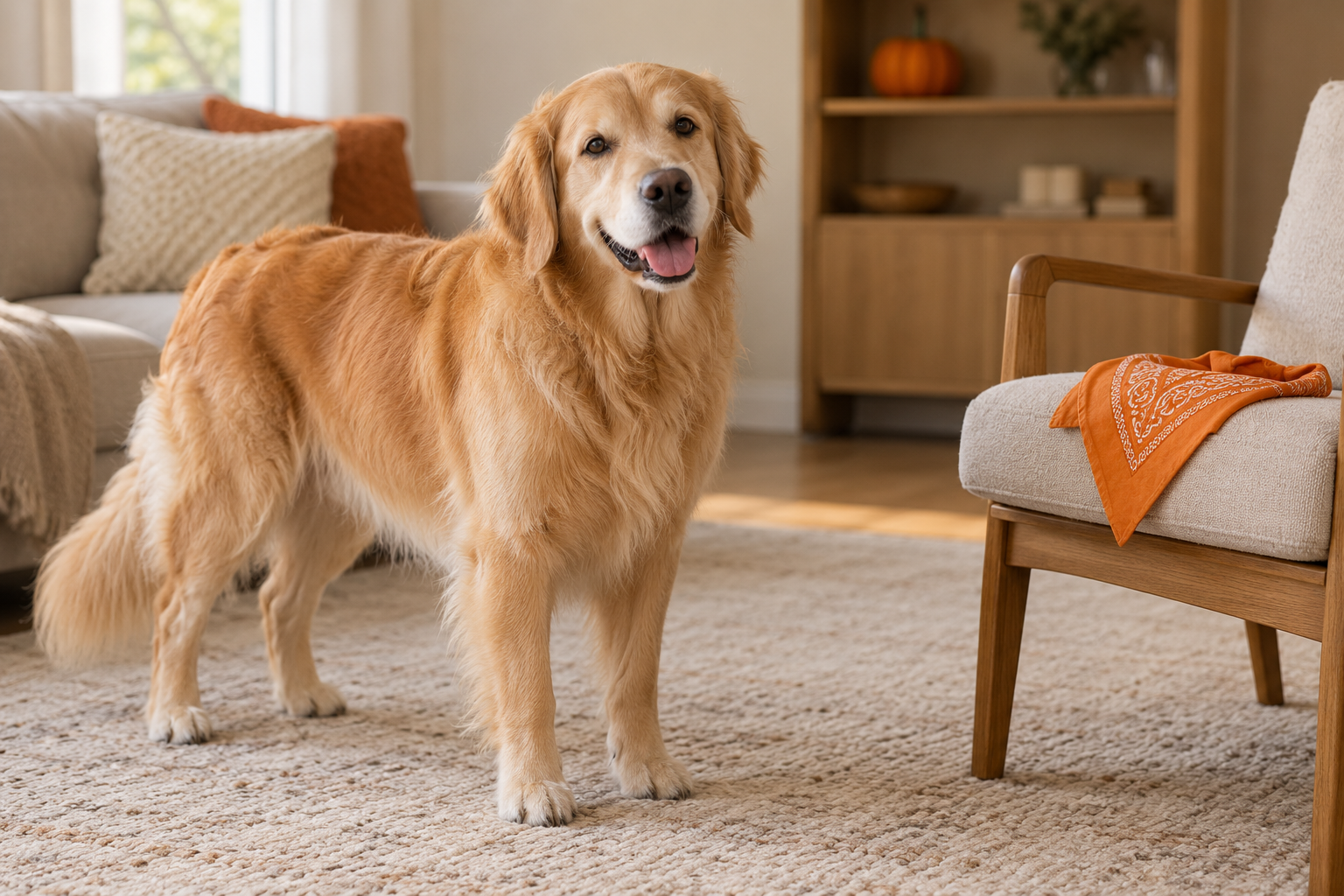
AI illustration of a dog beside an unused bandana.
A dog can be part of your Halloween photo without wearing anything. If you do choose an outfit, the useful question is whether your dog can move comfortably and behaves normally in that particular item. The character on the packaging matters much less.
Start with a simple design, check the exact size chart and try it quietly before the holiday. Remove it if your dog freezes, keeps trying to chew it or seems uncomfortable. A smaller accessory is an option for some dogs; skipping clothing altogether is a valid choice.
Quick Answer
- Inspect openings, fasteners and loose parts.
- Let your dog move normally during a short, supervised try.
- Remove the outfit if it restricts movement or your dog is uncomfortable.
- Choose an outfit-free photo if that is easier for your dog.
What You’ll Need
- The size chart for the exact garment, a soft fabric tape and clear floor space.
- A comfortable place for an outfit-free picture.
Check the outfit before you try it
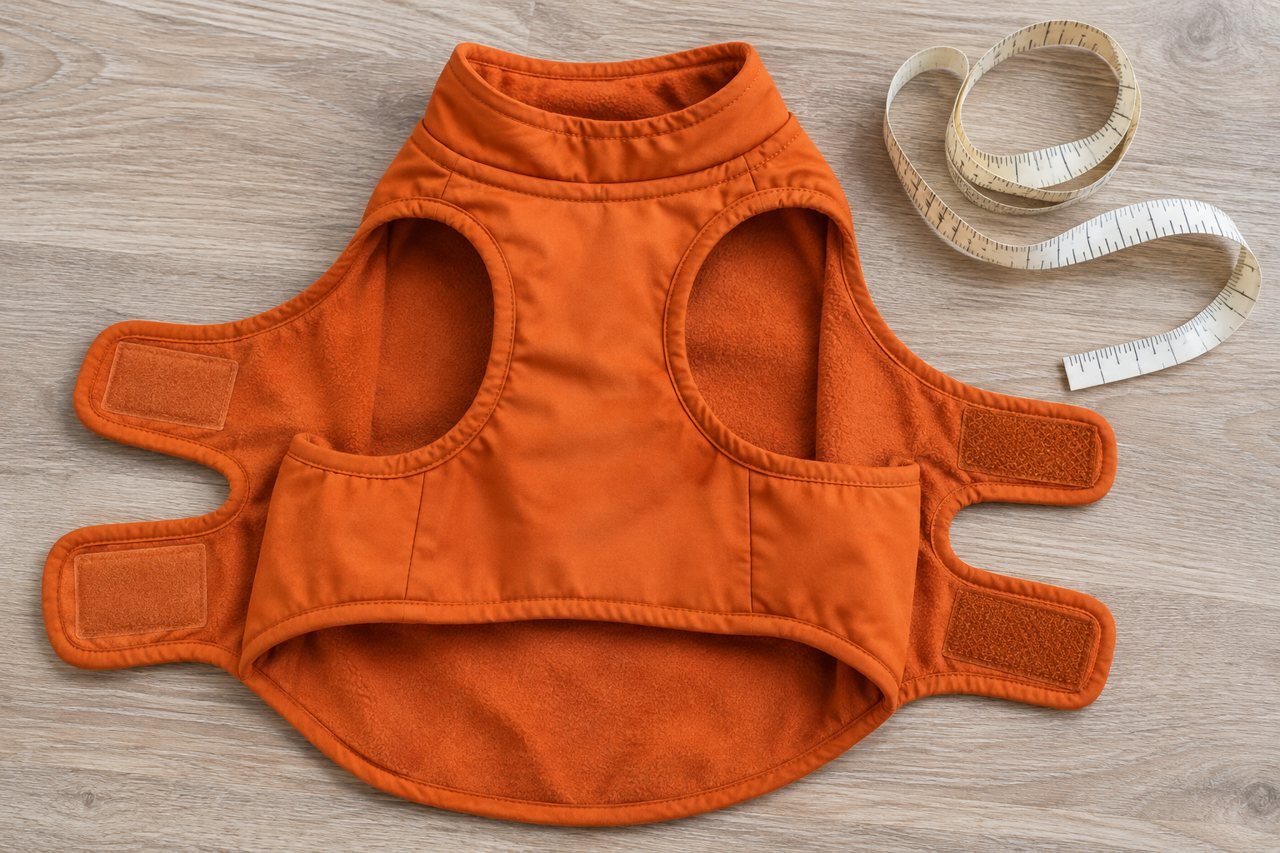
- Lay the outfit flat and check the openings, fastenings and any loose parts.
- If your dog is comfortable, use a soft tape at the points shown on the maker’s chart.
- Check unforced walking, turning and sitting during a short supervised try.
- Remove the outfit if the dog freezes, mouths it or has restricted sight, movement or breathing.
Decide whether a costume suits your dog
The American Animal Hospital Association’s costume guidance advises dressing pets who are already accustomed to clothing and considering their individual comfort. Tolerating a familiar winter coat does not tell you how a dog will respond to a different fastening, headpiece or dangling prop.
Think about what happens when you normally bring clothes near them. Do they remain comfortable, or turn away and try to leave? A dog that avoids the item does not need to complete a dressing-up lesson for Halloween.
Also consider the occasion. A quiet picture at home and a crowded event are different situations. Passing a fit check in your living room does not establish that your dog will enjoy strangers, masks or noise.
Inspect the outfit before putting it on
Lay the item out where you can see both sides. Check seams, openings, fasteners and anything attached to them. Avoid pieces that can cover the eyes, press over the ears or interfere with the mouth. Keep the face clear rather than adding a mask or a sheet with eye holes.
TailSprig Living · Amazon Idea List
My recommendations for taking garment measurements
For measuring your dog, choose a flexible tailor’s tape, such as the white 60-inch GDMINLO tape or the soft pink tape in the iBayam two-pack. Follow the garment maker’s chart and hold the tape gently. A rigid ruler or metal retractable tape is for household objects only. If your dog moves away, put the tape down.
Affiliate link. As an Amazon Associate I earn from qualifying purchases.
See measuring tools on AmazonThe ASPCA’s Halloween advice warns about small, dangling or easily chewed-off parts and clothing that catches on the pet or surrounding objects. Inspect the actual item you received, including loose decorations and accessible ties.
A size label is only a starting point. Measure the areas requested by that item’s chart, which may include the neck, chest and body length. Do not transfer a size from another brand or choose solely from a breed example. If the measurements and design do not work together, choose a different item or leave the outfit off.
Check fit while your dog moves
A costume needs to work beyond a posed standing photo. Cornell veterinary clinicians explain that both tight and loose outfits can cause problems: constriction, rubbing and difficulty moving. A generous-looking garment can still shift into an awkward position.
For a dog who remains comfortable with the try-on, check:
- Head and senses: the eyes, ears, nose and mouth stay clear, including when your dog lowers or turns their head.
- Neck and chest: fastenings do not squeeze, and breathing and normal vocalizing are unrestricted.
- Shoulders and legs: your dog can walk and turn normally without a changed stride or a foot catching in fabric.
- Loose material: hems, sleeves, straps and decorations do not trail, twist or become reachable chewing targets.
- Normal positions: the outfit stays clear as your dog naturally sits or lies down; check that it will not obstruct toileting.
Do not pull your dog through the checks to make the garment look successful. If an item needs constant repositioning to avoid trouble, it is a poor choice for this dog.
Keep familiar walking equipment separate. A costume fastening or bandana is not a leash-attachment point. Our dog harness-fit guide covers that different job; check the harness itself whenever clothing is added around it.
Make the first try quiet and brief
Try well before people arrive, in a familiar place with secure footing. Keep the item easy to remove and let your dog move away. Start with the simplest part of the outfit rather than adding every accessory at once.
You can offer a small familiar reward during a comfortable introduction, as Cornell’s guidance suggests. Food should not be used to keep a worried dog in place while you finish dressing them. If they avoid the item, struggle with it or try to leave, stop.
Watch the dog throughout rather than setting a target number of minutes. There is no single wear time that makes every dog and costume comfortable. Warmth, activity and the amount of fabric change the situation, and a short earlier try-on is not permission for all-evening wear.
Know when to remove it
AAHA identifies refusal to move, scratching or biting at the outfit, lip-licking and yawning among possible discomfort or anxiety signs. Interpret these in context; one isolated action is not a diagnosis. A clear change after dressing is a reason to pause and remove the item.
Standing still for a picture does not prove enjoyment. End the costume attempt if your dog repeatedly mouths the fabric, paws at it, withdraws or cannot move normally. Do not tighten the item to stop chewing or keep repeating the photo attempt.
Stay with a costumed dog, and remove the outfit when you cannot supervise. The ASPCA specifically advises against leaving a dressed pet unattended. If you are concerned about breathing, injury or a swallowed piece, contact a veterinarian promptly.
Consider a bandana only if your dog accepts it
A simple bandana covers less of the body than many costumes, but it still needs the right fit and supervision. Check where the fabric and fastening sit, whether the ends are reachable, and whether the accessory shifts as your dog moves. A dog that chews neckwear should have an outfit-free photo instead.
If you already own the Remy+Roo Wicked Halloween bandanas, Large, 2-pack, check how the tie and fabric sit on your dog. The manufacturer’s Wicked page describes this tie-fastened bandana line. Compare your dog’s actual measurements with the current maker’s sizing guide. The original product card identifies the large two-pack.
The product card below is also an affiliate link. TailSprig may earn a commission if you buy through it.

We have not personally tested these bandanas. The tie fastening and fabric still need the same checks described above, and the product does not establish that your dog will enjoy wearing it. Leave the accessory off if it cannot be fitted comfortably.
Plan an outfit-free picture
Leave the bandana and costume off if that suits your dog better. Photograph them in a familiar resting spot, or put a seasonal backdrop out of reach behind them. Keep loose props, cords and food decorations outside the dog’s space. You can wear the costume yourself while your dog stays as they are.

Let the picture end when your dog walks away. A comfortable, ordinary moment is enough; you do not need a hat, a held pose or repeated attempts to make the photo count.
Keep the day’s other needs separate too. Arrange secure management when visitors arrive; our doorway-practice guide explains why a trained pause does not secure an open exit. Choosing a costume-free dog is one less thing to manage, not a missed Halloween.
Printable dog costume fit checklist
- Fastenings and small parts checked
- Dog can see, breathe and move comfortably
- Outfit removed at the first sign of discomfort
- Outfit-free photo available
Frequently asked questions
What should I check while my dog walks?
Watch how the outfit moves around the shoulders, legs, face and fastenings.
What if my dog freezes during a fitting?
Take the outfit off and let the dog settle. An outfit-free photo is an option.
Is a bandana always easier?
Use one only if the dog accepts it and it fits safely under supervision.
How can I get a festive photo without clothing?
Use a quiet familiar spot with decorations out of reach and let the dog move away.
Leave a Reply