
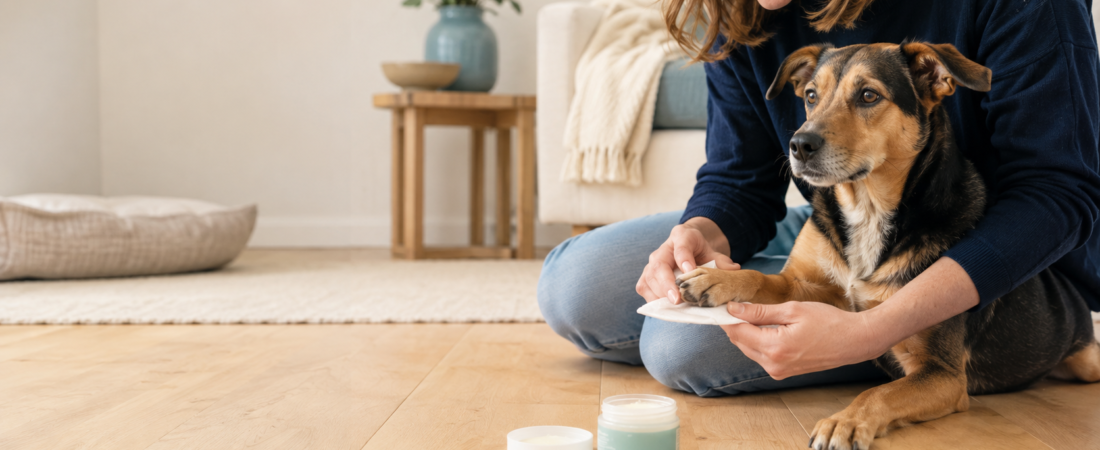
Dog nail bleeding after trimming can look alarming, but the first step is simple: put the clippers down. A nicked quick can leave more blood than you might expect, especially when your dog pulls the paw away or tries to walk.
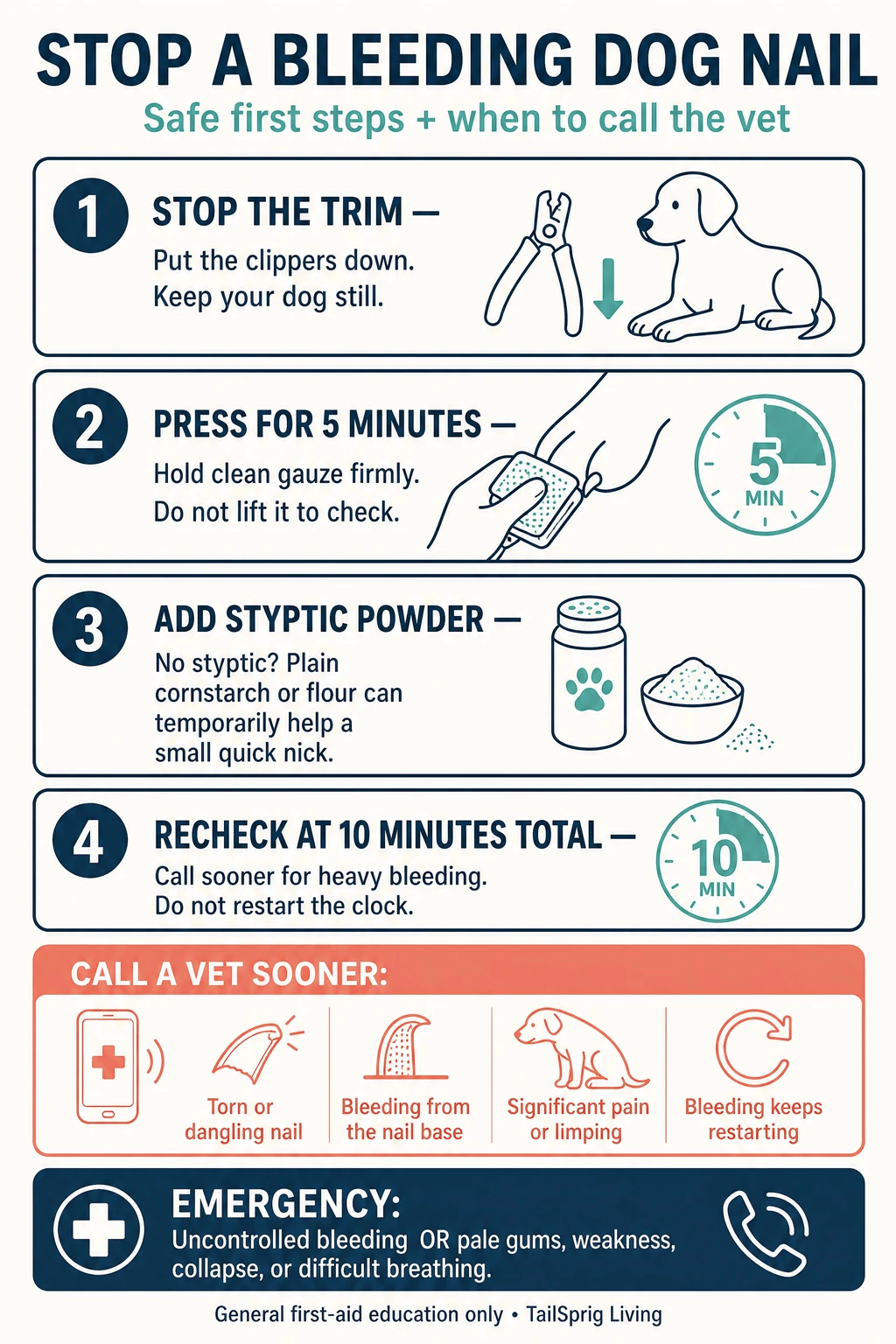
If you clipped the quick, stop trimming and keep your dog as still as you safely can. Start timing when you press clean gauze or a clean towel firmly against the nail. Hold it there for five minutes without lifting it to check. If the nail is still bleeding, add styptic powder if you have it and keep applying pressure. Call your veterinarian sooner for heavy bleeding, or if bleeding is still active at 10 minutes total. Do not restart the clock after adding powder. Veterinary guidance generally expects paw bleeding to come under control within about 5–10 minutes.
A small quick nick is painful but is not automatically an emergency. A split, torn, or dangling nail is a different injury. The same applies if blood is coming from the base of the nail. Call your veterinarian promptly because damaged nail tissue may need professional removal and protection.
Safety box: act now
For a small clip into the quick
- Stop the nail trim and keep your dog from walking around.
- Hold clean gauze or a clean towel firmly on the nail for five uninterrupted minutes.
- Press styptic powder onto the nail tip. Keep applying steady pressure.
- If you have no styptic powder, cornstarch or plain flour can be a short-term backup for a minor quick nick.
- Call your veterinarian if bleeding is heavy, keeps restarting, or is still active 10 minutes after you began pressure. Styptic powder is helpful, but not having it does not extend the 10-minute limit.
Get veterinary help sooner for a torn or dangling nail, bleeding from the nail base, severe pain, continued limping, pale gums, weakness, rapid breathing, bleeding elsewhere, a diagnosed bleeding disorder, a history of abnormal bleeding, or a medication your veterinarian has said may increase bleeding risk.
Do not yank off a damaged nail, keep clipping, pour hydrogen peroxide or rubbing alcohol on the exposed tissue, or give human pain medicine.
Why does a dog nail bleed after trimming?
Inside each nail is living tissue commonly called the quick. It contains blood vessels and nerves, while the hard outer nail protects it. Cutting into the quick can hurt and bleed even when the nail looks normal from the outside.
Blood spreads quickly through fur and across a floor, so a small nick can make a startling mess. Set the mess aside for a moment and check four things:
- Does steady pressure slow and stop the bleeding?
- Is the nail simply clipped short, or is it cracked, torn, or hanging?
- Can your dog settle, or is the pain severe?
- Are there signs of a wider bleeding problem?
How to stop a dog’s nail from bleeding safely
1. Put the clippers down
Put the clippers down. Do not try to “even up” that nail or finish the paw.
Pain can make even a gentle dog pull away or bite. Ask another adult to help only if your dog accepts calm handling. Do not wrestle, pin, or force the paw. If you cannot handle the toe safely, call a veterinary clinic for help rather than risking a bite or making the injury worse.
2. Apply steady pressure
Place dry, clean gauze or a clean folded towel over the end of the nail. Hold it firmly against the toe for five full minutes.
Try not to lift the material every few seconds. Disturbing the area can disrupt the forming clot. If blood comes through, keep the first layer in place and add clean material over it while maintaining pressure.
3. Apply styptic powder to the nail tip
Pour a small amount of styptic powder into a clean cap or shallow dish so you do not contaminate the container. Press the bleeding nail tip into the powder, or pack a small pinch onto the tip with clean gauze. Hold pressure again.
Styptic powder belongs in a dog-grooming kit because veterinary first-aid sources consistently recommend it for a minor quick cut.
4. If you do not have styptic powder
For a small quick nick, plain cornstarch or plain flour can be used as a temporary backup. Press it onto the nail tip and continue steady pressure.
Keep styptic powder in the grooming kit for next time. Cornstarch and flour are backups, not reasons to delay veterinary care when bleeding is heavy, the nail is torn, or the 10-minute limit is reached.
5. Recheck at 10 minutes total, or sooner if bleeding is heavy
If the nail is still bleeding 10 minutes after you first began firm pressure, call your veterinarian. Use styptic powder if it is available, but do not restart the clock after applying it. Veterinary Partner/VIN advises calling if bleeding continues longer than 10 minutes or is very heavy.
Do not keep repeating home treatment once the 10-minute limit has passed and the nail is still bleeding. Call sooner if the flow is heavy, your dog seems weak, or the injury worries you.
Helpful item to keep with your nail clippers: dog-safe styptic powder
If you trim your dog’s nails at home, styptic powder is worth having open and within reach before you start. Choose a pet-labeled product and follow its directions. It is for a small quick nick, not a torn nail or uncontrolled bleeding.
Affiliate disclosure: TailSprig may earn a commission if you buy through a link in this section, at no extra cost to you. A product recommendation is not a substitute for veterinary care. As an Amazon Associate I earn from qualifying purchases.
What not to put on a bleeding dog nail
The exposed quick is sensitive tissue, so keep harsh cleaners and unapproved products off it.
- Do not use hydrogen peroxide, rubbing alcohol, tea tree oil, herbal preparations, or other unapproved cleaners on exposed tissue unless your veterinarian tells you to. VCA warns that some wound products can be toxic if swallowed or can delay healing.
- Do not pull off a split or dangling piece of nail. Removal can be painful and is usually best handled by a veterinarian.
- Do not give aspirin, ibuprofen, naproxen, acetaminophen, or leftover medication prescribed for another pet. The FDA advises speaking with a veterinarian before giving any pain reliever; a human or leftover drug may harm the dog and may be inappropriate for the situation.
- Do not leave an improvised paw wrap in place. For transport, keep clean gauze or a towel against the toe and follow the clinic’s instructions.
Did you cut the quick, or is the nail torn?
| More consistent with a small quick nick | More concerning for a torn or broken nail |
|---|---|
| Bleeding began immediately after one nail was clipped short | Nail is cracked lengthwise, split, twisted, partly detached, or dangling |
| Blood comes from the cut end of the nail | Blood comes from the base or exposed nail bed |
| Bleeding responds to pressure and styptic powder | Bleeding keeps returning or does not respond to first aid |
| Dog is startled or briefly sore but settles | Dog continues to cry, guard the paw, or will not bear weight |
| No other nail or body area is bleeding | There is unexplained bruising or bleeding elsewhere |
These clues can help you describe the injury to a veterinary clinic, but they cannot reliably rule a torn nail in or out. Torn nails can be very painful, and a veterinarian may need to remove the loose portion, relieve pain, and protect the exposed nail bed.
When to call a veterinarian
Call your veterinarian
- Bleeding is very heavy.
- Bleeding is still active 10 minutes after you began firm pressure, with styptic powder used if available.
- Bleeding stops but repeatedly starts again with minimal movement.
- The nail is split, torn, twisted, dangling, or injured near the base.
- Your dog has marked pain, keeps crying, guards the foot, or continues to limp.
- You see redness, swelling, pus, or ongoing pain during follow-up.
- Your dog has a diagnosed bleeding disorder, a history of abnormal bleeding, or takes a medication your veterinarian has said may increase bleeding risk.
- More than one nail or another body area is bleeding without a clear cause.
- You cannot examine or handle the paw safely.
Go to an emergency veterinary clinic
Go to an emergency veterinary clinic if the bleeding is uncontrolled or your dog has pale or white gums, becomes weak or collapses, breathes rapidly or with difficulty, or has a very fast heartbeat. These can be signs of shock or serious blood loss.
If you are unsure how urgent it is, call your regular veterinarian or the nearest emergency clinic. Tell them how long the nail has been bleeding, what it looks like, and how your dog is acting. Mention any bleeding disorder or medication that your veterinarian has said may increase bleeding risk.
What to do after the bleeding stops
After the bleeding stops, limit running and rough play at first. Check the toe after your dog stands or walks. If it starts bleeding again, return to firm pressure and add styptic powder if available. Call the clinic if bleeding is heavy or keeps returning. Follow your veterinarian’s advice about activity and keeping the paw clean or dry, especially if the nail is torn.
Do not let your dog lick or chew the toe. Licking can irritate injured tissue, and VCA recommends preventing access to open wounds, often with a properly fitted recovery collar when needed.
Once the bleeding is controlled, look without pulling on the nail. Contact your veterinarian if you notice a crack, loose section, swelling, redness, pus, worsening pain, or persistent limping.
If a small quick nick stops bleeding and your dog seems comfortable, you can usually monitor it at home. Call your veterinarian if the nail is cracked or loose, the toe remains painful, or bleeding returns.
How to make the next nail trim safer
Do not restart the trim once the bleeding stops. Leave the remaining nails for another day.
Next time, open the styptic powder before you begin and keep it within reach. Clip off a very small amount at a time, especially on dark nails where you cannot see the quick from the outside.
If your dog has dark nails, our guide to trimming black dog nails safely shows what to look for as you shorten each nail.
Optional prevention tool: dog nail grinder
A grinder removes nail a little at a time, which some owners find easier for maintenance between trims. With the Casfuy 2-speed dog nail grinder, work in short sessions, pause often to avoid heat buildup, keep long hair away from the rotating bit, and never over-grind. A grinder still does not belong near an actively bleeding nail.
For more practical help with grooming, safety, and everyday care, visit our Dog Care guides.
Frequently asked questions
How long should a dog nail bleed after cutting the quick?
With firm pressure, a minor quick nick should come under control within about 5–10 minutes. Call your veterinarian sooner for heavy bleeding, or if it is still active 10 minutes after you began pressure. Use styptic powder if available, but do not restart the clock after applying it.
Is cutting a dog’s quick an emergency?
Not always. A small quick nick that stops with pressure and styptic powder is not necessarily an emergency.
Get prompt veterinary help for a torn or dangling nail, uncontrolled bleeding, severe pain, weakness, pale gums, or a diagnosed bleeding disorder.
Can I use cornstarch or flour on a bleeding dog nail?
Yes. Plain cornstarch or flour can be a temporary backup for a minor quick nick. Keep applying pressure, and call your veterinarian sooner for heavy bleeding or if it is still active 10 minutes after you began first aid.
Should I bandage my dog’s nail after cutting the quick?
For immediate first aid, hold clean gauze or a clean towel against the toe. Do not leave a tight homemade wrap in place. If the nail is torn, keeps bleeding, or needs protection, ask your veterinary clinic how to cover it for transport and whether a professional bandage is needed.
Can my dog lick the nail after it stops bleeding?
Do not let your dog lick or chew the injured toe. A properly fitted recovery collar may be needed if your dog will not leave it alone.
Can I clean the nail with hydrogen peroxide?
Do not use hydrogen peroxide, rubbing alcohol, tea tree oil, herbal preparations, or an unapproved cleaner on exposed tissue unless your veterinarian directs you. Some products can delay healing or be harmful if swallowed.
What if the nail stops bleeding and starts again?
Limit activity and reapply firm pressure, with styptic powder if available. Check for a crack or loose piece of nail. Call your veterinarian if bleeding is heavy or repeatedly restarts. Do not begin a new 10-minute waiting period each time it returns.
What are signs of infection after a nail injury?
Redness, swelling, pus, and ongoing or worsening pain are reasons to contact your veterinarian. Persistent limping also warrants a call; a loose or damaged nail should be assessed as a nail injury, even without signs of infection.
Health note: This article provides general first-aid education and cannot diagnose or treat an individual dog. Contact a veterinarian for uncontrolled bleeding, a torn nail, significant pain, lameness, signs of infection, clotting concerns, or any situation that worries you.
Veterinary sources reviewed
- VCA Animal Hospitals: First Aid for Broken Nails in Dogs
- VCA Animal Hospitals: First Aid for Bleeding in Dogs
- Veterinary Partner/VIN: What To Do When Your Dog’s Toenail Trims Don’t Go as Planned
- ASPCA: At-Home Pet Grooming: Top Tips and Recommendations
- Cornell University College of Veterinary Medicine: Canine von Willebrand Disease
- FDA: Get the Facts about Pain Relievers for Pets