
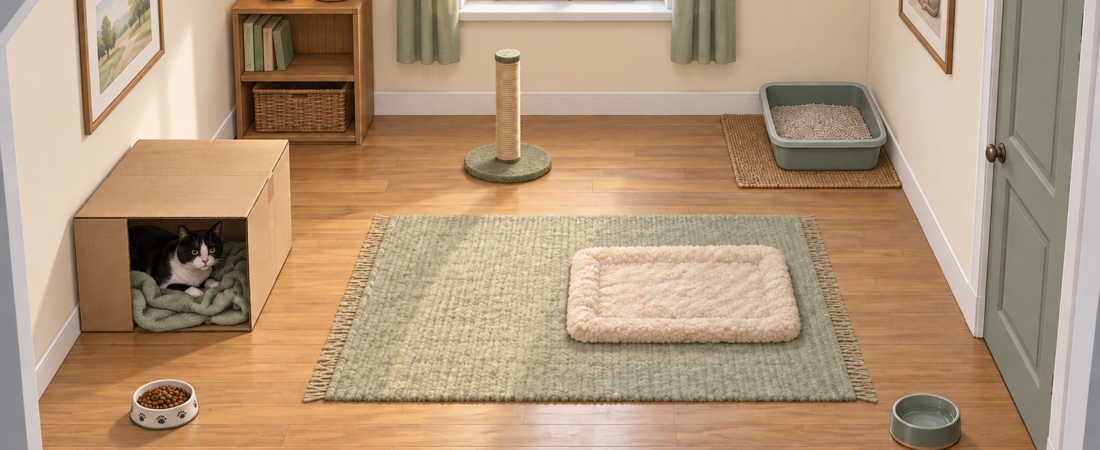
This AI-generated room example separates the hide, food, water and litter areas. Adapt the layout to the cat and room; the scene is not to scale.
The friendly cat you met at the shelter is now tucked behind furniture. It is tempting to keep checking or offer another hand for them to sniff. A quieter first step is to give them a manageable room with a safe hiding choice and access to everything they need.
This guide is for a newly adopted adult cat. Hiding can accompany an unfamiliar home, but it does not prove that the cat is healthy. Kittens and cats with medical needs may need a different arrival and monitoring plan from the rescue or veterinarian.
Quick Answer
- Prepare the room before opening the carrier.
- Give the cat a hiding option and a clear route out.
- Monitor eating, drinking and litter use without pulling the cat out.
- Call your vet promptly if you cannot confirm eating, drinking or normal toileting. Straining with little or no urine needs emergency advice immediately.
What You’ll Need
- A room with a closing door, a safe hide and an unobstructed way out of it.
- Separate food, water and litter areas, with room to reach each one.
Prepare the first visit
- Check the floor, windows and gaps before opening the carrier.
- Set the carrier down and let the cat decide when to come out. Leave the hide within reach.
- At quiet visits, see whether food has been eaten and the tray used. Avoid reaching into the hide.
- Contact your veterinarian promptly about poor intake or changes in toileting. Straining and passing little or no urine requires emergency attention.
Prepare the room before opening the carrier
Cats Protection recommends a quiet initial room with the cat’s essential resources, away from busy household areas. Check the room from floor level as well as standing height. An apparently tidy room can still have an appliance gap, unsecured window or trailing cord.

TailSprig Living · Amazon Idea List
My recommendations for tending the first-room litter area
For the tray in the new cat’s room, the Pet Cleaning Essentials collection includes a large blue metal litter scoop and an OXO dustpan and brush. Keep them available for quiet daily checks. Store them away from the hide entrance and bowls so your cat has a clear route.
Affiliate link. As an Amazon Associate I earn from qualifying purchases.
See litter cleanup supplies on Amazon- Provide a stable box or covered bed with an accessible, unobstructed entrance and space for the cat to leave.
- Place food and water in separate areas with clear access.
- Put a suitable litter box in a quiet area as far from the bowls as the room allows.
- Include a resting spot and stable scratching surface.
- Secure windows and remove hazards, loose cords and toys that need active supervision. Keep other pets out of the room.
The illustration shows one possible arrangement, not fixed distances. Before the cat arrives, walk the routes between the hide and each resource. A door, laundry basket or your chair should not block the only route. You can use a suitable box you already have; the point is a safe choice, not a particular product.
An optional scratching surface for the room
If the rescue knows your cat prefers upright scratching and you need a post, the SmartCat Ultimate Scratching Post in Beige (model 3832) is one option to compare. It has a woven sisal surface; see the manufacturer’s product and assembly information. Check the footprint and your cat’s comfortable stretching height before choosing it. Assemble it as directed and check for movement before use.
Keep the post clear of the hide entrance and the routes to bowls and litter. Let the cat investigate voluntarily; do not pull them out or place their paws on it. A cat who prefers horizontal scratching may need a different surface. We have not personally tested this post, and buying it does not make a hidden cat ready for contact. An existing suitable scratcher is fine.
The product card below is also an affiliate link. TailSprig may earn a commission if you buy through it.

Allow a hiding choice without making a trap
Set the carrier down in the prepared room, open it and allow the cat to emerge at their own pace. Keep the space quiet. Do not tip the carrier, drag the cat out or reach into the hide to insist on a greeting.
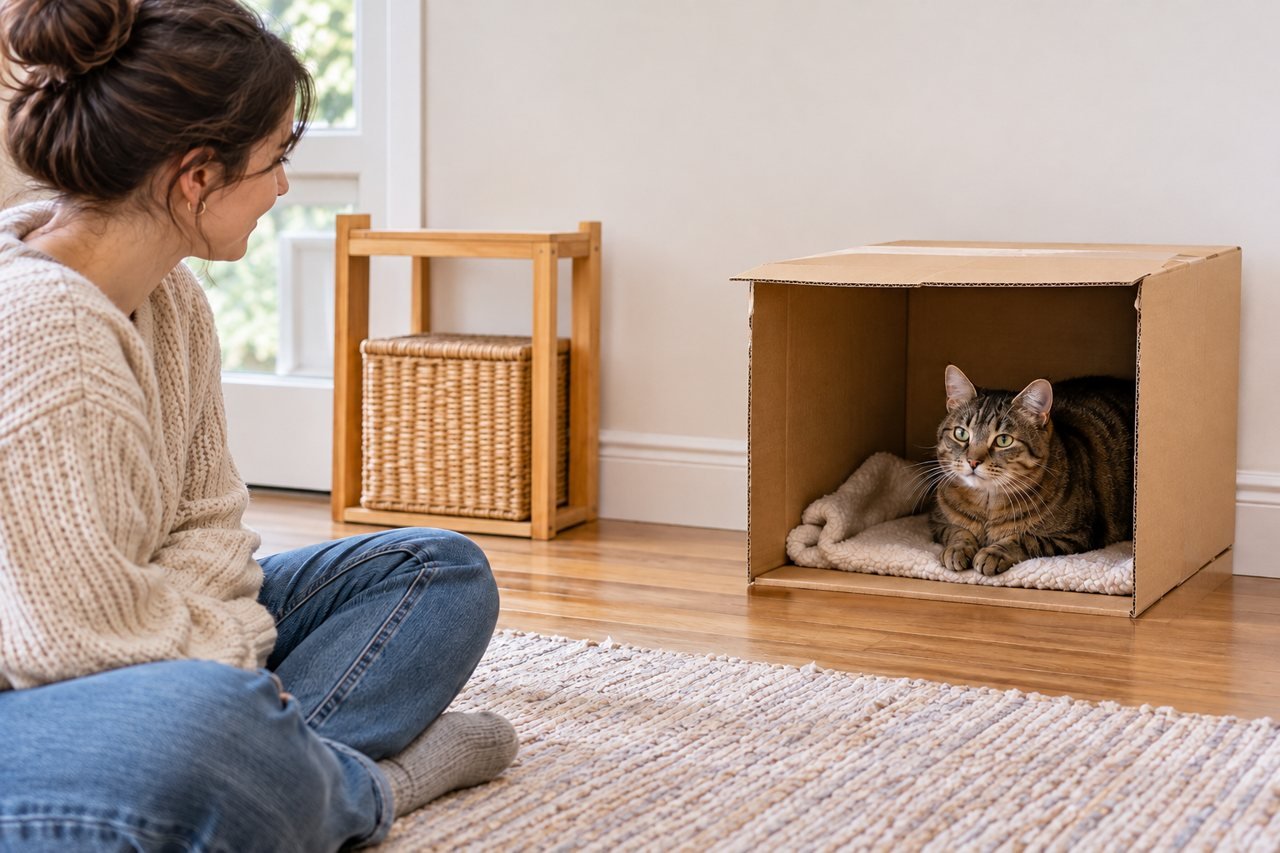
Cats Protection’s hiding advice recommends allowing a stressed cat to stay hidden until they feel ready. It also advises keeping resources nearby without putting them directly in or beside the hiding place. Sliding a bowl behind the sofa can crowd the space rather than help.
If the room is already in use, avoid chasing a hidden cat into the setup you wish you had prepared. If they are trapped or hiding in a dangerous place, contact the rescue or veterinary team for safe handling advice. Do not move heavy furniture or appliances blindly around an unseen animal.
Visit quietly and keep care predictable
You can sit quietly without approaching the hiding place. Speak softly, take care of bowls and litter, and leave the cat a choice about contact. Repeated peeking, coaxing and crowding may slow their confidence. Give them continued access to resources overnight, when the home may feel quieter.
Keep the first visits simple. For example, refill the water, check the food, scoop the litter and sit at a comfortable distance. If the cat watches you but stays hidden, there is no greeting test to pass before you leave. Make notes about what you actually observe rather than trying to produce a cuddle.
Monitor welfare separately from confidence
Record whether food has been eaten and whether the litter box has been used. In a single-cat room, measured portions and a scooped tray can make changes easier to notice. A disappearing meal is useful information; it does not establish that every health concern has been ruled out.
- Contact your veterinarian promptly if you cannot confirm eating, drinking or normal toileting, or the cat seems unwell. Do not wait through an adjustment timetable.
- Ask for help if hiding persists without progress or becomes more intense. Share your observations and the rescue’s history.
- If the cat strains to urinate or produces little or no urine, contact a veterinarian for emergency advice immediately.
Cats Protection explains why a suspected blocked bladder is an emergency. A litter-box problem during a move should not automatically be attributed to stress. Do not try to diagnose or treat it at home.
Expand the space when the cat is ready
Look for small changes: eating reliably, exploring the room, choosing to approach or returning to a resting spot after investigating. These observations can help you discuss the next step with the rescue. A calendar rule such as “three days, three weeks, three months” cannot determine an individual cat’s readiness or justify delaying medical care.
Before allowing more exploration, check the next area for hazards and preserve access to the first room. If other cats live with you, use a separate gradual cat-introduction plan. For arranging the toilet area, see our litter-box placement guide.
A quiet room lets you reduce pressure while keeping care visible. Give the cat a safe place to hide, clear routes to resources and a daily welfare check. Confidence can develop at its own pace; basic health needs still need attention today.
Printable first room checklist
- Hide available without a trap
- Food, water and litter accessible
- Eating and litter use observed
- Changes recorded for the vet
Frequently asked questions
Should I pull a hiding cat out to introduce myself?
Let the cat choose when to emerge. Keep care predictable and give access to food, water and litter.
Can the carrier be a hiding place?
An open carrier can work if it is comfortable, accessible and safe to enter and leave.
How can I tell if the cat is managing?
Track eating, drinking and litter use separately from how often the cat comes out to see you.
When should I call the vet?
Get advice about illness, changed appetite or litter habits, or ongoing distress.
Leave a Reply