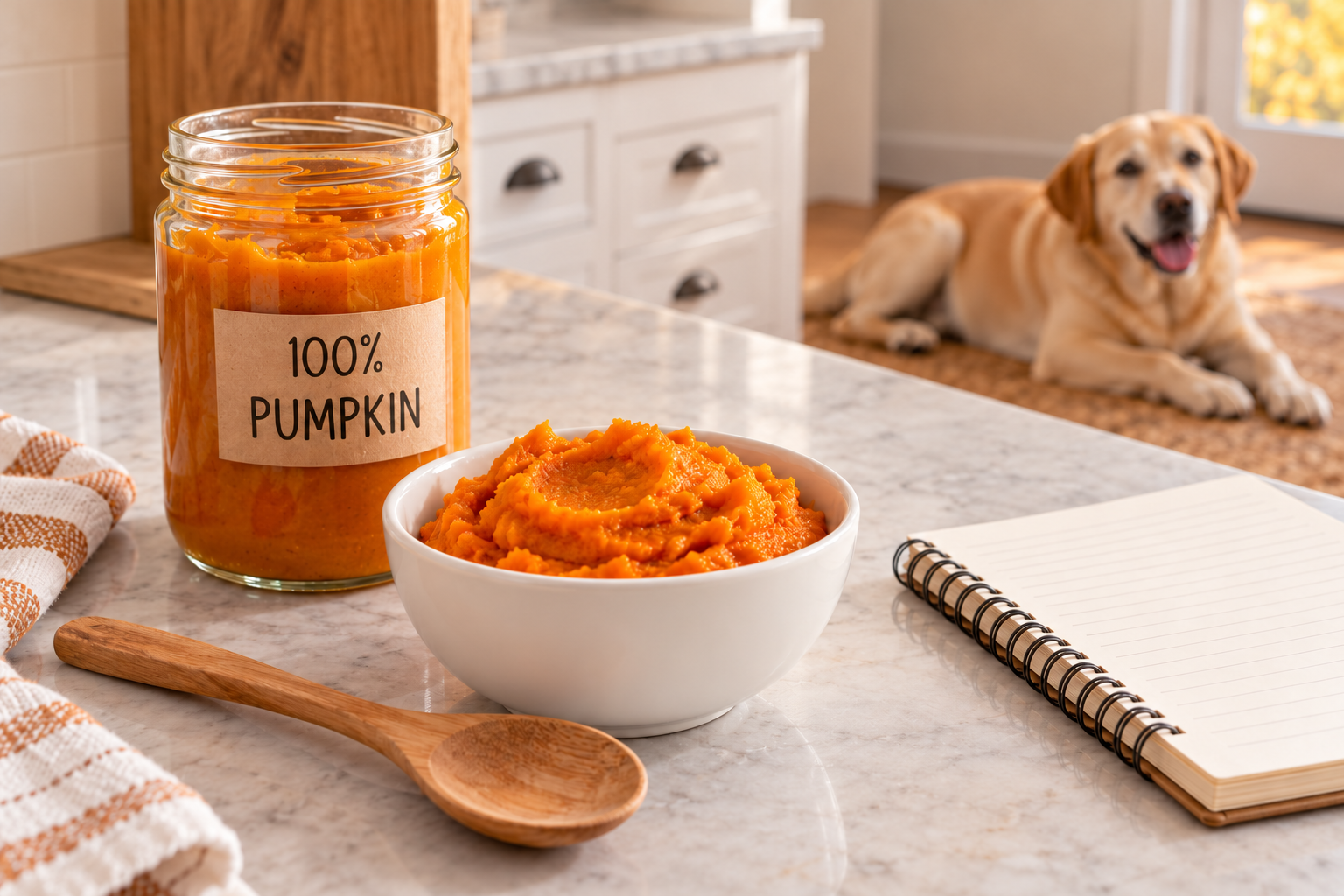
AI illustration of plain pumpkin puree.
Before you mix pumpkin dog treats or pick up a seasonal bag, turn the packet or can around and read the small print. Plain pumpkin puree, pumpkin pie filling and a finished pumpkin-flavoured biscuit are different products. The rest of the recipe matters just as much as the pumpkin.
Start with plain ingredients your dog can have, check any peanut butter for xylitol, and keep the finished treats within your dog’s daily treat allowance. A cute shape or a short ingredient list cannot make that decision for you.
Quick Answer
- Look for plain pumpkin puree. Read the ingredient list on pie filling and packaged treats separately.
- Check every peanut butter jar for xylitol before mixing. If your dog may have eaten xylitol, contact a veterinarian immediately.
- Check the rest of the recipe against your dog’s diet and treat allowance before making a batch.
What You’ll Need
Original ingredient labels, your dog’s dietary plan, and the recipe.
Check the ingredients before mixing
- Read the pumpkin label to identify exactly what is in the can.
- Check peanut butter and other ingredients for xylitol.
- Account for treats in the dog’s usual feeding plan.
- If your dog may have eaten xylitol, contact veterinary help immediately.
Start with the pumpkin can
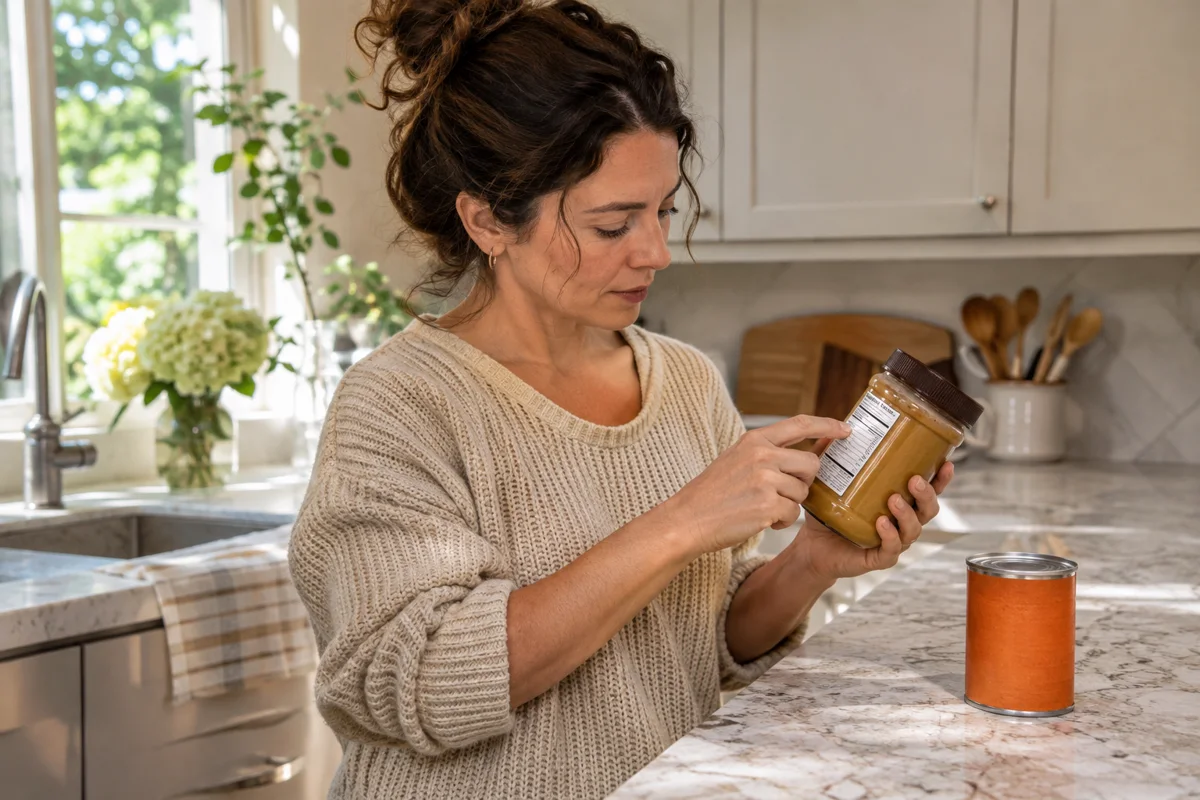
For homemade treats, choose plain pumpkin puree with no added sugar or salt. Read the ingredients rather than relying on a pumpkin picture or a familiar brand name.
Pumpkin pie filling or pie mix has extra ingredients, including sugar and spices. Leave it out of your dog’s baking. The American Kennel Club’s pumpkin recipe guidance makes the distinction between plain puree and pie mix.
If you are making puree from fresh pumpkin, follow a suitable recipe’s preparation instructions. Keep the dog-treat portion plain before adding anything intended for the family’s dessert.
Read the peanut butter label every time
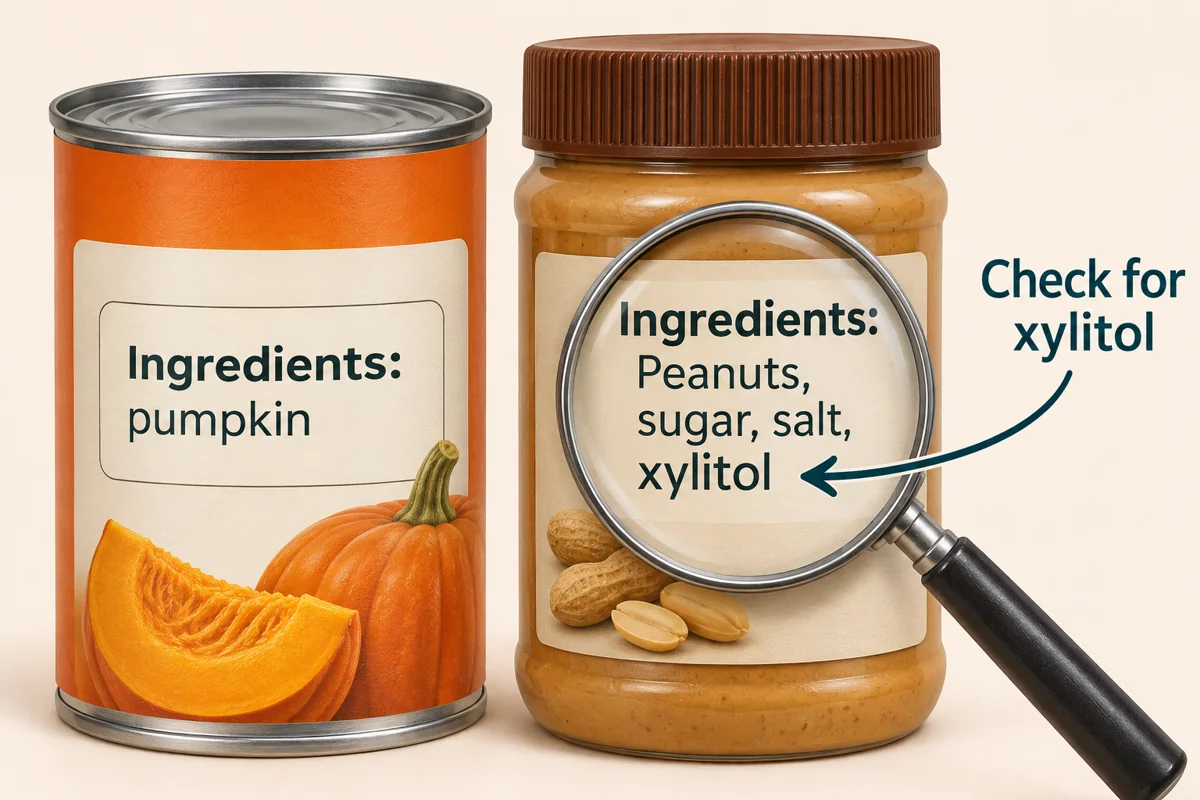
Some peanut and nut butters contain xylitol. The FDA warns that xylitol is poisonous to dogs; it may also be labelled birch sugar or wood sugar.
Check the ingredient list on the jar you are actually using. Do this again when replacing it, even if the packaging looks familiar. Words such as “natural” or “sugar-free” are not a substitute for that check. Apply the same care to applesauce, yogurt or other sweetened ingredients in a recipe.
If you think your dog has eaten xylitol, contact your veterinarian, an emergency animal clinic or an animal poison-control service immediately. Do not wait for symptoms.
Check everything going into the bowl
Pumpkin does not make the other ingredients suitable. Check the recipe from beginning to end, including optional toppings and decorations.
Keep chocolate, raisins, grapes, macadamia nuts, onion and garlic out of your dog’s treats. These are among the foods identified as hazardous by the FDA’s pet-safety guidance. Skip the family’s chocolate drizzle, sweetened icing and pumpkin-spice additions rather than treating them as necessary finishing touches.
Also check the recipe against your dog’s individual diet. If your dog has a food allergy, is on a therapeutic diet or is following a veterinary feeding plan, ask your vet which ingredients and treats fit that plan before baking or buying. An unfamiliar flour, dairy ingredient or nut butter is still a diet change.
Work out the treat allowance before the batch
Treats and other extras should generally provide no more than 10% of a dog’s daily calories, according to the UC Davis treat guidelines. Your veterinarian can help with a suitable allowance for your dog.
That allowance includes everything: pumpkin biscuits, training rewards, table scraps and other snacks given by the household. It is a calorie limit, not 10% of the bowl’s volume.
For packaged treats, look for calories per treat and check the feeding guidance. For homemade treats, use reliable calorie information for the actual ingredients and finished batch. If you cannot establish the calories, do not invent a daily biscuit count from your dog’s size alone. Ask for help with portioning.
Pumpkin biscuits are occasional extras. For advice about cooking your dog’s main meals, see our separate guide to planning a complete homemade diet with your vet.
Buying pumpkin treats? Check more than the flavour
Read the whole packet, including:
- Ingredients: check every component against your dog’s needs, not just the named pumpkin flavour.
- Intended use: confirm that the product is a dog treat and read any stated age, weight or feeding restrictions.
- Portions: look for calorie information and directions for how much to offer.
- Storage: follow the packet’s opening, resealing and storage instructions.
AAFCO’s label guide explains that treats are usually not intended to provide a complete diet. It also explains the role of the full ingredient statement.
If a retailer’s headline conflicts with the feeding directions, pause and ask the manufacturer to clarify. A broad description such as “for all dogs” should not override a specific restriction on the product you are buying. Recheck the packet when it arrives.
Baking? Choose the recipe before the cutter
TailSprig Living · Amazon Idea List
My recommendations for weighing pumpkin treat ingredients
For a recipe written in grams, put an empty bowl on a kitchen scale and zero it first. Choose a scale with increments that suit the recipe. Treat size and your dog’s daily allowance are separate decisions.
Affiliate link. As an Amazon Associate I earn from qualifying purchases.
See kitchen scales for pet meal prep on AmazonPick a published recipe with clear ingredients, preparation, cooling and storage instructions. Check those instructions before you begin, so you are not trying to improvise halfway through.
PDSA publishes a pumpkin dog-biscuit recipe with ingredient checks and a full method. TailSprig has not baked or tested that recipe.
Follow the recipe’s amounts and preparation rather than borrowing the ingredients from one version and the baking time from another. A different flour, added liquid or thicker biscuit can change the result. Check with your vet before making ingredient substitutions for a dog with dietary restrictions.
For a cut-out recipe, follow the author’s directions for dough thickness and biscuit size. Changing the cutter can change the number and size of the pieces; it does not preserve the original yield or establish a safe portion.
Optional tool: a small bone-shaped cutter
If you already own the Ann Clark Dog Bone Cookie Cutter, 2.5-inch, check whether your chosen recipe uses rolled dough. The manufacturer’s exact product page identifies the cutter and its dimensions. It is a shaping tool; the finished biscuit still needs to fit your dog’s treat allowance.
Affiliate product link.

We have not tested this cutter. A clean food-use cutter you already own may also suit your recipe. Inspect the tool before use and keep it out of your dog’s reach. Ann Clark’s care instructions call for hand washing and immediate drying, with no soaking or dishwasher use.
Optional tool: a scale for recipe amounts
When your recipe gives ingredient amounts in grams, a kitchen scale lets you follow those amounts without guessing from a spoonful. If you already own the OXO Good Grips 5-lb Kitchen Scale with Pull-Out Display, Black (model 11238300), check how to zero the empty bowl. OXO lists a tare function, gram readings and a display that pulls out from beneath a bowl.
Affiliate product link.

We have not tested this scale. Use a suitable kitchen scale you already own if it meets your recipe’s needs. Follow the scale’s instructions and capacity limit. Weighing ingredients does not establish a safe treat allowance or tell you the calories in a finished biscuit; keep the ingredient checks and portioning guidance above.
Plan cooling and storage before serving
Let baked treats cool fully before offering them. Follow the storage directions for the exact recipe you used, and label the container with its contents and preparation date.
Do not assume homemade pumpkin biscuits are suitable for a jar on the counter just because a commercial biscuit is sold that way. Recipes vary in moisture and ingredients. Use the recipe’s stated refrigeration or freezing instructions instead of assigning every batch the same shelf life.
Keep the ingredients, finished batch and empty food packaging out of your dog’s reach. Offer an appropriate small portion under supervision rather than leaving the whole batch available.
Printable checklist
Pumpkin dog treat ingredient checklist
- Read the pumpkin label to identify exactly what is in the can.
- Check peanut butter and other ingredients for xylitol.
- Account for treats in the dog’s usual feeding plan.
- If your dog may have eaten xylitol, contact veterinary help immediately.
- Label the finished treats and follow the exact recipe’s storage instructions.
Open the pumpkin dog treat ingredient checklist (one-page PDF)
Frequently asked questions
Are fewer ingredients always better?
A shorter list is easier to check, but each ingredient still needs to suit your dog. A three-ingredient recipe containing an unsuitable sweetener is not made appropriate by being simple.
Can I use pumpkin treats to manage a digestive problem?
Ask your veterinarian about ongoing vomiting, diarrhoea or another digestive concern. This guide is about checking occasional treats; it does not establish a pumpkin treatment or a dose for an unwell dog.
Is pumpkin pie filling the same as plain pumpkin?
Read the ingredients. A pie mixture can include other ingredients the recipe does not call for.
Why check peanut butter each time?
Check the actual jar for xylitol before using it. If your dog may have eaten xylitol, contact veterinary help immediately.
Leave a Reply