
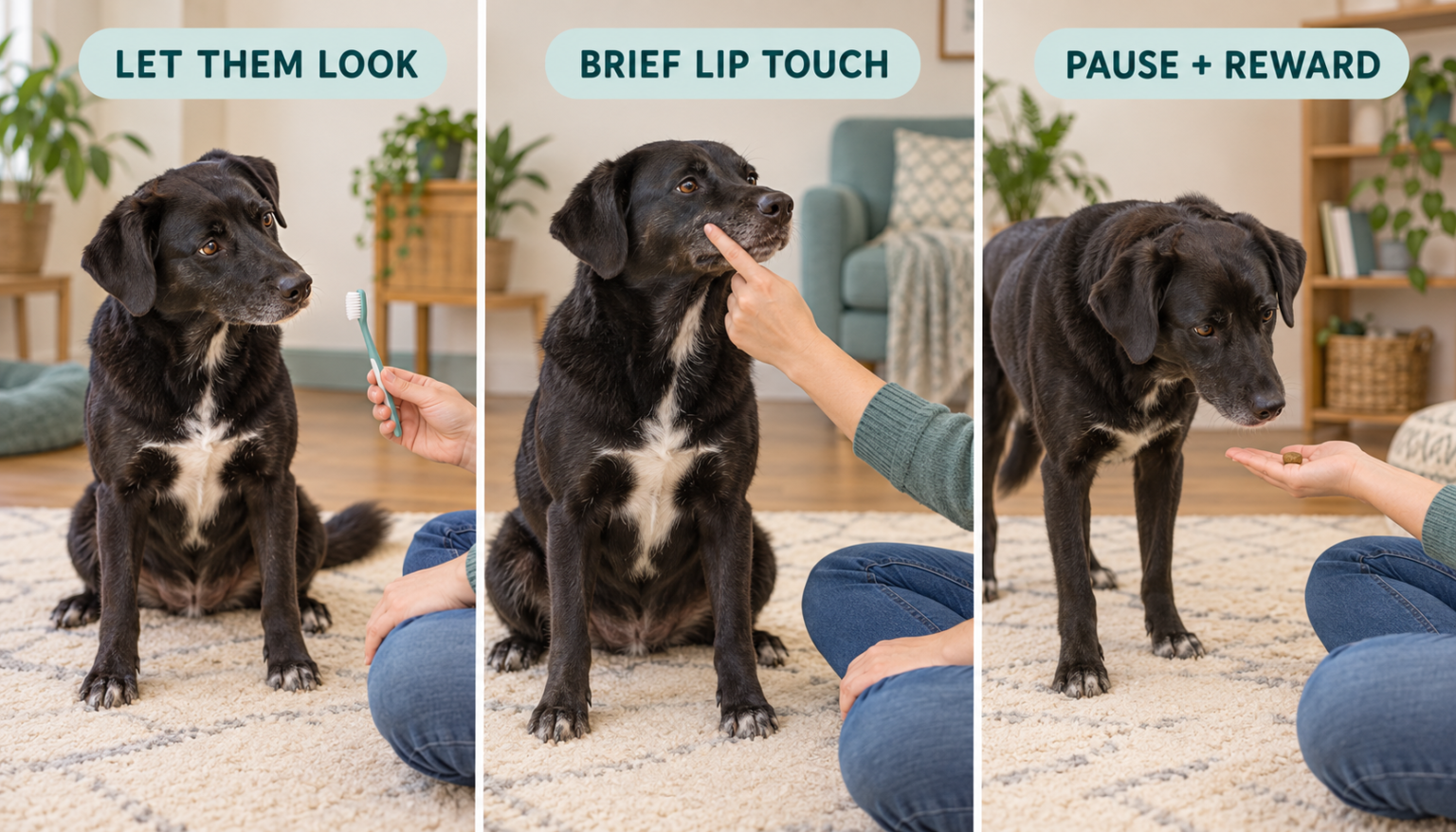
Brush introduction, brief lip contact and a pause for a reward. AI-generated educational illustration.
Your dog licks the toothpaste, then turns their head as soon as the brush approaches. Or they leave when you reach toward their lips. Buying another brush may help with fit, but it does not teach them to accept mouth contact.
Start with the part they can manage comfortably: being near the brush, a brief touch beside the mouth, or a gentle lip lift. Build from there in short sessions. This guide is for gradual preparation after your veterinary team has confirmed that home brushing is appropriate.
Quick Answer
- Check for a painful mouth before practice. If your dog has bleeding, swelling or discomfort, contact the vet.
- Practice brief lip contact separately from tasting pet toothpaste or feeling a brush.
- Stop when the dog turns away. Ask your vet to demonstrate brushing the outer surfaces as the dog becomes comfortable.
What You’ll Need
Pet toothpaste, an appropriate brush and a quiet place.
1. Check the mouth before practising
A painful mouth needs veterinary attention. Contact your vet if you notice bad breath, red or bleeding gums, a broken or loose tooth, facial swelling, drooling, dropping food or difficulty eating. A dog can keep eating despite dental pain. If they cannot close their mouth or are too painful to eat, seek an urgent veterinary appointment. PDSA explains these signs and when to seek help.
If your dog previously accepted brushing and now avoids it, arrange a check rather than assuming they have become stubborn. Do not brush inflamed or painful gums. AAHA’s dental guidelines explain that this causes pain and can make animals avoid brushing.
Ask for a demonstration suited to your dog’s mouth. For puppies, ask when to begin brushing as their adult teeth develop; sore teething gums need care.
2. Set up a short practice session
Choose a quiet room with secure footing and space for your dog to move away. Sit beside them at a comfortable height. Have a small familiar reward ready, along with pet toothpaste and a soft brush that your vet considers suitable.
TailSprig Living · Amazon Idea List
My recommendations for a pet toothbrush and toothpaste
The collection includes handled brushes, finger brushes and toothpaste made for pets. Ask your veterinary team which brush head fits along your dog’s outer teeth and whether the toothpaste is suitable for their diet.
Affiliate link. As an Amazon Associate I earn from qualifying purchases.
See pet toothbrushes and toothpaste on AmazonLet your dog approach. Keep the brush aside during the first handling practice if its appearance already makes them leave. Avoid catching them while asleep or cornering them against furniture.
Work on one easy action, then finish. You do not need to reach a tooth during the first session. Repeat a comfortable step before adding anything new; there is no set day on which every dog should progress.
3. Build comfort with mouth contact
The WSAVA toothbrushing toolkit starts with accepting face contact, then introduces teeth and the brush gradually. Use the following small steps at your dog’s pace:
- Briefly touch the cheek or the outside of the lips, wherever your dog already accepts contact. Remove your hand, then offer the reward.
- When that stays comfortable, lift a small section of lip gently for a moment. Release it and reward. Keep the jaw in its natural position.
- Once the lip lift is easy, ask your veterinary team to show you a brief touch to an accessible outer tooth. Practise only what your dog accepts; keep fingers away from a mouth that may bite.
- Show the brush separately and let your dog inspect it. When they accept its approach, introduce a brief brush contact to one accessible outer tooth, then withdraw and reward.
- Gradually add a gentle stroke and a few more outer tooth surfaces. Ask your vet to demonstrate the brushing motion and gumline contact rather than pressing harder or guessing.
You can practise the lip lift without bringing the brush into the same session. Changing one part at a time makes it easier to notice what your dog finds difficult.
Do not hold the jaws open. You can reach outer tooth surfaces by lifting the lip, and forcing a mouth open adds a handling task your dog may not accept.
4. Introduce the toothpaste separately
Use toothpaste formulated for pets, in the amount directed by the label or your veterinary team. Offer a small taste if your dog wants it, then introduce it on the brush during a separate easy practice. Never use human toothpaste or baking soda. VCA’s veterinary guide explains the problems with those substitutes and choosing an appropriate brush.
Some dogs enjoy the flavor but dislike the brush touching a tooth. Keep taste practice and contact practice separate when that happens. Licking paste from the brush is not a completed brushing session or a reason to keep brushing while your dog pulls away.
Check with your vet before choosing flavored paste or rewards for a dog on an allergy trial or prescribed diet. Do not improvise a homemade mixture.
What to do when your dog turns away
Stop contact and give them room. At the next attempt, return to the last comfortable step. Dogs Trust’s veterinary-reviewed guide recommends a break when a dog pulls away and an easier step before progressing again.
- They leave when the brush appears: begin with seeing it at a comfortable distance. Keep it out of the mouth while rebuilding that association.
- They lick paste but dodge contact: practise the gentle lip lift separately, then return to a very brief brush touch.
- They chew or grab the brush: withdraw it when you can do so safely and end the attempt. Recheck brush fit and approach with your vet; do not turn brushing into a tug game.
- They stiffen, growl, snap or repeatedly try to escape: stop. Keep hands out of their mouth and seek veterinary advice and qualified behaviour support before trying again.
A reward should follow an accepted action, with your hand already withdrawn. Avoid using food to keep your dog in place while continuing contact they are trying to escape. Do not punish a growl or chase them with the brush.
A quiet mat can help provide comfortable footing if your dog already chooses it. Our settle-on-a-mat guide covers that separate skill; staying on a mat is not permission to continue mouth handling.
Work toward regular brushing
As your dog becomes comfortable, gradually extend brushing across more outer surfaces. Ask the veterinary team to check your technique and advise you about areas you cannot reach comfortably. Rinse the brush after use, let it dry and use a separate brush for each pet.
Daily brushing is the usual home-care goal. During preparation, a brief handling exercise teaches acceptance; it does not clean the whole mouth. Ask your vet what dental care your dog needs while you build the skill.
Brushing removes soft plaque, not established hard tartar. Do not scrape deposits with a fingernail or a dental tool at home. Even regular brushing does not replace dental examinations and treatment when needed. AAHA’s guidance makes that distinction clear.
If brushing remains difficult, your vet can help plan suitable dental products alongside training and assess whether behaviour support is needed. Avoid assuming that a chew, powder or water additive replaces an individual dental-care plan.
Choosing a brush and pet toothpaste
Virbac C.E.T. Enzymatic Toothpaste has a poultry-flavor 2.5-ounce (70 g) tube for dogs and cats. It is one example to discuss with your vet, particularly if your dog has dietary restrictions. Use an existing suitable pet toothpaste if your dog already accepts it. This example is not a promise of acceptance or a treatment for dental disease.
The product card below contains affiliate links.

For another handling task, our dog nail-trimming guide explains gradual paw preparation and when to stop. Practise each task separately rather than combining a difficult mouth session with nail care.
Printable checklist
First dog toothbrushing practice checklist
- Ask your vet about pain or a sore mouth before practising.
- Introduce brief mouth handling separately from the brush.
- Let your dog get used to pet toothpaste.
- Pause if your dog withdraws and return to an easier step.
- Ask the veterinary team to show where the brush should reach.
Open the first dog toothbrushing practice checklist (one-page PDF)
Frequently asked questions
Can I brush if my dog’s mouth seems sore?
Ask your vet about pain, bleeding or other changes before practising.
Should I use human toothpaste?
Choose toothpaste made for pets and follow your veterinarian’s guidance.
What if my dog backs away?
Stop. Return to a step the dog accepts, such as a brief comfortable touch.
Do I need to finish the whole mouth on day one?
Build comfort in small steps and ask your vet about ongoing dental care.
Leave a Reply