
Last updated: October 1, 2026
Dog diarrhea is common, but it is not a diagnosis. A sudden loose stool can follow a food change, stress, scavenging, parasites, infection, medication, or an underlying illness. Some mild episodes can be watched briefly at home, while others need prompt veterinary care.
This guide explains what you can safely monitor, which warning signs mean you should call a veterinarian, and what information will help your veterinary team. It does not replace an examination or individualized medical advice.
Quick answer: If your dog has blood or black stool, repeated vomiting, marked weakness, a painful or swollen abdomen, refuses water, or may have swallowed a toxin or object, contact a veterinarian promptly. Puppies, senior dogs, and dogs with other health conditions should also be assessed sooner.
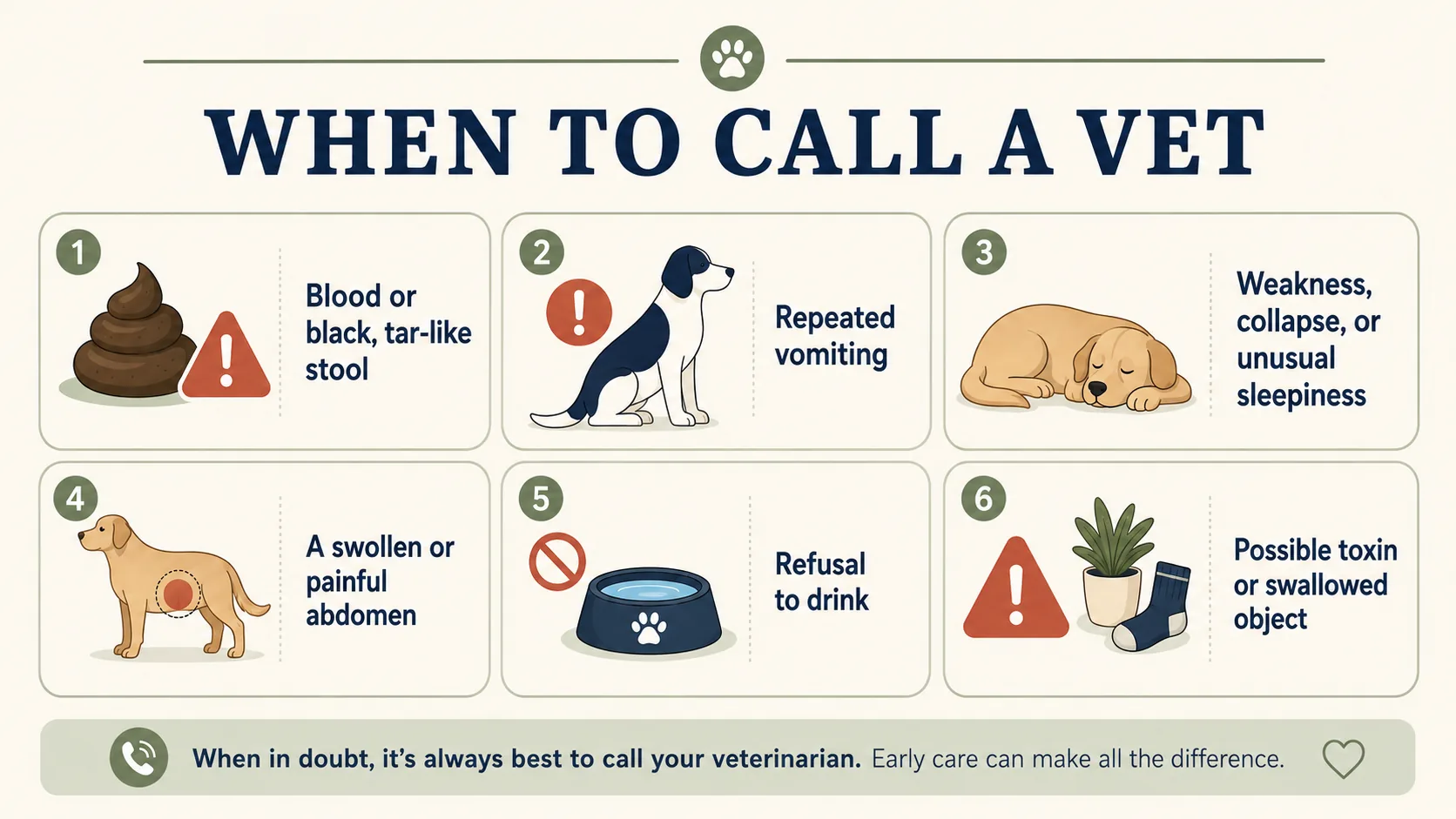
When to Call a Vet
Seek veterinary advice promptly if your dog has any of the following:
- Blood in the stool or stool that looks black and tar-like
- Repeated vomiting or an inability to keep water down
- Weakness, collapse, unusual sleepiness, confusion, or reduced responsiveness
- A swollen, tense, or painful abdomen
- Refusal to drink or other signs that your dog may be dehydrated
- Possible exposure to a toxin, human medication, spoiled food, or a swallowed object
- Severe, frequent, worsening, or persistent diarrhea
- Diarrhea in a puppy, senior dog, pregnant dog, very small dog, or dog with a chronic illness
The American Animal Hospital Association advises prompt care for severe or ongoing vomiting or diarrhea, particularly when blood, weakness, or other concerning signs are present. If you are unsure, it is safer to call your regular veterinarian or the nearest emergency clinic.
When a Mild Episode May Be Monitored
Brief monitoring may be reasonable when an otherwise healthy adult dog has only one or two loose stools and remains bright, comfortable, interested in normal activities, and able to drink. There should be no blood, repeated vomiting, significant pain, suspected toxin exposure, or known foreign-object ingestion.
Even in a mild case, watch closely rather than assuming the problem will resolve. Call your veterinarian if the diarrhea becomes frequent, worsens, lasts longer than a day, or is accompanied by any new symptom. Your veterinarian may recommend earlier care based on your dog’s age, size, medical history, medications, and the likely cause.
Safe Support While You Monitor
1. Keep fresh water available
Diarrhea can cause fluid loss. Keep clean, fresh water available and observe whether your dog is drinking and urinating normally. Do not force large amounts of water and do not use a human electrolyte drink unless your veterinarian specifically recommends it. A dog that refuses water, cannot keep water down, or appears weak needs veterinary advice.
2. Avoid rich foods and unfamiliar treats
Pause table scraps, fatty foods, bones, chews, and new treats. Do not automatically fast your dog or prescribe a homemade bland diet on your own. Feeding recommendations vary, and puppies, small dogs, seniors, and dogs with medical conditions may be harmed by inappropriate fasting. Ask your veterinarian whether to continue the regular food, offer smaller meals, or temporarily use a veterinary gastrointestinal diet.
The UC Davis School of Veterinary Medicine notes that nutritional management depends on whether the condition is acute or chronic and that fiber and homemade diets should be used with veterinary guidance.
3. Record symptoms and possible triggers
Write down when the diarrhea started, how often it occurs, and what the stool looks like. Note vomiting, appetite, water intake, energy level, medications, recent food changes, travel, boarding, scavenging, and anything unusual your dog may have eaten. A photo or fresh stool sample may be useful if your veterinary clinic requests one.
4. Do not give human medication
Do not give loperamide, bismuth products, pain relievers, antibiotics, or other human medicines unless a veterinarian who knows your dog directs you to do so. Some drugs are unsafe for certain dogs, can interact with other medication, or can mask a condition that needs treatment. The Merck Veterinary Manual describes important drug-specific risks, including genetic sensitivity to loperamide in some breeds.
5. Contact your vet if symptoms worsen
Home monitoring should stop if your dog’s condition changes. Call if diarrhea becomes more frequent, your dog develops vomiting or pain, energy drops, drinking changes, or you simply feel something is wrong. Trust your observations—you know your dog’s normal behavior best.
Can You Check for Dehydration at Home?
Dry or tacky gums, reduced energy, sunken-looking eyes, and changes in drinking or urination can be concerning, but no single home check can reliably measure hydration. The commonly suggested “skin tent” test can be affected by age, body condition, and skin elasticity. A normal-looking result does not rule out dehydration.
If you are worried about hydration—especially in a puppy, senior, small dog, or dog with ongoing fluid loss—contact a veterinarian rather than relying on a skin test.
What About Pumpkin and Probiotics?
Pumpkin is not a universal treatment. Its fiber may change stool consistency, but the appropriate type and amount depend on the dog and the cause of diarrhea. Too much fiber may worsen digestive signs. Ask your veterinarian before adding pumpkin, especially if your dog has another health condition or eats a prescription diet.
Probiotic products also differ in strains, quality, storage requirements, and evidence. A product that is appropriate for one dog may not be the best choice for another. Your veterinarian can advise whether a veterinary probiotic is reasonable and how it should be used. Do not let a supplement delay an examination when warning signs are present.
Reducing the Risk of Future Stomach Upsets
- Change foods gradually according to your veterinarian’s or the food manufacturer’s instructions.
- Keep trash, medications, chemicals, toxic foods, and small swallowable objects out of reach.
- Avoid sudden servings of rich table food and unfamiliar treats.
- Maintain veterinary-recommended parasite prevention and routine wellness care.
- Pick up stool promptly and practice good hand hygiene, particularly in multi-pet homes.
- Ask your veterinarian about testing if diarrhea is recurrent rather than repeatedly treating it at home.
Frequently Asked Questions
What can I safely give my dog for diarrhea?
There is no single home remedy that is safe and appropriate for every dog. Keep fresh water available and avoid rich or unfamiliar foods. Contact your veterinarian for feeding and treatment advice based on your dog’s age, health, symptoms, and likely cause.
How long should I wait before calling the vet?
Do not wait when warning signs are present. For a healthy adult dog with a very mild episode and normal behavior, brief monitoring may be reasonable, but contact your veterinarian if it persists beyond a day, becomes frequent, or worsens. Puppies, seniors, and medically vulnerable dogs should be assessed sooner.
Should I withhold food?
Do not automatically fast a dog without veterinary guidance. Current feeding advice depends on whether the dog is also vomiting, the suspected cause, and the dog’s age and medical history. Ask your veterinarian what and when to feed.
Can I give my dog Imodium or Pepto-Bismol?
Only under direct veterinary instruction. These medicines are not suitable for every dog and may cause harm, interact with other drugs, or hide important symptoms.
Optional Practical Supplies for Cleanup
Disclosure: As an Amazon Associate, TailSprig Living may earn from qualifying purchases made through links on this page, at no additional cost to you. Product recommendations are separate from the veterinary information above.
The following products do not treat diarrhea. They are optional supplies that can make cleanup and hygienic stool disposal easier while you monitor your dog or prepare a sample for your veterinary clinic.
Earth Rated Dog Poop Bags are a practical option for prompt stool pickup and disposal. Use a clean bag for routine cleanup; if your veterinary clinic requests a stool sample, follow its instructions about the container and storage.

Rocco & Roxie Enzyme Stain & Odor Eliminator is intended for cleaning pet accidents from compatible household surfaces. Follow the product label, test an inconspicuous area first, and keep cleaning products away from pets until the treated area is ready for use.

Veterinary Sources
- American Animal Hospital Association: Help! Is This a Pet Emergency?
- American Animal Hospital Association: Pet Health Signs You Should Never Ignore
- UC Davis School of Veterinary Medicine: Nutritional Management of Gastrointestinal Disease
- Merck Veterinary Manual: Drugs Used to Treat Diarrhea
- ASPCA: Protecting Your Pets From Poisons
This article is for general educational purposes and is not a diagnosis or a substitute for veterinary care. Contact your veterinarian for advice specific to your dog.